

James Conolly had a problem. The 19th-century Irish revolutionary could not get his fellow Irishmen to mobilize against their British occupiers. Just decades after the British state produced a man-made famine that killed millions, Connolly and his allies struggled to build support for anti-imperialist revolution. While the British occupation was unpopular, the masses cared more about immediate needs, such as securing food, water, and shelter. While his intellectual contemporaries groveled that the peasantry were too backward to recognize what’s good for them, Connolly took a different approach. A committed Marxist, Connolly examined the situation and concluded that revolutionary politics had to be grounded in the material needs of the working class:
“The great political organisations which have successfully revolutionised the systems of governments under which they lived, have had their origin, not in the brains of mighty leaders, but in the daily and hourly needs of the multitude, and have acquired force and power only in so far as those needs became sharp and pressing enough to goad that sluggard multitude to action…
Examine the great revolutionary movements of history and you find that in all cases they sprang from unsatisfactory social conditions, and had their origin in a desire for material well being. In other words, the seat of progress and source of revolution is not in the brain, but in the stomach. The fact that this truth has hitherto been obscured, or even denied; that the pioneers of progress uniformly clothed their political demands in the most idealistic language and the most flowery phraseology; or that they constantly appealed for the support of ‘all unselfish and generous souls’, rather than to commonplace interests, only proves that we are all too prone to hide even from ourselves the real nature of our impelling desires, and, even when most stubbornly following our grossest instincts, to throw around our actions all the glamour of ‘spiritual cravings’, or ‘patriotic hopes’.”
Connolly made his point more sardonically in his satirical essay, Let Us Free Ireland!, in which he ruthlessly mocked the liberal and conservative revolutionaries who failed to address material needs:
“Let us free Ireland,” says the patriot who won’t touch Socialism. Let us all join together and cr-r-rush the br-r-rutal Saxon. Let us all join together, says he, all classes and creeds. And, says the town worker, after we have crushed the Saxon and freed Ireland, what will we do? Oh, then you can go back to your slums, same as before. Whoop it up for liberty!
And, says the agricultural workers, after we have freed Ireland, what then? Oh, then you can go scraping around for the landlord’s rent or the money-lenders’ interest same as before. Whoop it up for liberty!
After Ireland is free, says the patriot who won’t touch socialism, we will protect all classes, and if you won’t pay your rent you will be evicted same as now. But the evicting party, under command of the sheriff, will wear green uniforms and the Harp without the Crown, and the warrant turning you out on the roadside will be stamped with the arms of the Irish Republic. Now, isn’t that worth fighting for?”
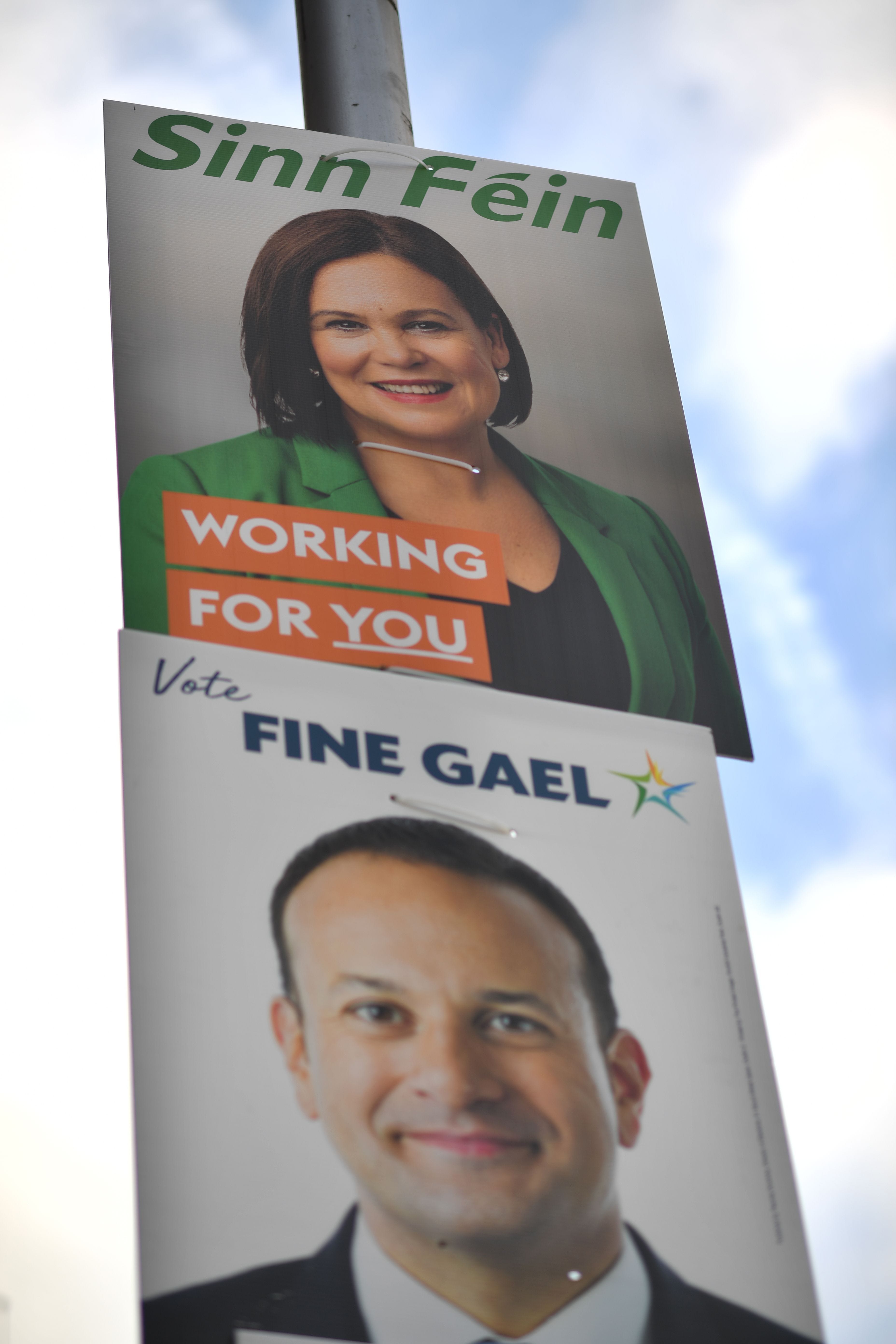
Connolly’s thesis remains true to this day. Sinn Féin, a democratic socialist party that is the largest political unit on the island, is rapidly building support for a referendum on a united Ireland. While national unity is a key focus for the party, Sinn Féin political campaigns lead with economic populism in housing, jobs, and healthcare. Socialists call these “material interests.” In America, they’re referred to as “kitchen table issues.” Call it whatever you want, but the fact remains. In every part of the world, across cultures and eras, people’s main concern is a matter of resources — in one way or another, politics boils down to income versus expenses. James Carville, as far from a socialist as one could get, summed up politics perfectly: “It’s the economy, stupid.”
The centrality of economic interests is reinforced in every election. Many sensational media narratives attempted to explain Donald Trump’s second victory. The Republicans claimed their 2% margin gave them a full cultural mandate. Misbelieving they had the full support of the American public, the GOP went full steam ahead with mass deportations, attacks on free speech, and a white nationalist agenda greatly out of touch with the wishes and needs of American voters. With Russiagate disproven and needing an excuse, many Democrats accepted this interpretation, admitted Republicans had won the culture war, and blamed the party’s left flank. They urged “cultural moderation” by moving away from Democratic support for trans rights, abortion rights, and other socially progressive measures. Both of these were wrong. Broadly speaking, Americans elected Trump because they were unhappy with the economy. They gave candidate Harris a chance, but when she moved too far right and failed to address their economic needs, they decided to replace the incumbent administration with the only realistic option. Eight-in-ten voters said their top 2024 priority was the economy, a statement that could’ve been written after any election in American history. Trump’s second term is a disaster, and voters’ chief dissatisfaction is his economic performance. Trump’s economy is so poor that voters now trust Democrats to handle the economy better than Republicans for the first time in a decade. Of course, Americans aren’t excited for the milquetoast corporatism that they recently rejected in 2024. They’re optimistic about programs proposed by progressives and socialists, such as Medicare for All, universal childcare, and stronger unionization, as well as about anti-establishment candidates who speak to their struggles and provide real solutions. This gives the anti-genocide left a wide opening to bring liberatory politics into the halls of power.
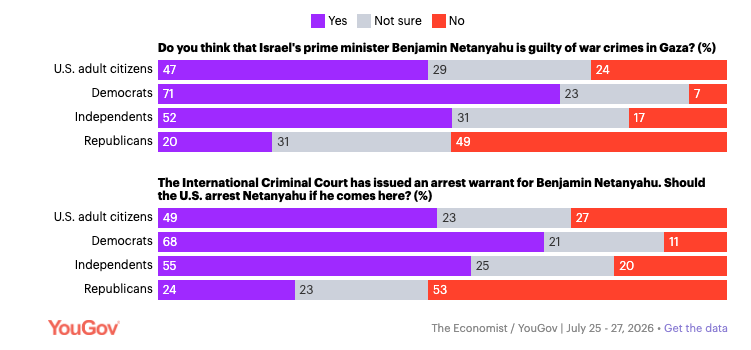
The mayorship of Zohran Mamdani provides a good example of how economic populism and Palestinian liberation go hand in hand. A municipal leader, Mamdani’s control of American foreign policy is next to zero. So, outside a few welcomed steps such as evicting Israeli drone manufacturers from New York City, his contribution to the cause has been mostly rhetorical and symbolic. He was the first mayor not to attend the Israel Day Parade since it began, and his viral video calling for the arrest of Benjamin Netanyahu propelled the topic into mainstream discourse. Two days after the mayor posted his video, pollsters began asking Americans if the United States should arrest Netanyahu. Guided by courageous moral leadership, something hard to find amongst American politicians, the country followed Mamdani and declared it would like to see Benjamin Netanyahu in chains.
The greatest testament to the impact of Mamdani-style politics is that Benjamin Netanyahu’s Likud Party is campaigning against him. With Israeli elections fast approaching, the ultra-Zionist coalition has raised campaign billboards in Tel Aviv depicting America’s Mayor as an equal threat to Zionism as Iran’s Supreme Leader Mojtaba Khamenei, Turkish President Recep Tayyip Erdogan, and Hezbollah chief Naim Qassem. Though extreme, Likud is not wrong to view pro-Palestine politicians such as Mamdani as a challenge to Zionist supremacy. The guarantee of American weapons shipments weakens with every progressive victory. Without American arms, Israel’s military might would be severely diminished, forcing it to negotiate with rather than dominate its more peaceful neighbors.

While Zionists are obsessed with Zohran Mamdani and constantly trying to besmirch him as an Israel-obsessed anti-semite, the truth is he did not run on the Palestinian cause. Though a longtime supporter of Palestinian liberation, Mamdani did not campaign on decolonization, because that is not New Yorkers’ top priority. He ran on affordability, specifically three economic planks: universal pre-K, fast and free buses, and freezing the rent. This is also why New Yorkers elected him. Election day exit polls found 51% of NYC voters were voting for “affordable prices.” 78% of Mamdani’s ads mentioned affordability or high prices, while only 32% of Andrew Cuomo’s ads did.
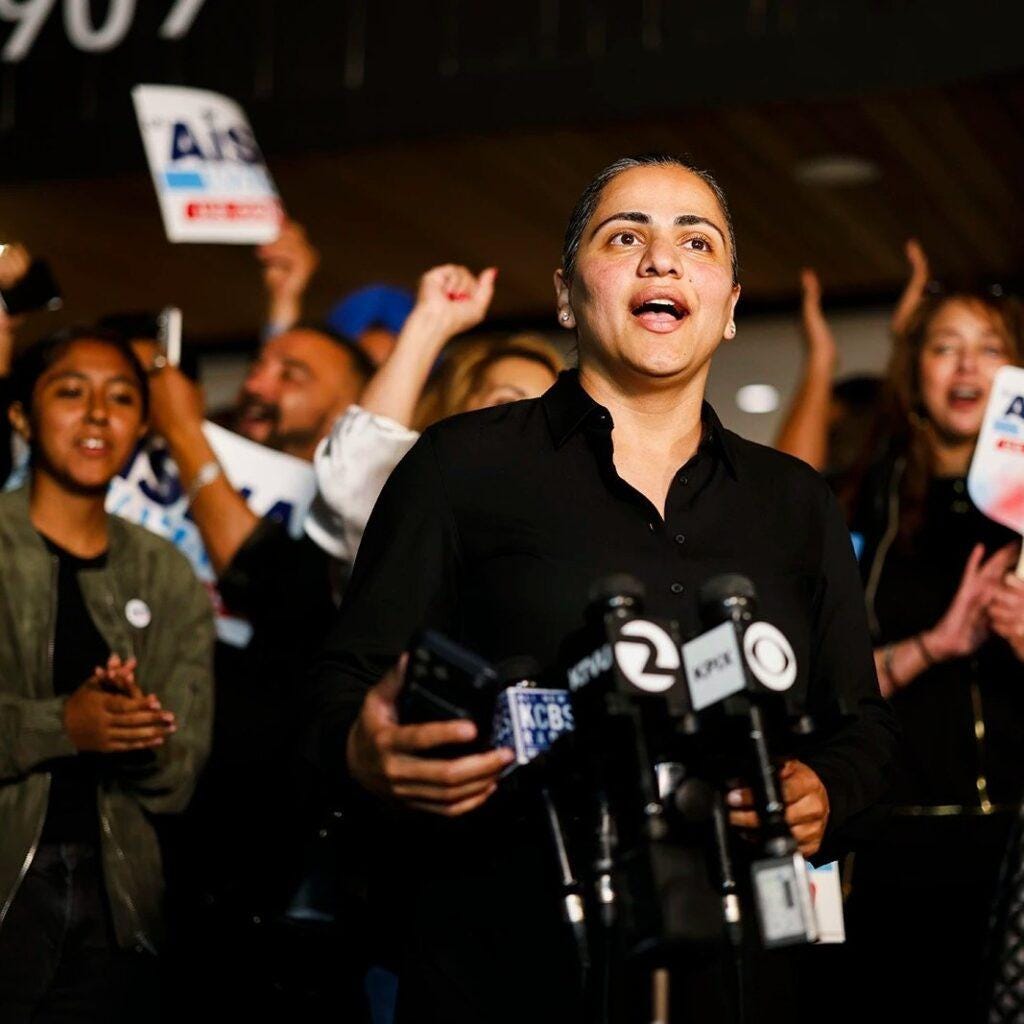
Delivering on these economic promises, as well as responsible and impressive municipal governance, has propelled Zohran Mamdani — and his anti-genocide advocacy — to international stardom. Zionists know cultural significance is a threat, which is why they try to brutally cancel human rights activists with accusations of bigotry. It’s also why Israeli spy firms attempted to derail Mamdani’s campaign, as well as those of several other Israel-critical politicians around the globe. And it was that cultural power, which has turned into political capital, that Mamdani used to uplift the congressional candidacies of anti-Zionists Claire Valdez and Darializa Avila Chevalier, as well as anti-genocide candidate Brad Lander. Mamdani explained how he was using political capital in his recent interview with The New York Times:
Interviewer: “We’ve talked about your endorsements. And I would like to talk in particular about Darializa Avila Chevalier, who ran successfully against Adriano Espaillat, the head of the Hispanic caucus. He’s a former undocumented immigrant. He has strong progressive credentials: dismantle ICE, supportive of Medicare for All. Did you privately promise him that you were going to support his re-election campaign during your campaign for mayor?”
Mamdani: “I told him that I appreciated his support when he endorsed me in the general election after I won the Democratic primary. And the promise that I made to New Yorkers was to use any tool that I had to further that affordability agenda. And in Darializa, I see a congressional candidate, soon to be a congresswoman, who really has built a campaign on a vision of babies, not bombs. And I think that that speaks to what it means to invest in affordability, and also reckons with the bankruptcy that has typified a lot of our politics, especially when it comes to our foreign policy.
You were asking me earlier about political capital. I think the point of political capital is to spend it to deliver material change. And these are not intellectual arguments. When it comes to Darializa’s district, this is one of the poorest congressional districts in the United States of America. And as I walked that district with her, we were discussing the amount of money that our federal government sends, billions of dollars, to the Israeli military, and as we were doing so, a man came out of a bodega with his hands full with two packages of Huggies. And you see what the priorities are of people living in the district, and yet you see what the priorities are of the federal policy that represents the district. And you see this chasm. And the more that you tolerate that kind of chasm, the more you tell people that politics is something to tune out, as opposed to something to be a part of.”
As Darializa and Claire ran for federal office, foreign policy was a more prominent issue in their election and will play a more central role in their political impacts. These candidates and many others blended their anti-genocide platforms with affordability issues to great effect. Seizing on voters' dissatisfaction with high gas prices, Chriss Rabb combined the affordability and anti-war message into a juggernaut campaign that steamrolled the establishment-backed Sharif Street by fifteen points. Each one of these candidates has brought us closer to ending weapons sales to Israel and reaching a full arms embargo. Not just because of their additional votes on future legislation, but because of the magnetic pull of their influence. Every new anti-genocide legislator gives the emancipatory left an additional soapbox to highlight the rank hypocrisy of liberal Democrats who preach domestic liberty but foreign oppression. As we force these deceivers to defend their indefensible positions on the national stage, they appear weak, unprincipled, and duplicitous. Voters recognize them as hollow suits and place their support elsewhere. More left candidates are elected, and more centrist candidates move left to avoid voters’ scorn. Though not yet victorious, we can already see the fruits of this strategy in practice. Two years ago, only thirty-seven House Democrats voted to stop sending weapons to Israel. Last month, that number jumped to one hundred, including hard-line Zionists such as Jake Auchincloss and Nancy Pelosi. Have these politicians seen the light? Of course not. They are simply opportunists moving left to match the current political environment. The truth is, we don’t need a supermajority of anti-zionists in the House and Senate to cut off arms shipments. We only need enough to wield the bully pulpit and cajole the opportunists into voting how we want.
This is not to say that socialist politics should replace single-issue advocacy on Palestine. Quite the opposite. It is to point out the indisputable fact that, in our undemocratic system, single-issue projects of any sort do not reach the levers of power. Not because they are wrong or misguided, but because voters will always prioritize their economic needs, and if the single-issue doesn’t address those needs, it will fail to win support. The American public was sternly against Israel in November of 2024. But it did not elect any of the single-issue microparties running on Palestinian liberation. Unfortunately, it chose the most pro-Israel candidate in the race because he at least spoke to their material concerns. Any political program that does not include a broadly applicable economic package will fail to win the mass base necessary to achieve its goals. This is why it is important to package liberatory politics inside socialism, its natural home.
Fortunately, the left has a legacy of effective politicking to take inspiration from. The Bolsheviks won power in the Duma (tsarist parliament) and soviets (workers councils) on a platform of peace, land, and bread. Behind each plank of these easily understandable words lay a set of policies that explained how the party would deliver on the masses’ desire for sustenance and safety: removing Russia from World War I, land reform for the peasantry, and an end to the tsarist mismanagement that had created near-famine conditions in Petrograd and other major cities. Today, the American masses have very similar demands. They don’t like Trump’s Iran War, $6 gas prices, the high cost of living, and Israel’s genocide in Gaza. During a recent conversation about the explosive success of the electoral left, acclaimed journalist Amy Goodman articulated a succinct slogan for modern progressives to use to similar effect:
“Some people call it sewer socialism, some people call it pothole politics, but they are deeply concerned. I was summarizing it the other day, saying its gas, groceries, and Gaza. And each word represents something much bigger than that. But it’s a new way of how do we take care of this planet? Beginning with individuals, families, and communities all over the world.”
This is an effective, easily understandable platform that shows Americans the left is focused on their priorities and has a plan to address them. Affordability, safety (as in, abolish ICE), and an appeal to human rights are the keys to strong democratic majorities that can stop American weapons from being used in Palestine and eventually win a full arms embargo. As Darializa Avila Chevalier said — “Babies. Not Bombs.” Of course, more will be necessary to truly free Palestine. But disrupting the flow of American weaponry is the immediate political objective and, I would argue, a moral responsibility for the American left. As Palestinian scholar and author of The Hundred Year War on Palestine Rashid Khalidi said, ending our nation’s support for the genocidal state is the chief priority, taking precedent over concerns of ideological purity in our organizing. The legendary Palestinian intellectual argues class-based politics is the path to an anti-genocide majority.
Interviewer: “You were telling us in your talk here at Georgetown to move beyond the politics of purity—to stop making people answer checklists before you work with them. I’d like to hear more about that, especially because within the Palestinian movement there tend to be divisions over what’s going on in Palestine and Gaza, Hamas, armed resistance, and so on. People tend to butt heads over armed resistance versus nonviolent resistance, especially when armed resistance has been such—”
Rashid Khalidi: “Can I say something about that? I’m perfectly happy to have people in Gaza or Nablus talk about armed struggle. What the hell business is it of ours in the United States? I mean, really, seriously: if you want to support something, support it. But to make that a debate among us divides us and brings unspeakable joy to our enemies."
Let them fight about armed struggle, because we’re not going to struggle or be armed. We’re sitting in Georgetown or at the University of Chicago. What does that have to do with what we have to do? We live in the belly of the beast. We live in the country that sustains this genocide. Our work has to do with the United States…
What is our objective? Is our objective stopping arms sales? I can agree with some Zionists on that. Is our objective BDS—the divestment of universities? I can agree with some people I don’t agree with on anything else.
If you want to change anything, and you don’t just want to be pure and self-satisfied—to know that you’ve done the right thing—if you’re willing to actually decide, “This is the objective, and to achieve it we’re going to have to get our hands dirty and talk to people we don’t really like,” imagine creating a coalition that effects change with people you don’t really agree with, but that is effective. The alternative is completely ineffective.”
Interviewer: “To stray away from this very narrow view of Palestine and Israel, I think the global movement has looked at the connections to the military-industrial complex. It has looked, for example, at what communities need before they can go protest—people’s basic needs in the streets, such as class struggles.”
Khalidi: “I think we can be more effective if we’re thinking about ways to reach beyond the narrow group of people who are active around Palestine—to people who don’t have proper schools or hospitals, or whatever, because so much money is spent on the war machine.
Then we’re talking about a majority of Americans who may agree: Let’s stop arms sales to Israel—not only because those weapons are killing Palestinians, but because they’re killing people who don’t have proper hospitals, contributing to the miseducation of youth, and leading to the worst railway systems and the worst bridges in the world because we’re not spending on infrastructure. A third of the budget is going to weapons to kill people—not just Palestinians, of course. So I agree with you completely.”
This is the path to achieving the pinnacle objective of anti-genocide politics: the end of all American bombs, guns, tanks, and planes going to Israel. A broad coalition that speaks to the economic needs of the majority and ties a direct line between their suffering and that of colonized peoples everywhere. As Khalidi said, this coalition will at times be uncomfortable. But as the great civil rights organizer Bernice Johnson Reagon once said, “If you're in a coalition and you're comfortable, you know it's not a broad enough coalition.”
Some will read this and accuse this strategy of deprioritizing the Palestinian cause behind American domestic issues. As I’ve been critiqued before, it will probably sound like, “How can you care about free childcare for Americans when Palestinian children are being bombed?” The prioritization is not my choice. If the options of a free, peaceful Palestine and universal childcare were mutually exclusive and readily available, I would choose the former without thought. But that is not the situation we face. Much like the left’s relationship to the Democratic Party, we are not the ones who dictate the political reality in the United States. That is determined by the masses, who have, in every nation, at every point in time, prioritized their access to resources, the precondition to their survival, above all else. Our list of political priorities is not the list of our moral priorities. If we ranked them morally, and each issue was simply a matter of what to solve first by directing resources, then anti-genocide would be first on the list. Politics is not the practice of telling other people what you care about. It’s the art and science of showing others why your concerns should also be theirs, then mobilizing them to act. That is the task facing the anti-genocide American left. If we can solve the working class’s most pressing issue, the matter of survival and security inside the capitalist system, they will follow us on more radical avenues - from Palestine to policing. But if we lose sight of our mandate and stray from our core belief that capitalism is the primary issue facing the working class, then our project will crumble, and imperialist slaughter will continue unabated.
When the iconic Palestine scholar Norm Finklestein was asked how to stop the genocide, he reformatted a famous quote from Che Guevara on how to stop the American Empire. In a past age, Che called for “One, two, three Vietnams.” In this age, Finklestein called for “One, two, three Mamdanis.” Put as many Mamdanis in state, local, and federal office as we can, and American support for Israel will soon be seen as a relic of our savage past, akin to Jim Crow or allegiance to Apartheid South Africa.
If you appreciated this essay, please click the ❤️ to help it rise in Substack’s algorithm. Don’t forget to subscribe so future articles are delivered to your inbox. If you’re a returning JoeWrote reader, consider supporting my work with a premium subscription. For the cost of just one cup of coffee a month, you can help me keep creating content like this. Plus, you unlock everything JoeWrote has to offer.
Thanks in advance!
In Solidarity — Joe
I swear we need a "second program" that's purely written with this in mind. Not that I disagree with anything in the current one, but has anyone tried to have a conversation about it with just a normal ass working person? It just feels so out of touch with someone whose looking at tomorrow, not decades from now.
"Russiagate disproven?" LOLOLOLOL! Hardly!