

I’ve been a harsh critic of artificial intelligence. With a background in the tech industry, I saw the birth of the AI boom as nothing more than opportunistic companies rebranding what was once called “algorithms” and “machine learning” as “artificial intelligence.” I’m not saying new AI technology wasn’t developed. It was. But it’s neither profitable nor productive, and it’s certainly not what tech oligarchs promised it would be. In 2018, the Google CEO said AI was more profound than the discovery of “electricity or fire.” The AI summary at the top of Google search results is helpful. But, in my humble opinion, it fails to parallel the discoveries that ushered humanity out of the caves and into civilization.
My criticism has not gone unchallenged. The last time I wrote about AI, someone left a comment asking how I could judge AI if I didn’t use it. That was a fair point. So, over the last three months, I’ve been forcing myself to use Claude and Perplexity for basic tasks. Though I see why this technology is preferred by the typical user, I still don’t think artificial intelligence is worth the enormous social and financial costs — and America agrees with me.
Lacking Benefits
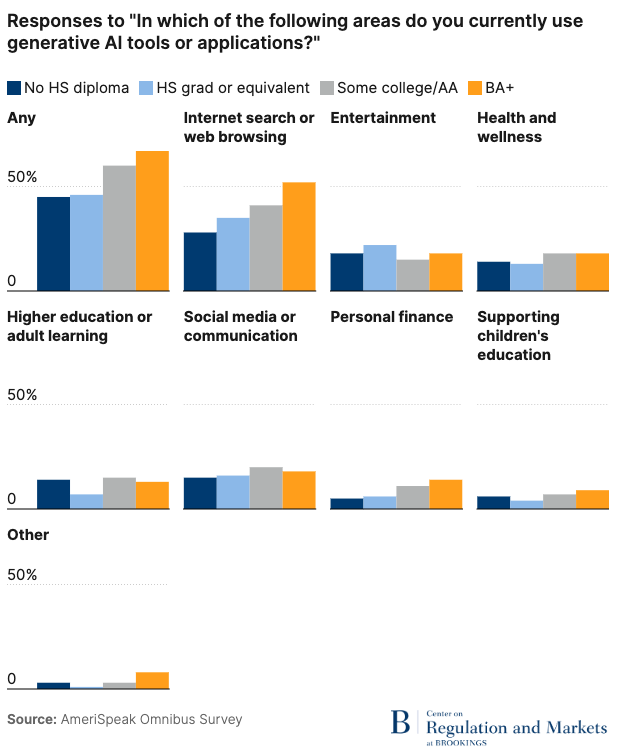
While tech executives and Wall Street investors tell us that artificial intelligence is a revolutionary technology, the actual applications paint a different picture. The most common use of artificial intelligence is to cheat in school. Four out of five high schoolers use generative AI for schoolwork, and Brookings found that the most common use for AI is for higher education. User data from ChatGPT confirms this theory. In the chart below, we see ChatGPT usage from May to July in 2025. The dips in May are weekends (when there’s less homework). Once summer break comes, ChatGPT use plummets by 70%.
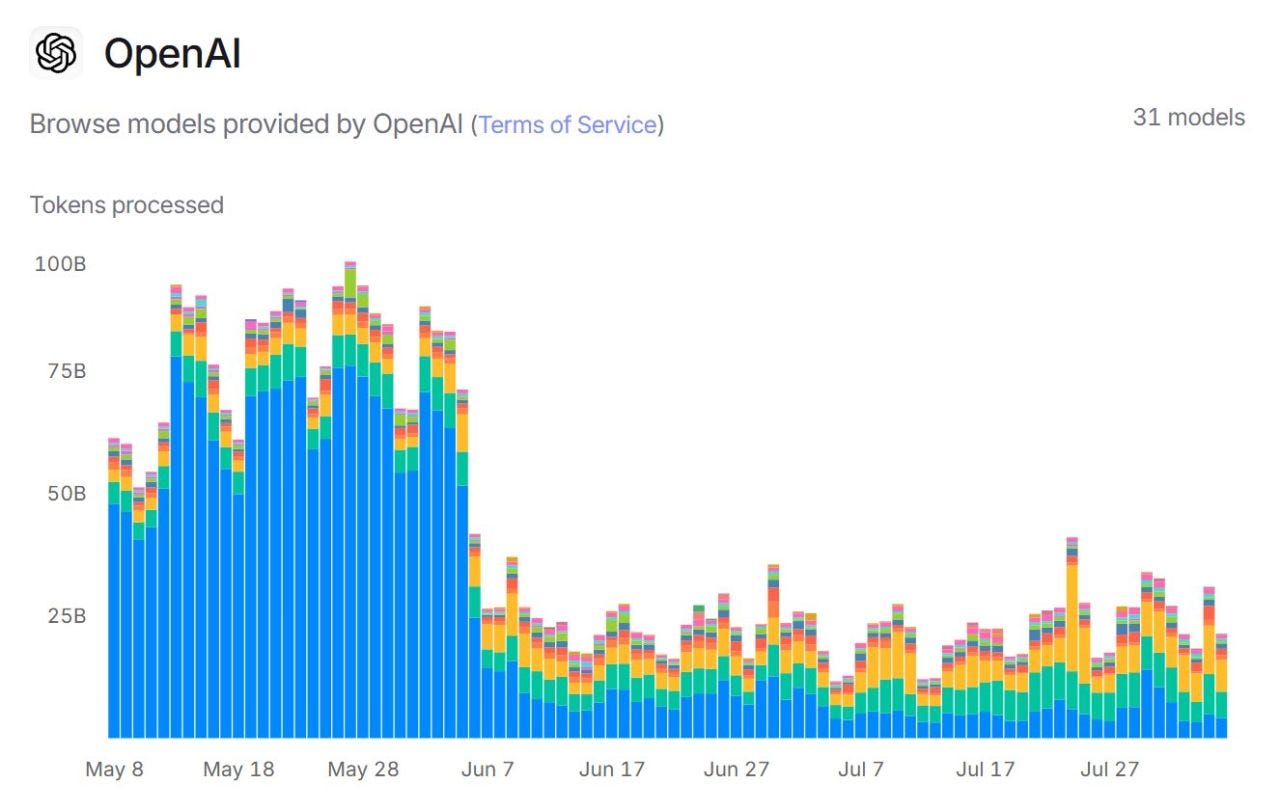
Look, I’m in no position to throw stones about educational delinquency. High school Joe got pretty good at SparkNotes-ing my way to a B minus. And Einstein’s famous saying, “I’ll never remember anything I can look up in a book,” applies equally to more advanced systems of information storage. If there’s an easy way to access info, people should use it. But that’s not how AI is being used. One Purdue computer science professor recently caught half his class cheating with AI, triggering a campus-wide panic as students threatened to unenroll. Under the instruction of California Governor Gavin Newsom, San Jose State University adopted an A.I. Everywhere strategy. Soon, professors saw no reason to give long writing assignments and asked students to submit their ChatGPT logs instead. I’m not one to police the learning strategies of higher ed. But I doubt that asking a computer questions prepares American students for the modern world.
Behind school, America’s second most common use for artificial intelligence is as a search engine. Brookings found that besides school and search, all other applications plummet. As it stands, there’s a chasm between how AI is presented and how it is actually used. NVIDIA CEO Jensen Huang recently said AI can autonomously start and run a billion-dollar business. (Life Hack: tell ChatGPT to make you money.) In reality, AI is useful for looking up recipes, settling debates, and misdiagnosing medical conditions with answers pulled from WebMD. Hardly the paradigm-shifting technology we’ve been promised.
During my time in my self-imposed AI reeducation camp, I came to see AI search as a slightly better version of Google Search.
