

The latest episode of The Ezra Klein Show features an interesting discussion with the directors of A Land For All, an Israeli-Palestinian peace group with a novel idea for the region’s future. Rula Hardal, a Palestinian citizen of Israel, and May Pundak, a Jewish Israeli, make a strong case for their plan, which would recognize both the sovereign states of Israel and Palestine in a confederated system with equal rights and free movement for all. They liken their idea to a miniature version of the European Union, which enables citizens of any E.U. country to travel and work in another country while still retaining political rights in their home country. This idea has been used with success in previous peace-seeking initiatives. The Good Friday Agreement, which largely ended sectarian conflict in the North of Ireland, established the right of Irish Catholics living under British rule to opt in to Irish citizenship and hold a Republic of Ireland passport.
A Land For All’s confederate model holds promise. But ultimately, it’s not up to me, or you, or anyone except for the people who live in historic Palestine to decide what their society will look like. Palestinian self-determination means Palestinian self-determination, not another colonially-imposed defunct system, ala Lebanon. Whether the inhabitants choose to pursue a one-state, two-state, or hybrid solution is their prerogative alone. However, this is not to say that outsiders, particularly Americans, do not have a role in establishing a free Palestine. While we have no right to insist upon the final form of post-colonial governance, we do have a political, moral, and legal duty to dismantle the current Zionist entity, which was constructed to preserve Jewish supremacy that ultimately led to genocide. As required by our commitments to international law, the United States must assert that the status quo is unacceptable and insist that the future must be built on human rights, not biblical tales or the prioritization of one ethnicity over another. Which is why I take issue with the way Ezra Klein frames the path to peace like this:
“I don’t see how a two-state solution is still possible given the number and size of Jewish settlements in the West Bank. They’re not going away. Or the insistence on a right of return for Palestinians. I don’t think a one-state solution is plausible or likely. The Jewish people in and around Israel want self-determination and sovereignty. So, too, do the Palestinians. Neither side, given their history, is going to willingly give the other that kind of power.”
The keyword here is “willingly.” Throughout the interview, Klein repeatedly asks the directors how they will enact their plan, given the polarization and distrust between the groups. In typical Ezra Klein fashion, he ignores international law and discusses the plan’s viability as one that requires changing Israeli minds — as if the genocidal power currently fighting a half-dozen wars of aggression is open to good faith debate and solutions. As Klein reiterates:
“And so I can read the polling there. For the commitment to this kind of vision that you’ve described needing, you would need a wholesale change in the structure of Israeli public opinion and leadership. What is your theory of what creates that change that makes this possible?”
And again:
“I know there are no shortcuts, but, even on a 10-year time frame, what do you believe will change attitudes sufficiently so that something like this becomes possible?”
Klein is missing, or potentially misconstruing, the nature of reality in Israel-Palestine. Israel has committed genocide in Gaza. Its leaders have made openly genocidal statements, which its military has enacted through unfathomable violence. A recent United Nations inquiry found the IDF “targeted Palestinian children in Gaza in two distinct ways: directly by shooting at their vital organs using precision weapons such as quadcopters and snipers; and through the use of high-impact weapons causing widespread and systematic attacks on residential buildings, schools, and displacement camps crowded with children.” The report lists several verified murders of children, including the shooting of a ten-day-old baby breastfeeding from its mother:
Injuring of a 10-day-old baby by quadcopter inside the tent in Nuseirat camp
On 12 April 2024 at 13:00, a 10 day-old-baby boy was shot by a quadcopter while being breastfed by his mother inside their tent in Nuseirat camp. The mother was alone in the tent, breastfeeding her baby, when a single bullet from a quadcopter hit the baby in the head and exited through the back of his head, hitting the pillow behind her. The baby survived but sustained brain injuries and now suffers from seizures.
The Commission viewed and analysed images of the bullet that hit the baby. The Commission concluded on reasonable grounds that the bullet was fired from a sniper rifle mounted on a quadcopter. Considering that the shooting occurred in broad daylight, the Commission concludes that the quadcopter controller would have been able to see inside the tent and assesses that the target was a mother and a baby.
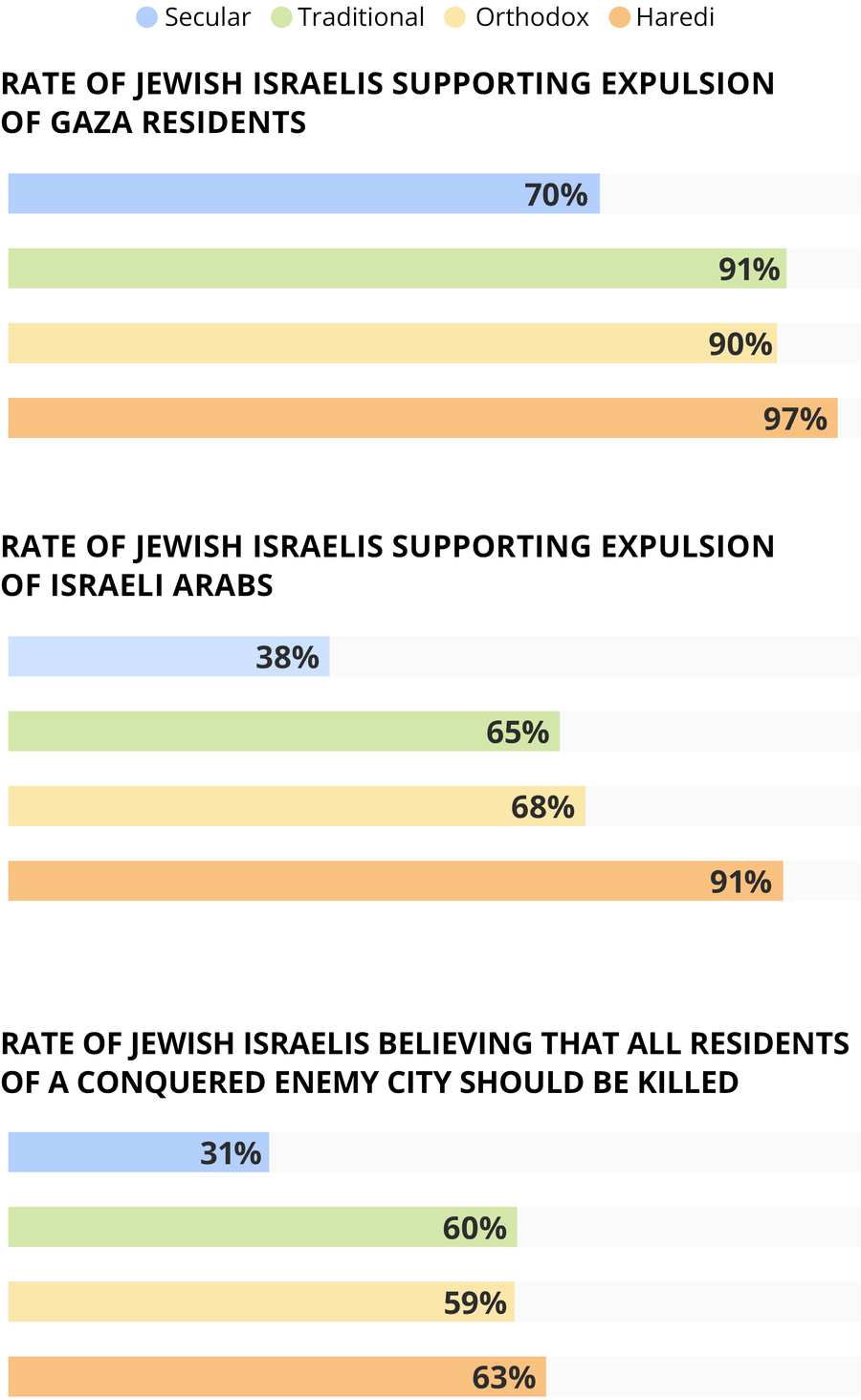
With a few valiant exceptions, Israeli society does not recognize Palestinians as humans. There is no world in which the Israeli government, or its population, will operate as the good faith, egalitarian actors required for Klein’s theory of change to work. The Netanyahu government conducted the genocide, the opposition party is attacking him for not going far enough, and the Jewish-Israeli public largely supports the cross-partisan agreement on ethnic cleansing. A Haaretz poll conducted during the height of the genocide found 82% of Jewish Israelis supported the “transfer” (ethnic cleansing) of Gazans, while 56% support cleansing Palestinian citizens of Israel (such as Rula Hardal) from the country. Most shockingly, roughly half of Jewish Israelis encouraged the army to “act in a manner similar to the way the Israelites acted when they conquered Jericho under the leadership of Joshua, namely, to kill all its inhabitants." Israel’s other wars with Iran and Lebanon have received similar public support. The Zionist state is not the only country aflush with belligerent sentiments. But it is the only one that has turned those sentiments into widespread slaughter.
Israel’s defenders will excuse atrocities, genocidal officials, and their public support by whatabouting with similar allegations against Palestinian militants and governing bodies. But that is beside the point. Only Israel has been credibly accused of genocide by almost every major human rights organization, including its own. The United States has a specific legal duty to “prevent and punish” genocide according to the 1948 United Nations Genocide Convention. As decided in the 2007 International Court of Justice case Serbia v. Bosnia, signatories are obligated to step in on even suspicion that genocide is occurring, not wait for the ICJ to give a final declarative verdict. With a national sentiment seeking to eliminate the Palestinian people, a seemingly unquenchable desire for war, and well-documented genocidal crimes, the state of Israel has forfeited its right to control its future. Even if they were willing, which they are not, the Israeli state has no legal or moral right to determine what the future of Palestinian self-determination looks like, just as Germany had no say in how it was governed after World War II. Peace in historic Palestine won’t be won by debating Israelis with facts and logic. The only viable delivery of a solution, regardless of what it might be, is to employ international political, economic, and military power to force Israelis to accept a future in which everyone’s rights are respected and accepted — even if it goes against their wishes.
As with most conversations about the future of historic Palestine, this episode of The Ezra Klein Show referenced similar decolonial peace processes to find possible solutions to the enduring difficulties of settler colonialism. Specifically, the Land For All co-directors pointed to the North of Ireland Good Friday Agreement and the international movement that brought down apartheid South Africa. In both cases, justice did not arrive by convincing the dominant social group that the oppressed deserved equality. Rather, peace was achieved by forcing the prevailing power to recognize equality and codify it into law. President Bill Clinton took an active role in the Good Friday Agreement, most notably by allowing Sinn Féin leader Gerry Adams to travel to the U.S. and serve as a representative of the Irish Catholic Republican faction. The Agreement was met with joyous cheers in the Irish nationalist communities and a funeral atmosphere in the pro-British loyalist districts. Which isn’t surprising. Outside power had forced the dominant, oppressive group to accept its victims’ humanity. Of course those who lost their social power resented the deal! They opposed equality, and it was forced on them by a combination of armed resistance, civil disobedience, and international pressure.
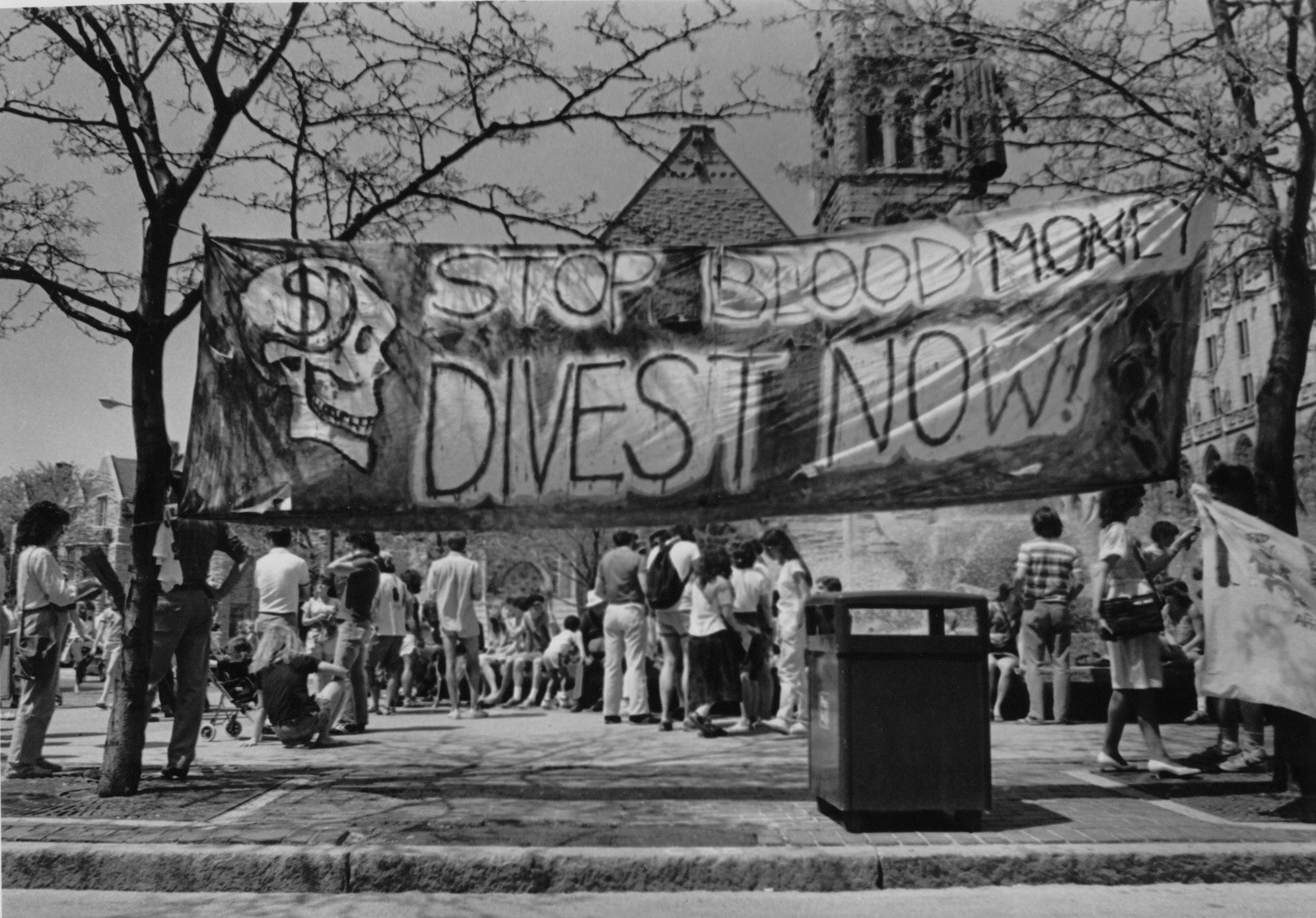
Even more outside pressure was required to decolonize South Africa. A global international anti-apartheid campaign, ranging from consumer boycotts to directed state power, helped bring down the segregationist government. In the United States, this led to the Comprehensive Anti-Apartheid Act of 1986, which placed sanctions on South Africa that could only be removed by the end of apartheid. With its economy strangled and ostracized on the world stage, the South African government began talks with Nelson Mandela and the anti-apartheid movement. Within a decade, white minority rule had ended.
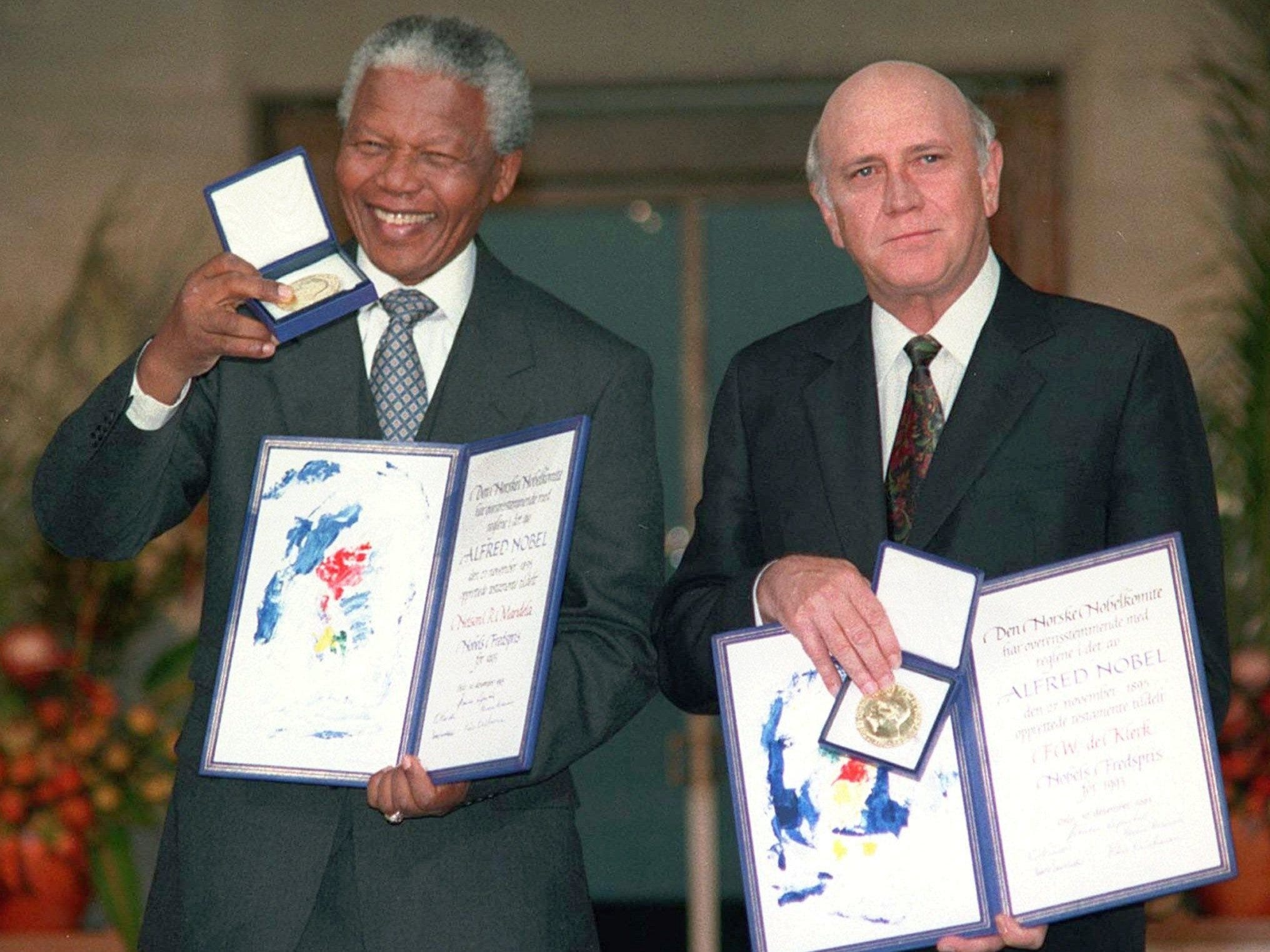
This is not to say that international pressure alone will free Palestine, nor are they the only important actors outside the territory illegally governed by Israel. Far from it. Neither the Irish nor the African peace campaigns could have succeeded without the internal work of leaders such as Gerry Adams and Nelson Mandela, just as peace in historic Palestine will require activists such as Rula Hardal, May Pundak, and many other activists locked in Israel’s draconian torture dungeons. Whether the future looks more like Land For All’s confederation or a hard border between the two independent states, there will need to be good relations and social connections between Israeli and Palestinian neighbors. That’s true for the highest levels of their governments and for the populations that will inevitably cohabit and mingle. Social repair is a necessary component of resolving the century-long struggle, and the Land For All directors rightly recognize its imperative. But as is evident by the lens with which Ezra Klein discusses the path to end this “conflict,” mainstream liberal Zionism still sees Israel’s illegitimate state as a body that needs to be respected and nurtured, as opposed to one that must be dismantled and replaced. Fortunately, the co-directors of Land For All recognized this bias and called it out. They corrected Klein when he attempted to draw false parity between West Bank settlers and Palestinian refugees.
Klein: “One thing that I find very interesting in this project is that — you can frame it in different ways, but in a way that is different from, I think, the two-state solutions with all of its land swaps and everything — you’re able, much more directly, to simultaneously accept the presence of Jewish people in the West Bank, in East Jerusalem, and accept the Palestinian right of return at the same time. When I read it, and I doubt this is how you all would frame it — though maybe you do — it almost feels like a trade.”
Pundak: “Well, first of all, we are very careful not to make that symmetry between refugees and settlers. It’s very important for us not to make that symmetry, for all the reasons. But what I would say—”
Klein: “Why?”
Pundak: “Because refugees have a right to be part of their homeland. They have been subjected to terror and to expulsion from their homes. The settlement enterprise is an illegal and immoral enterprise. It is against international law, a lot of it is against Israeli law, and it is based on a system of supremacy. There’s no question about that, and we are all in agreement with that.”
Ezra Klein’s frame that this is a problem for Israelis and Palestinians to reach a mutual agreement on is naive at best; at worst, it’s a way to burn out good faith efforts and preserve the Israeli-dominated status quo. Because the Israelis will never willingly sacrifice their ruling position in the power imbalance. By committing genocide, Israel, by which I mean the current apartheid nation state, has forfeited its right to exist. Never mind having a say in how to solve the problem it created. Colonization is a structure, not an event. Decolonial projects tear down those structures. That can be done through an outside force, whether through diplomatic or economic pressure, or something more drastic, such as the multi-decade occupation of Germany.
The anti-genocide movement, which Ezra Klein considers himself a part of, is a long way from holding the political and social power to enact sanctions or use the American government to force an egalitarian future in historic Palestine. But we should make no mistake in clarifying that outside actors such as ourselves have a legal and ethical responsibility to enforce equality, even over inevitable objections from Zionist Israelis and their allies. Because if Middle East Peace depends on waiting for the Israelis to willingly change their minds, thousands more will die.
The organizers of A Land For All know this. After outlining the plan and addressing some of the host’s questions, May Pundak called on the international community to end the current atrocities and secure a real solution. In response, Ezra Klein ended the conversation.
If you appreciated this essay, please click the ❤️ to help it rise in Substack’s algorithm. Don’t forget to subscribe so future articles are delivered to your inbox. If you’re a returning JoeWrote reader, consider supporting my work with a premium subscription. For the cost of just one cup of coffee a month, you can help me keep creating content like this. Plus, you unlock everything JoeWrote has to offer.
Thanks in advance!
In Solidarity — Joe
does Israel's genocide have a right to exist?
clearly no, right? yet it does, in spite of that fact.
and so will Israel continue on in spite of the fact that most of the world believes it had assumed the privilege unjustly and proved itself a mostly, hugely destructive player.
The UN was never designed to prevent such a catastrophe and we all have made damn sure it never would. Now we must live with it and God help us.
The article contradicts itself. It says the people living between the river and the sea should decide their future, then argues that Jewish Israelis have “forfeited” that right and should have a political system imposed on them from outside.
That is not equality or self-determination. It is collective punishment.
It also treats the accusation of genocide as if it were already a proven fact. Civilian suffering in war is real and tragic, but suffering alone does not establish genocide. Genocide is a specific legal claim requiring evidence of intent to destroy a protected group. Repeating the accusation, citing casualty figures or presenting horrific images does not remove that burden of proof.
The Good Friday Agreement does not support the article’s argument either. It was based on consent, equal rights and recognition of both communities, not on declaring one population illegitimate.
Palestinians deserve freedom and political rights. Jewish Israelis do too. Peace cannot be built by replacing one form of domination with another.