
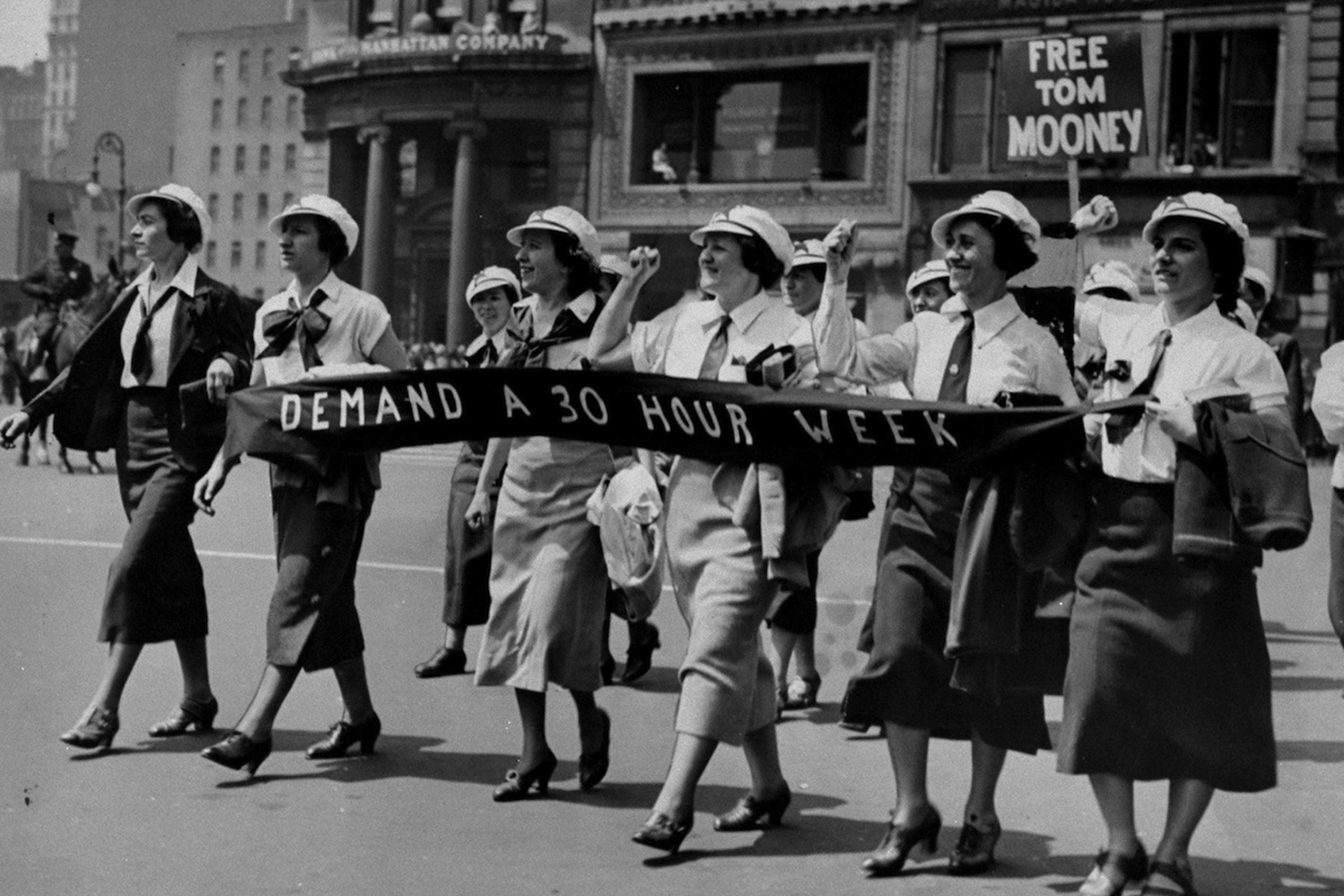
Tomorrow is May Day, or as it’s known outside the U.S., International Workers’ Day. In 1889, the Second Communist International designated the first day of May a holiday to commemorate the Haymarket Affair. Three years earlier, labor organizers held a rally in Chicago’s Haymarket Square calling for an eight-hour workday. Someone threw a bomb at the police, who fired on the crowd, killing or wounding dozens of protestors. Eight anarchists, most of them immigrants, were tried for the bombing and sentenced to death on flimsy evidence. With most of the accused being foreign-born, Haymarket set off a wave of anti-immigrant sentiment that laid the groundwork for the first Red Scare.
While May Day is celebrated everywhere from India to Canada, its connection to international communist, socialist, and anarchist movements (which predated both the Haymarket Affair and the Communist International declaration) has kept it from being recognized in the United States. Ironic, given the holiday memorializes an American event. Not wanting to bolster the socialist movement, President Grover Cleveland designated the first Monday in September as Labor Day instead of May 1st. By removing the American working class from its international context and placing it in a patriotic container, the anti-communist political class greatly limited the effectiveness and imagination of the American labor movement. While workers around the world will get a day off to celebrate their martyrs, champions, and campaigns, all American workers will receive on May 1st is an iPhone reminder to observe Law Day, the American Bar Association’s annual celebration of the rule of law.
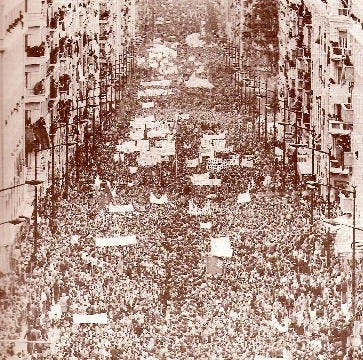
Though it is not a federally recognized holiday, May Day will still be celebrated in the United States. May 1st is to socialists what Christmas is to Christians: a reminder of the heart of our ideology. If you’ve read my work or that of any other Marxist, you’ve probably noticed that workers’ rights take priority over other left-wing issues, such as feminism, immigration, or healthcare. Comparatively, progressive pundits and politicians from a non-socialist background present workers' rights as one part of the left-wing agenda. Pledges to “Protect Workers’ Rights” and “Support Unions” appear on the “Issues” page of left-wing Democrats, equally as celebrated as commitments to restoring reproductive justice and gun safety legislation. The difference in prioritization is not because socialists don’t care about these issues, nor is it because progressives aren’t seriously committed to labor rights. Instead, socialists are most focused on workers’ issues because we believe labor relations are at the heart of capitalism. As capitalism reaches across every geographic and identitarian boundary, so too does its exploitation.
Because it is the basis of American life, everything and everyone is impacted by capitalism. Both pro-capitalists and anti-capitalists agree that capitalism works because workers — the people who do not own capital, and therefore have to sell their labor to survive — don’t receive the full value of their labor. Every day, workers go to work. There, they create value by making goods and delivering services. The value of their work is measured in a business’s net income, the total amount consumers pay. But workers don’t receive that full value. Instead, they receive only a portion of it, called a wage. The difference between workers’ wages and the net income (minus other operating expenses) is called profit. Under capitalism, profit is the property of the business owner. Karl Marx coined this the Surplus Value Theory, but it was first identified by Adam Smith in The Wealth of Nations. Whether you agree with Marx’s conclusions that the wage structure is exploitative or you are more sympathetic to Milton Friedman’s argument that profit is necessary for capitalists to invest in new businesses, there’s no denying that the extraction of value from the working class is a core feature of capitalism.
To evolve beyond this exploitative system, socialists focus on building class consciousness. Class consciousness is simply workers realizing that the system I detailed above exists and that they are on the short end of it. The best way to achieve this consciousness is through labor organizing. Fighting for a union and a contract reveals the true nature of capitalism by making clear that the bosses and workers are not on the same team. The bosses want to extract as much profit as they can, which requires paying workers less. The workers want as high a wage as possible, which requires reducing profit. Winning a union contract is fantastic, but simply helping working-class Americans witness this dynamic instills them with class consciousness. This is why socialists, anarchists, and communists have led union efforts in every age and country in which capitalism has existed.
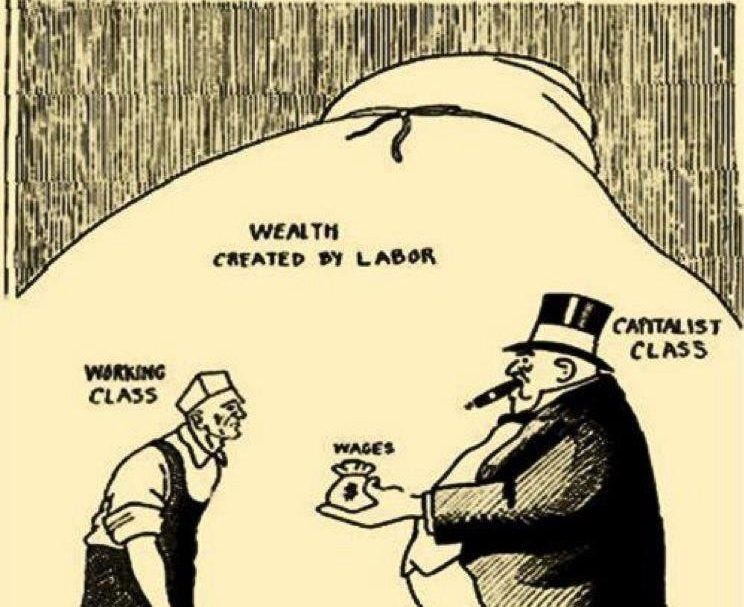
Not only does the wage system harm workers personally, but it also harms our entire society by leading to antisocial and destructive outcomes. Because capitalists want to maximize profit, there is always an incentive to cut workers' pay, offshore jobs, and lobby for laws that enrich the wealthy at the expense of the working class. Let this system continue long enough, and the working-class life will become so miserable that they will look for a political alternative — even if it’s a bad one.
Unless there is a socialist movement ready to channel their frustration into effective labor movements, the disaffected working class will turn to fascists and reactionaries who scapegoat their problems on immigrants, Jews, women, and other vulnerable communities. This outcome is inevitable because capitalism is contradictory. It requires both the worker's consent and exploitation. Contradictions can exist in political ideologies, but only if there is a plan to resolve them. As I wrote recently, liberal Zionism is collapsing because it couldn’t reconcile its contradiction between liberal democracy and Israeli ethnosupremacy. That’s the thing about political contradictions — they are going to resolve. The only question is whether they resolve beneficially or destructively. As socialists, we want to be well-positioned to lead society through the transition from capitalist decline to a more progressive, fairer world. If there is no socialist movement ready to speak to this need, then capitalism will collapse into fascism, as it has done, is doing, and will continue to do.
It is commonly said that men don’t die of prostate cancer, but die with prostate cancer. As the original cancer and chemotherapy destroy the body and weaken the immune system, new diseases appear. These secondary malignancies, as they’re known, can often be more harmful than the original ailment, and are frequently the official cause of death for the patient. As is cancer, so is capitalism.
The great flaw of liberalism is that it fails to account for the power capitalism creates. Liberal economists and theorists seldom examine how the private ownership of business, which they support, creates the oppression of minorities, which they hate. Sure, the Walton Family owning Walmart doesn’t make people racist or start foreign wars on its own. But the need to protect the interests of the private ownership class and give it access to new markets undoubtedly creates destructive secondary effects such as racism, misogyny, and imperialism. Why wouldn’t these issues stem from our capitalist structure? I’m always baffled when people dismiss the connections between capitalism and social issues by saying, “Not everything has to do with capitalism.” Of course, certain human behaviors have existed for millennia and will persist regardless of our mode of production. But claiming the operating system of all modern life bears no responsibility for worsening our problems is like saying monarchical feudalism isn’t responsible for the quality of life in the 13th century. Nothing happens in a vacuum.
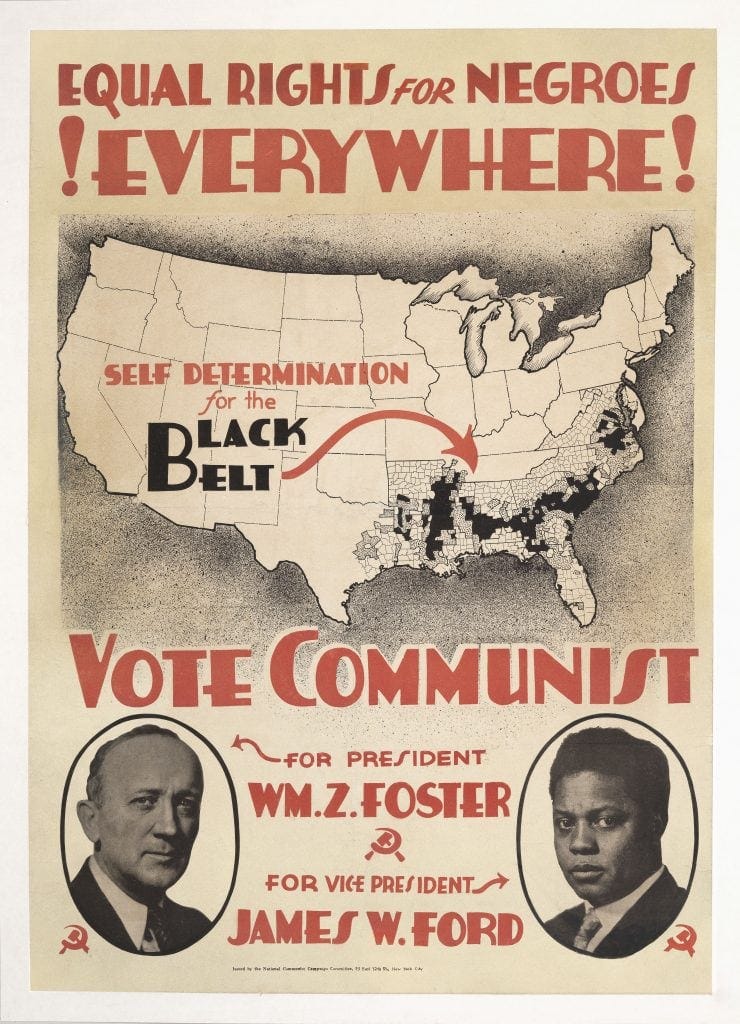
When proto-capitalists set up shop in 17th-century America, they imported slaves to provide the cheap labor needed to grow tobacco, cotton, and other cash crops. Chattel slavery is gone, but its legacy isn’t. Black families have about $15 for every $100 that White families have. And even when working-class wealth increases as a whole, the racial wealth gap still widens. Socialists support ending police violence and delivering reparations as valiant causes unique to the Black experience. But in our view, the oppression of Black Americans won’t end until the economic system that gives them a smaller share of the national wealth is replaced with one that distributes wealth equally. That is why communists were early champions of civil rights, long before Northern liberals lent the Black struggle their attention.
I disagree with Vladimir Lenin’s claim that imperialism is the highest stage of capitalism. (Capitalism has not ended, so how do we know what its most advanced form is?) But the Russian revolutionary was absolutely correct to show how capitalism drove foreign wars. Capitalists are sharks. They must swim or die. Stagnation is not an option. So, capitalists use their enormous power to pressure governments into conquering new territories for them to sell to and exploit. In centuries past, this drove the westward colonization of the American continent, leading to unspeakable crimes. Today, Donald Trump does my job for me. Why is America warring with Venezuela and Iran? “To take the oil,” the President admitted.
As socialists, we understand that immigrants aren’t crossing the Southern Border because they “want our freedom.” In our view, immigrants are being pushed into America, often against their own will. The North American Free Trade Agreement decimated the Mexican agriculture industry, driving millions of unemployed Mexican farm workers north. Known as “The Northern Triangle,” the nations of El Salvador, Guatemala, and Honduras generate a significant number of undocumented immigrants currently in America. While Mexican immigration is a direct result of capitalists’ conquest for cheap, cross-border labor, immigration from the Northern Triangle is largely due to the multi-generation cycle of violence that began with the 1954 American coup of the democratically elected Guatemalan government. Why did the CIA overthrow the Guatemalan president and begin a genocide? Because the United Fruit Company (now known as Dole) didn’t want the government redistributing their land. The case of Guatemala is the Marxist view of contemporary American politics in a nutshell: Capitalists drove American imperialism, which drove a wave of undocumented immigration, which Donald Trump used to win power, so he could launch wars on Iran and Venezuela to enrich his friends in the oil industry. Need I say more?
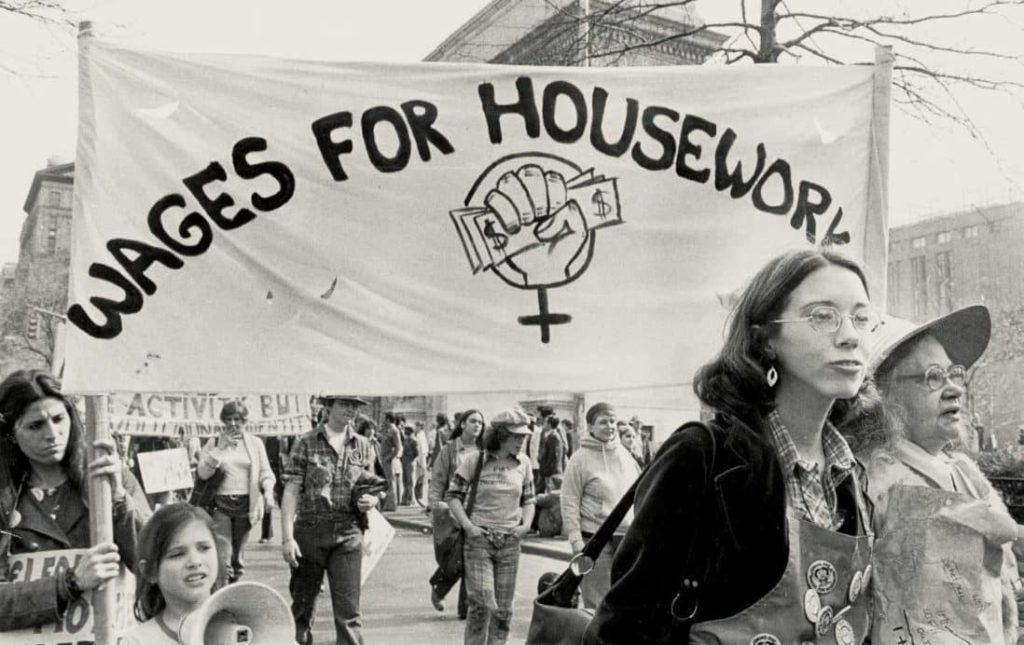
Even seemingly unrelated identitarian struggles can be traced back to capitalism. The feminist movement has fought for equal treatment of the sexes for centuries. Why do men earn an average of $300 more than women during the typical work week? Because capitalism requires the unpaid labor of homemaking and childcare, which has traditionally fallen to women. Even the highest-performing women workers will likely take time off to have a child and raise it. Though this is the most important job in human society, homemakers are neither compensated for their work nor for the risks they face in childbirth. Instead, patriarchy teaches that women “naturally” belong in the home. It’s interesting: The gender stereotypes of social conservatives just happen to support the capitalist system, which requires men to expend all their productive energy in workplaces making profit for bosses, while women prepare the home so men can comfortably rest for their next shift. What a weird coincidence!
Now this is not to say capitalism is the sole cause of racism, immigration surges, sexism, or war. All of these existed before capitalism, and will likely outlive it. But, just like previous stages of human development, such as feudalism, tribalism, and slave empires, capitalism has worsened these issues far beyond what they need to be. Will a post-capitalist war end racism and war? Of course not. Will it greatly reduce them? Undoubtedly.
Though it is unfortunate that the ailments of capitalism reach every element of American life, we are fortunate that this makes the fight for labor rights one of the most universally appreciated political messages, regardless of partisan identity. As I wrote after the 2024 election, red state voters consistently voted for pro-worker referendums that would be considered “progressive,” while voting overwhelmingly for Donald Trump.
“While polls are helpful, the strongest indication that voters want worker-friendly economics is the 2024 election itself. Six states held voter referendums on economic issues in 2024. All of the states that took the labor-friendly position voted for Trump. Arizona strongly rejected a decrease in tipped-worker pay, while Alaska (Trump +13.1%) and Missouri (Trump +18.4%) approved a $15 minimum wage and required paid sick leave. Nebraska (Trump +20.4%) voters also passed a requirement for paid sick leave.” — Centrists Shrank the Democratic Tent. Only the Left Can Expand It.
While it’s false to say that Americans outside of major metropolitan centers don’t care about marginalized communities, labor politics have a much wider appeal than identity-specific politics in rural areas. By centering the working-class struggle, the left has a foothold for building coalitions to advance other progressive causes in conservative areas. As Alabama coal miner Braxton Wright told New York Times correspondent Michael Corkery, he feels abandoned by the radicals in both parties. This leaves him in the political center, right next to the Democratic Socialists of America.
Michael Corkery: “When we put always sort of labels or how we identify Democrat, Republican, do you identify most primarily as a union worker?”
Braxton Wright: “Yeah. I mean, I consider myself a union worker. That’s what I am. And if possible, that’s what I’m going to stay.”
MC: “So where does that leave you politically?”
BW: “Kind of in the middle of the road. You know? We’ve had a lot of support from local and state DSA chapters. The Birmingham DSA chapter has showed tremendous support for us.”
MC: “What’s that, the DSA?”
BW: “The Democratic Socialists of America. They’re very pro-worker. You know what I mean? They support workers. It doesn’t matter the industry. To them, we’re still a worker. We work in fossil fuel. But at the end of the day, we’re still a worker that is important as a worker in another industry.”
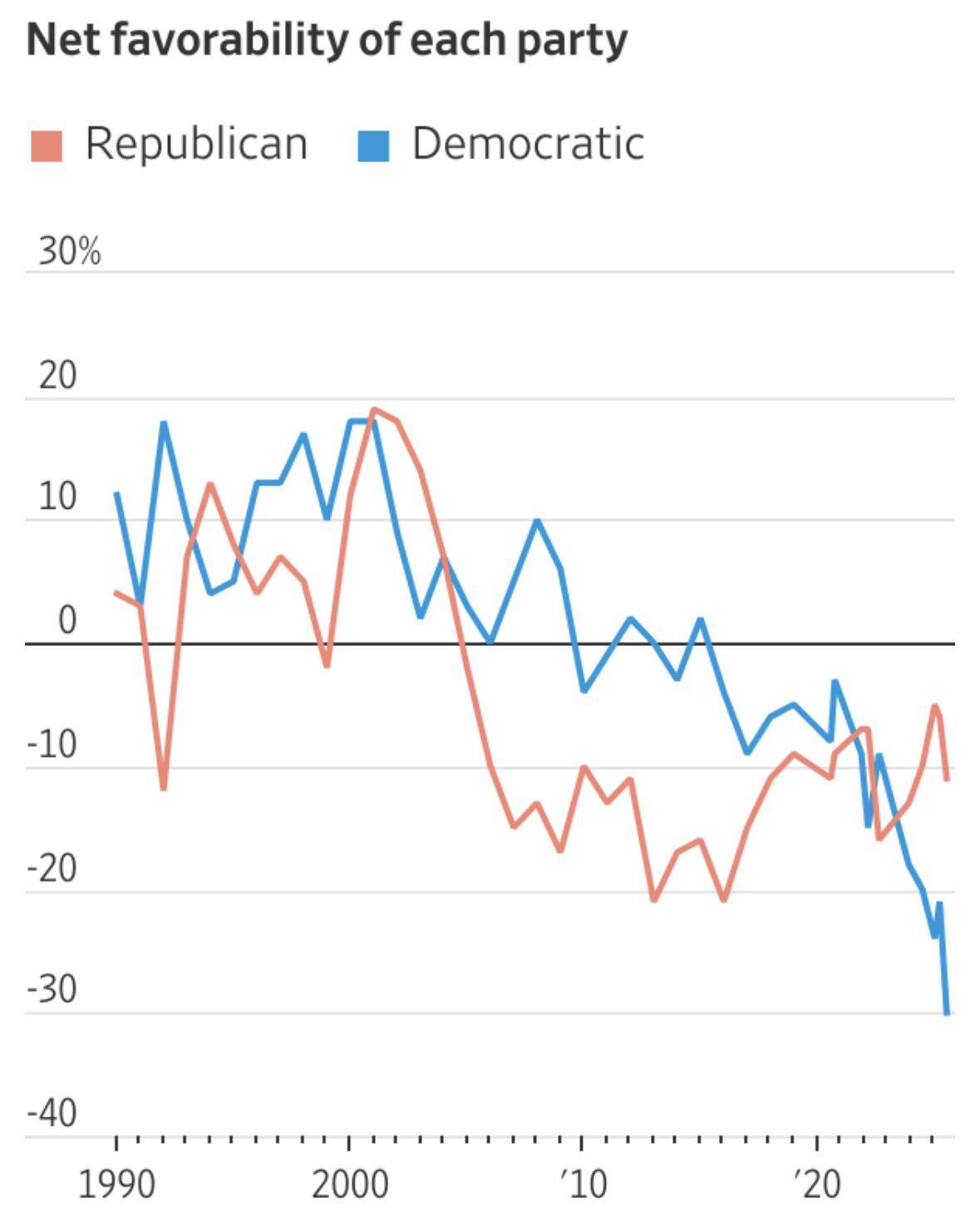
Workers from traditionally conservative environments like Braxton Wright might not support the full progressive agenda of anti-war campaigns, immigrant rights, and gender equality. But because the socialist movement can reach these Americans with concern and advocacy for their daily struggles, that is the principle the American left should unite around. Once unity around the labor struggle is established, it is much easier to promote equitable causes. Not only because working-class Americans trust socialists, but because, as we have seen, the wars we aim to stop and the oppression we seek to end are consequences of the same system exploiting workers like Braxton Wright. There is no better time for the American left to make this case. As each of America’s two capitalist parties has strayed from the economic concerns of working-class Americans, they’ve fallen out of favor with their constituents. In the 1990s, the Democratic Party turned away from supporting unions in search of mystical moderation, leading to a cataclysmic fall-off in public approval. The Republican Party experienced an uptick in support during the Biden years, as Donald Trump spoke to the economic concerns of millions of Americans that were going unnoticed by the Democratic President. Yet as soon as Trump took office, Americans realized he was all talk. More concerned about ideological issues such as anti-wokeness and supporting Israel, Trump and the GOP’s popularity has crashed as well. America is waiting for a working-class movement, and we should give it to them.
Political movements are often referenced as “tents.” Whether the coalition under the tent is big or small, all tents need a tentpole; something to unite around that holds up the tarp protecting your political coalition from the rain. Socialists believe that this tentpole should be the labor struggle. Not only because the exploitation of workers is the foundational crime of capitalism, but because all other problems, as well as the solutions to them, grow out of it.
By showing all working-class Americans that their struggles are linked, we unite them in pursuit of a universal solution — socialism.
I’ll be teaching a May Day workplace organizing training at the Colorado People’s Center in downtown Denver this Saturday! Come stop by and check out all the other May Day celebrations we have going on this weekend.
If you appreciated this essay, please click the ❤️ to help it rise in Substack’s algorithm. Don’t forget to subscribe so future articles are delivered to your inbox. If you’re a returning JoeWrote reader, consider supporting my work with a premium subscription. For the cost of just one cup of coffee a month, you can help me keep creating content like this. Plus, you unlock everything JoeWrote has to offer.
Thanks in advance!
Happy May Day — Joe
A lot of thoughts ran through my head reading this, mostly having to do with the artificial, and therefore horseshit, divisions that many in the USian labor movement have created for themselves; one core concept the domestic movement can't get right is the essential value of all work. White building trades unionists look down on labor movements that are significantly non-white (especially non-white women) in leadership and their rank and file. One view is that this started with Samuel Gompers and the birth of his AF of L: No use for non-craft workers, those who worked mills, docks, and factories--who also happened to include thousands of Eastern European immigrants in their numbers. Internal divisions and perspective rifts among workers persist today. Naturally, because women are seen as "having the option" to revert to child-bearing and maternity leave where it exists, workers' movements led by and inclusive of mostly women get short shrift in the taxonomy of "worthiness" to lead and drive discussions about workers' rights. Illustration of the latter was front and center in my labor movement career across two unions. The predominantly male members of the IUOE looked down on those in SEIU whom I had previously represented; the latter were viewed as unskilled janitors or "just" social and office workers. Likewise, the value of publicly-funded labor (highway workers, planners, analysts) elicited eye-rolls among those unionized in the private sector (again mostly male) who operate cranes, heavy equipment, and complex building systems. It is not as though women are frozen out of the latter; apprentice waves admit some. The "man's work" culture, though, is a disincentive for women and in some cases people of color to grind through apprenticeships and attempt to function as peers once they achieve journey-level status.
All of the above-listed artificial divisions delight capitalists as they create barriers to the development of class consciousness.
May Day is about the value of *all* labor, though I have a few problems with including cop unions in the discussion given those groups tend to identify with the capitalists who send them out to hurt the working class.
Yes thank you for elucidating reminder of what May 1st means to Labor. Power to the people. I look forward to more articles including on the labor movement in the US.