

When the Metaverse launched in 2021, Mark Zuckerberg stans would beat you with a lead pipe if you didn’t praise the Facebook founder for personally accelerating human evolution. Zuckerberg pitched the project to the world as a deeper level of technical progress, envisioning an internet you could live within and calling it “the ultimate expression of social technology.” Zuckerberg’s personal fascination with the “embodied internet” was so deep that he rebranded Facebook as Meta and made grand statements about how the Metaverse would forever change the world’s most recognizable social media company.
“In the coming years, I expect people will transition from seeing us primarily as a social media company to seeing us as a metaverse company.” — Mark Zuckerberg, 2021
For the most part, the business world bought into the Metaverse. Atari bought $4.3 million worth of Metaverse “property.” Someone paid $450,000 to be SnoopDog’s “neighbor.” Another $650,000 was spent on a yacht. Big-name brands such as Gucci and Crate & Barrel bought stores in the Metaverse. Disney hired a “chief metaverse officer.” More absurd than any of these worthless purchases was McKinsey’s report, titled Value Creation In The Metaverse, which claimed that 15% of all corporate revenue would come from the Metaverse by 2027. The report also predicted that by 2030:
50% of live events would be held in the Metaverse,
80% of commerce would be impacted by in-Metaverse consumer activity,
Most learning and development would happen in the Metaverse,
Manufacturers and telecommunications companies may have virtually all assets and processes represented in the Metaverse,
The average internet user would spend six hours a day in the Metaverse,
The Metaverse would generate $5 trillion in value.
Yeah, none of this came true. Not even close. The Metaverse “stores” are more deserted than shopping malls. Nobody logs on. I imagine the crew of the derelict digital yacht committed mutiny and turned pirate. With little consumer interest and no financial return in sight, Meta recently announced it was sunsetting Horizon Worlds, the name of the Metaverse app. The company soon walked that back to say they weren’t closing the Metaverse, but rather “shifting focus” away from it. About 10% of Meta’s virtual reality workforce was laid off, and Meta recruiters soon began poaching talent from Robolox, signalling that its VR work would focus on video games rather than a digital world going forward. All told, Meta lost about $80 billion on the Metaverse, to say nothing of the other companies and consumers that spent tens of millions buying worthless digital trinkets.
I Thought They Were Geniuses?
My gleeful schadenfreude at rich a-holes wasting money aside, the Metaverse saga shows how hollow capitalism is as an ideology. At every point in our lives, we are told that success in the capitalist system is the result of hard work, intellect, and a general superiority over those making up the unwealthy masses. Capitalism is the ultimate meritocracy, I’m told. Like the most courageous lion rises to lead the pride, billionaires have achieved their high social position on merit. Therefore, the capitalist ideologues say, we should let them command and dictate not just the global economy, but the conditions of our everyday lives. After all, who are you, a mere peasant, to doubt the greatest of Mark Zuckerberg, our modern monarch?
“You merit wealth, fundamentally by creating it (or otherwise obtaining it through voluntary trade). It is the creation of value that determines one’s wealth on a free market and it sets the standard for what it means to ‘earn’ wealth.” - The real reason J.K. Rowling deserves her billions, by the Ayn Rand Institute
This argument was always weak. But it's even more ridiculous to stand by in modern times, when every billionaire is broadcasting their idiocracy through every microphone they can find. For example, here’s Marc Andresen saying introspection was invented four hundred years ago.
First, Andresen thinks introspection is “talking about the past.” It’s not. To be introspective is to look inward and study yourself to better understand and control your future motivations and actions. It’s actually the exact opposite of looking backwards. Second, “Before four hundred years ago, it never would’ve occurred to anybody to be introspective.” Yikes man. Socrates’ “The unexamined life is not worth living” is the oldest and most notable phrase in all of philosophy. Such a big head, such a little brain.
Though the dumbfounding public statements of billionaires indicate they’re far from the brightest humanity has to offer, the Metaverse catastrophe shows they’re not even the expert businessmen they’re made out to be. Elon Musk tweeting “my based 20-year-old son orders milk at sushi restaurants” while he’s found guilty of fraud shows these guys are pretty dumb, but Mark Zuckerberg’s Metafuckup disproves the theory of capitalist hierarchy altogether. The Metaverse wasn’t a half-baked idea taken on a whim. Zuckerberg had been building towards it for a better part of a decade, since acquiring the virtual reality headset company Oculus for $2 billion in 2014. By all accounts, the Metaverse was Zuckerberg’s brainchild. He e expected it to be bigger than Facebook, which is why he changed the company name and reoriented it away from social media. And because Zuckerberg said this is the next big thing, capitalist zealots who believe wealth = smart diligently followed along. It’s no surprise that the Metaverse items mentioned above cost hundreds of thousands of dollars. Those who have money are the most likely to believe in the hierarchical model, as it justifies their prestige. If someone wealthier than them, who is therefore smarter than them, says the Metaverse is the place to invest, they will happily do so. Unsurprisingly, some of the biggest dupes were the world’s richest people. Following Zuckerberg’s rollout, Bill Gates said most work meetings would take place in the Metaverse by 2025. Acclaimed venture capitalist Matthew Ball praised Zuckerberg’s bet on the Metaverse as a “brilliant example of founder conviction, ability, resources, and commitment.” He even equated the platform to the discovery of a livable solar system.

Right Place, Right Time
I’m not one to believe that every billionaire or millionaire is only rich because they had rich parents or friends. There is an element of skill and intellect that is required to acquire that much money. However, as all available evidence shows, those attributes are far less important to acquiring unimaginable wealth than simply being in the right place at the right time.
For the most part, our billionaire overlords are only wealthy because they had access to capital, connections, and a somewhat good idea at the birth of the internet. Elon Musk and the rest of the PayPal Mafia (Peter Thiel, David Sacks, Reid Hoffman, and many other tech capitalists) were the first to commodify sending money over the internet. It’s a good idea, but it was pretty basic. If they hadn’t founded the various companies that eventually merged into PayPal, there’s no doubt somebody else would have done it. It’s not like something only they could come up with. They deserve credit for getting it done, but the main ingredient that separates them from the rest of us is that they were fortunate enough to 1) Have or access the capital necessary to start a company, and 2) Be born at a time that put them at a professional age at the boom of the internet. The same goes for other members of the 1%. Dave Portnoy started Barstool as a sports-and-humor newspaper and was lucky to be the first to combine humor and athletics on a blog. If he’d been born a decade earlier or later, he’d have been too soon or too late for Barstool to become what it is. Mark Cuban became a billionaire when he sold Broadcast.com, a primitive streaming library hyped by the dot-com bubble, to Yahoo for $5.7 billion. Cuban was fortunate to be in the right place at the right time, riding the wave of over-investment and cashing out at the right time. Though it propelled the Shark Tank host to billionaire status, the sale of Broadcast.com is considered one of the worst business deals of all time.
Because so many of our billionaire class owe their wealth to the good fortune of having early access to the internet, it’s best to think of these capitalists as those who seized land and resources during the 19th-century Manifest Destiny land grab. As the U.S. Army waged genocidal conquest across the continent, soon-to-be land barons tagged behind, snatching up “vacant” land and using it to build exorbitant wealth. I’m sure homesteading, mining, and railroading had their challenges, but those capitalists had the advantage of a once-in-a-generation opportunity that previous and subsequent generations did not. The same goes for most (if not all) modern billionaires who jump-started their bank accounts with early-internet adventurism. The public invention of the internet created an entire digital continent, just waiting for the lucky few to come and monetize it. As we’ve seen, it doesn’t take a genius to set up a digital payment transfer, online sports humor blog, or social networking site. They just had to have a leg up on everyone else and be in the right place at the right time.
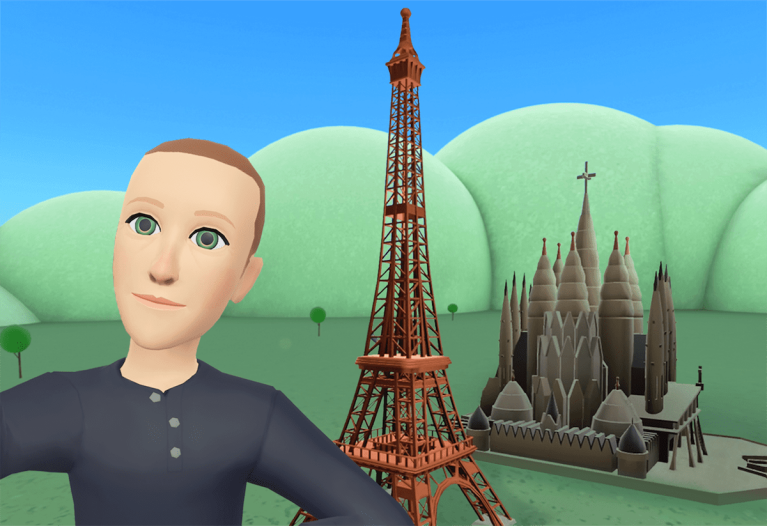
While fortunate timing is the key ingredient in most billionaires’ success, Mark Zuckerberg got luckier than most. He was fortunate that no one was so much of a loser as to create Facemash, a Facebook prototype that ranked Harvard students' hotness using photos stolen from the school’s database. He got even luckier when he wasn’t kicked out of Harvard for the data breach, and his fortunate streak continued when the Winklevoss twins told him about their idea for a collegiate social site, which he took and turned into Facebook. He got even luckier when, after the school newspaper ran a story about his intellectual theft, he still wasn’t kicked out of Harvard for breaking into the editors’ email accounts by using their Facebook logins. Outside of Facebook, which you can’t really attribute solely to Zuckerberg’s ingenuity, the man really hasn’t invented or created anything. He bought Instagram explicitly to stop it from becoming a Facebook competitor. It’s a clear breach of antitrust law, but wouldn’t you know it, wealth brings special privileges. And as the complete worthlessness of the Metaverse shows, Zuckerberg isn’t good at product creation or business. Zuckerberg’s motive for creating the Metaverse arose from a desire to humanize the internet. As he told The Verge, living through “small, glowing rectangles” on our phones is “not really how people are made to interact.” That’s true. But humans aren’t supposed to interact on the internet. Normal people recognize that the internet is a proxy of human interaction, not a substitute for it. It’s fun and useful, but ultimately, we’d much rather live. So, when we’re done working on Zoom or scrolling TikTok, we log off, hang out with our friends, go to the gym, or do any of the other countless activities humans have been doing long before the internet was invented, and continue doing as long as it exists. We certainly don’t want to dehumanize ourselves further by taking our real-world experiences and putting them online. This is why the Metaverse failed. Mark Zuckerberg misunderstands why humans are on the internet in the first place. Because he’s kind of dumb. He thought that when people felt detached from reality after spending the entire work week on their computers and phones, they’d hop into the Metaverse and “go” to a concert with their friends. That’s pretty stupid. Everyone actually wants to get away from their screens and go to a concert with their friends. This fundamental inability to understand basic human desires is why Zuckerberg launched a $80 million cash-burning pit, and why every sycophant working at Meta and in the larger business world clapped like seals, because that’s what capitalist zealotry commands them to do. Which is why all the Metaverse promotional material looked like this.
It’s worth noting that Meta isn’t pivoting away from the Metaverse back to social media. Like every other billionaire born in the internet era, Zuckerberg is investing heavily in artificial intelligence. Just yesterday, Meta announced a five-year, $27 billion AI partnership with Nebius. As with the Metaverse, the business potential of AI is theoretical. The product is nowhere near what we were told it would be, but investors keep investing in AI on the promise that it will revolutionize the world.
Don’t worry. I’m sure this time, the overhyped tech fantasy rapidly consuming humanity’s resources will work out. It’s not like the inventor of the Metaverse could be wrong.
If you enjoyed this article, please click the ❤️ to help my work rise in Substack’s algorithm. If you’re a first-time reader, remember to subscribe so future posts are delivered to your inbox. If you’re a returning reader, consider upgrading to a supporting subscription. For the cost of just one cup of coffee a month, you can support my work and unlock everything JoeWrote has to offer. Thanks in advance!
In Solidarity — Joe
This is a perfect example of private sector "waste, fraud, and abuse." Markets don't prevent misallocation of resources, they amplify it when only a few people control where capital goes
Great article demolishing the capitalist meritocracy myth and forensically picking apart Zuckerberg's Metaverse folly. I've only just been introduced to JoeWrote and I like what I'm reading.