

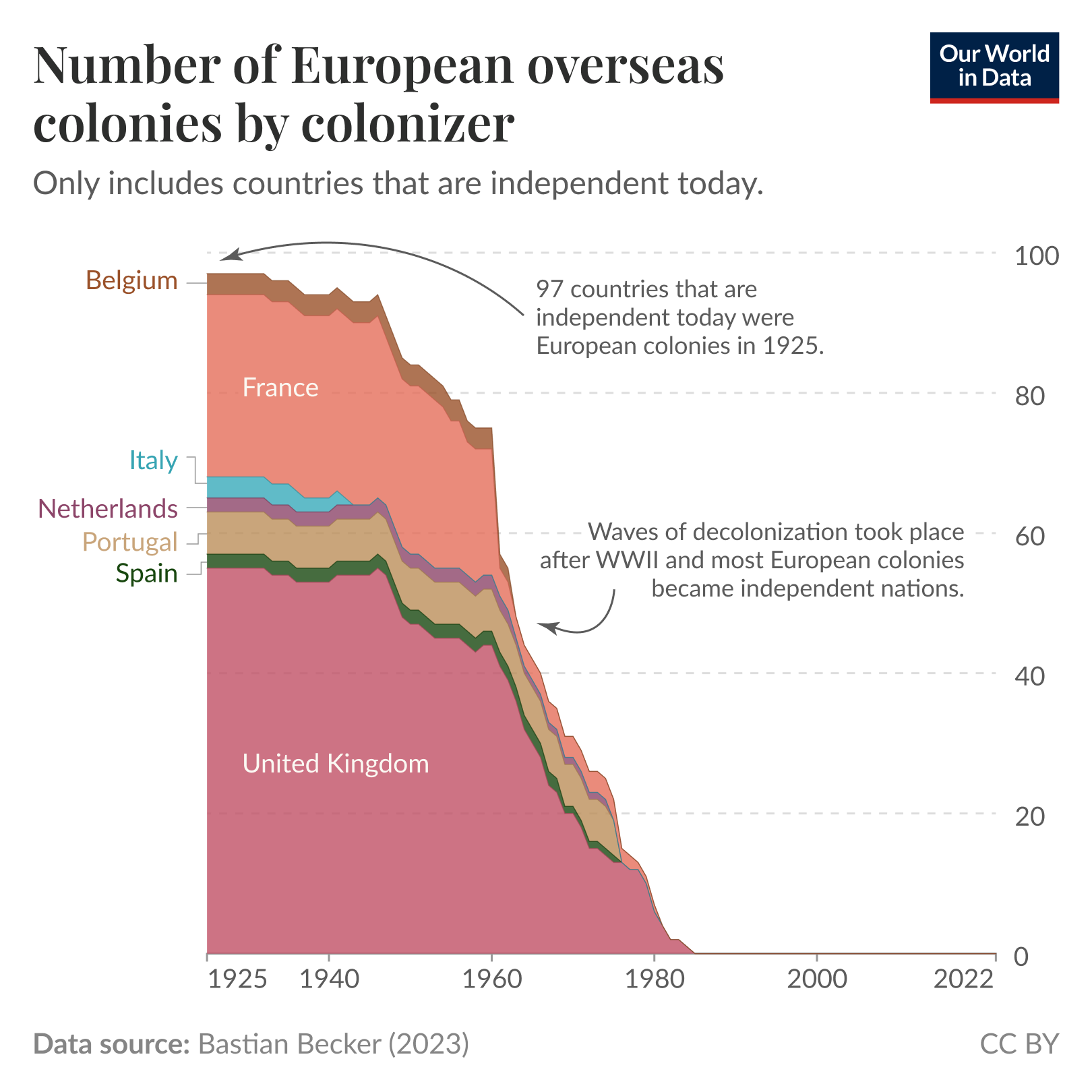
On the eve of World War II, one-third of Earth’s population was colonized. Everyone had a one-in-three chance of being born into a nation ruled by foreign, undemocratic leaders who exploited the indigenous population’s labor and resources for profit and prestige. Then war came. After the dust settled, a wave of decolonization emancipated what is now called the Global South (Africa, Latin America, Southeast Asia, and the Caribbean) from what is now called the Global North (North America, Europe, and Russia). Within a few decades, Europe’s once-mighty control of overseas territories disappeared. In 1925, Europe held almost one hundred colonies. By the 1980s, none.
Though the developed capitalist nations of the North Atlantic relinquished formal sovereignty of these emerging nations, they continued to dominate them through exploitative economic arrangements. Though the British Union Jack and French Tricolore were lowered from flagpoles overlooking India and Algeria, European and American capitalists structured the global economic system to ensure that decolonization did not disrupt the flow of money from poorer Southern countries to richer Northern countries. This new form of colonialism was dubbed neocolonialism by Kwame Nkrumah, the Marxist president of Ghana.
“The essence of neo-colonialism is that the State which is subject to it is, in theory, independent and has all the outward trappings of international sovereignty. In reality its economic system and thus its political policy is directed from outside. The methods and form of this direction can take various shapes. For example, in an extreme case the troops of the imperial power may garrison the territory of the neo-colonial State and control the government of it. More often, however, neo-colonialist control is exercised through economic or monetary means. The neo-colonial State may be obliged to take the manufactured products of the imperialist power to the exclusion of competing products from elsewhere. Control over government policy in the neo-colonial State may be secured by payments towards the cost of running the State, by the provision of civil servants in positions where they can dictate policy, and by monetary control over foreign exchange through the imposition of a banking system controlled by the imperial power.” — Neo-Colonialism, the Last Stage of Imperialism
Each developed nation had its own one-sided trade treaties and economic arrangements that could be described as neocolonial. But the highest form of neocolonialism was the Bretton Woods system, which made the U.S. dollar the staple global currency and established the International Monetary Fund (IMF). Uncoincidentally, this system was configured towards the end of World War II by the Allied Powers, just as decolonial momentum was sweeping through the Third World.
The IMF positions itself as a friend to the Global South by offering formerly colonized nations much-needed loans. After all, these governments don’t have much money, because the colonizers took it. To receive these loans, borrowing nations must cut social programs such as unemployment and public-sector jobs. Allowing investment from foreign capital isn’t required to receive an IMF loan, but it happens in almost every situation. This devious combination does two things. First, because the capital base is international, the majority of the value created will leave the country in the form of profits. Second, the austerity program squeezes the working class and forces them to accept even lower wages, keeping the population impoverished to ensure foreign capitalists reap the maximum profits. A Harvard study found the IMF’s exploitation of West Africa throughout the 1980s and 1990s decreased education spending by 25%, healthcare spending by 50%, and caused an estimated half-a-million unnecessary childhood deaths in Africa. Another study from 2022 called the IMF’s entire existence into question:
“Although the International Monetary Fund (IMF) claims that poverty reduction is one of its objectives, some studies show that IMF borrower countries experience higher rates of poverty. This paper investigates the effects of IMF loan conditions on poverty. Using a sample of 81 developing countries from 1986 to 2016, we find that IMF loan arrangements containing structural reforms contribute to more people getting trapped in the poverty cycle, as the reforms involve deep and comprehensive changes that tend to raise unemployment, lower government revenue, increase costs of basic services, and restructure tax collection, pensions, and social security programmes.” — The effects of IMF loan conditions on poverty in the developing world
While neocolonialism might be cancer upon the Global South, it’s a perpetual cash cow for the Global North. In just 2020 alone, Global South nations paid over $1.2 trillion in debt servicing to capitalists in the Global North. Not only is neocolonialism lucrative, but it also offers plausible deniability. The powerful nations that extract resources portray themselves as mutually beneficial business partners to their economic subjects, avoiding the stigmatization associated with the brutal colonization of centuries past. While I won’t say neocolonialism is good, at least it involved less violence directed at the subjected population. Unfortunately, the Trump Administration, specifically Secretary of State Marco Rubio, has reasserted the rhetoric and violence of the colonizers of old.
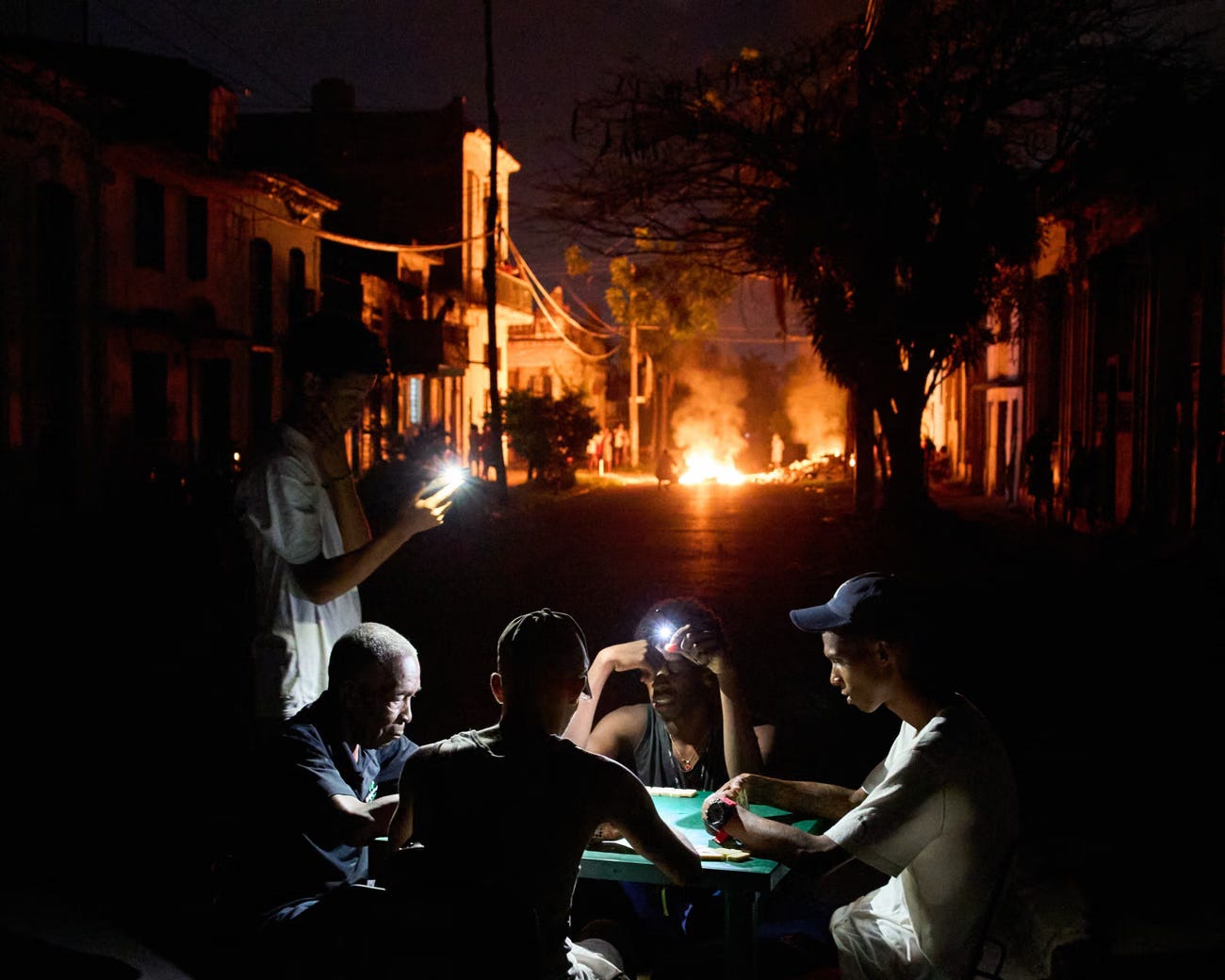
As soon as he was inaugurated, President Donald Trump instituted a “maximum-pressure” foreign policy with specific hostility towards Latin America’s two socialist-led countries, Venezuela and Cuba. On his very first day back in office, Trump revoked Biden’s decrees and reclassified Cuba as a state sponsor of terrorism, severely restricting the financial flow to and from the island. By the end of the first week, an executive order declared Cuba “constitutes an unusual and extraordinary threat” to the US, and within a few months, Trump re-imposed travel restrictions, prohibited more financial transactions, and reinforced the already-suffocating embargo. In January of this year, Trump blockaded fuel from reaching the island, then tightened the noose in May with even more sanctions on Cuba’s energy, metals, mining, financial services, and security sectors.
The impact has been devastating. The United Nations accused the United States of driving Cuba towards a “humanitarian collapse.” As with every catastrophe, Cuba’s most vulnerable populations are the most impacted. Infant mortality has doubled in recent months, childhood cancer survival rates have fallen by 20%, and supplies of life-saving medicine are at 30%. Defenders of the U.S. embargo often claimed it didn’t prevent food or medicine from reaching the island. This was dubious in the pre-Trump era. Now it’s laughable. The U.S. government is depriving the Cuban people of food, medicine, and a modern life because it disagrees with the Cuban government’s ideology.
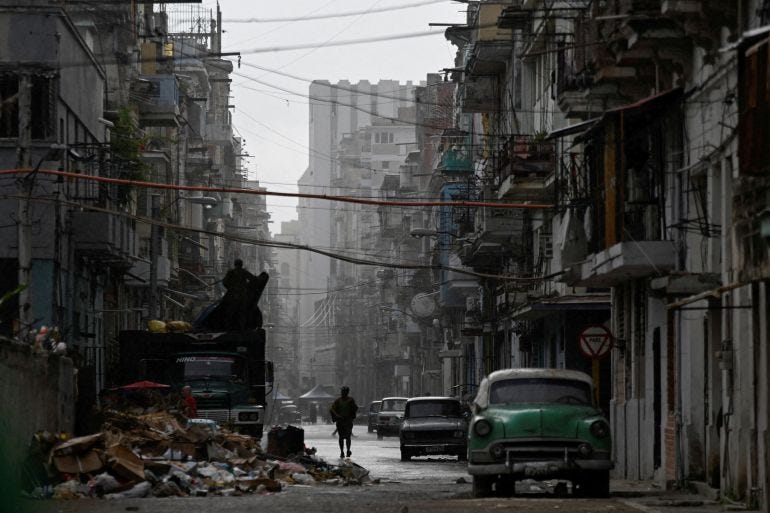
The sanctions regime has also ruined Cuba’s agricultural sector, forcing farmers to sell off large swaths of land to pay their bills. As a result, barely anything is grown on the island nation, severely accelerating the U.S.-caused crisis. Four House Democrats traveled to Cuba last week and described the situation as a “Silent Gaza.” The analogy is fitting. Not just because of the widespread presence of death and hardship, but because it is the deliberate choice of American foreign policy.
“Such severe sanctions packages that target entire sectors of an economy and produce broad, indiscriminate and harsh effects on populations are incompatible with basic principles of international human rights law.” — Volker Türk, United Nations Human Rights Chief
Under this cataclysmic pressure, Cuban President Miguel Díaz-Canel recently liberalized the economy. With approval from parliament, Díaz-Canel allowed private real estate development, the operation of private banks, and the sale of state-owned companies to foreign investors. The Communist Party of Cuba, also known as the Partido Comunista de Cuba or PCC, justified the move as following in the footsteps of the Chinese and Vietnamese Communist Parties, which have urged Cuba to liberalize for many years. Truthfully, I think a man will say anything when you put a gun to his head. Still, Díaz-Canel’s retreat on the once-firm centralized economy wasn’t enough for the Trump Administration. Last week the U.S. Army leaked that it had begun preparing for an airborne invasion of Cuba. A year ago, I would have considered this bluster. But now that the United States has already recolonized Venezuela, any threat of military invasion must be taken seriously.
In the seven months since shredding international law to kidnap President Nicolás Maduro, the United States has turned Venezuela into an American colony. Under the direction of Secretary of State Marco Rubio, the gradual exploitation of neocolonialism has been discarded in favor of the direct colonial rule found in centuries past. This time, American colonialism is enforced with the murderous armaments of the 21st century.
Immediately after the deposition of Maduro, the Trump administration gave Venezuela leaders an ultimatum: submit or die. With direct threats to them and their families, as well as Venezuela’s civilian infrastructure, Maduro’s Vice President, Delcy Rodríguez, and other government officials agreed to do as Rubio wished. As a result, nearly every government function is now being run by Washington. Marco Rubio’s Republican colleagues have begun calling him “viceroy”, a colonial-era title given to appointed rulers who oversaw colonies on a monarchy’s behalf. The American Secretary of State now controls Caracas’ finances. Revenue from Venezuelan exports is controlled by the U.S. Treasury, which distributes it to Venezuelan banks friendly to Washington’s interests. Sanctions still plague the Venezuelan people. Yet, American oil companies have been allowed to operate without penalty, ensuring the profits of the world’s largest oil flow to the Global North. Rubio has even pushed out some European oil companies that operated before the recolonization to make room for the GOP’s longtime allies in the American oil industry. Because it wouldn’t be colonization without a competition between rich Northern nations.
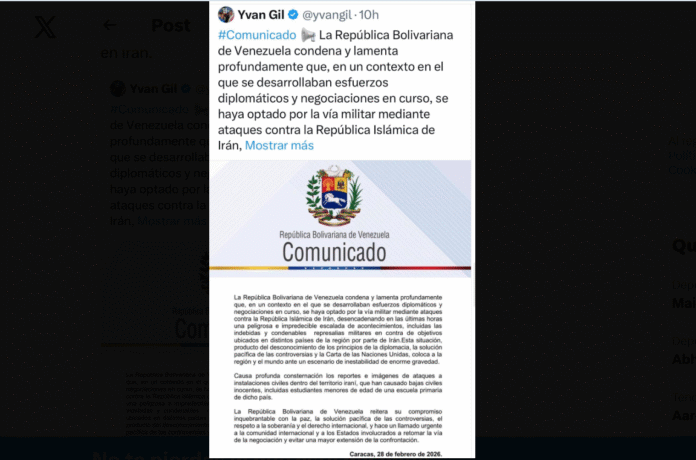
Marco Rubio also determines Venezuela’s foreign policy and international relations. The Rubio regime recently took full control of oil projects co-owned with the Russian state producer, bringing more energy assets under American control while pushing one of Maduro’s strongest allies out of the region. At this point, Venezuelan officials are puppets who dance on the world stage whenever Rubio tugs their strings. The Secretary of State publicly announced that Delcy Rodríguez would travel to India, something that greatly surprised the official Venezuelan President. After the U.S. attacked Iran, Rubio directed the foreign minister to delete social media posts criticizing the attack. He complied.
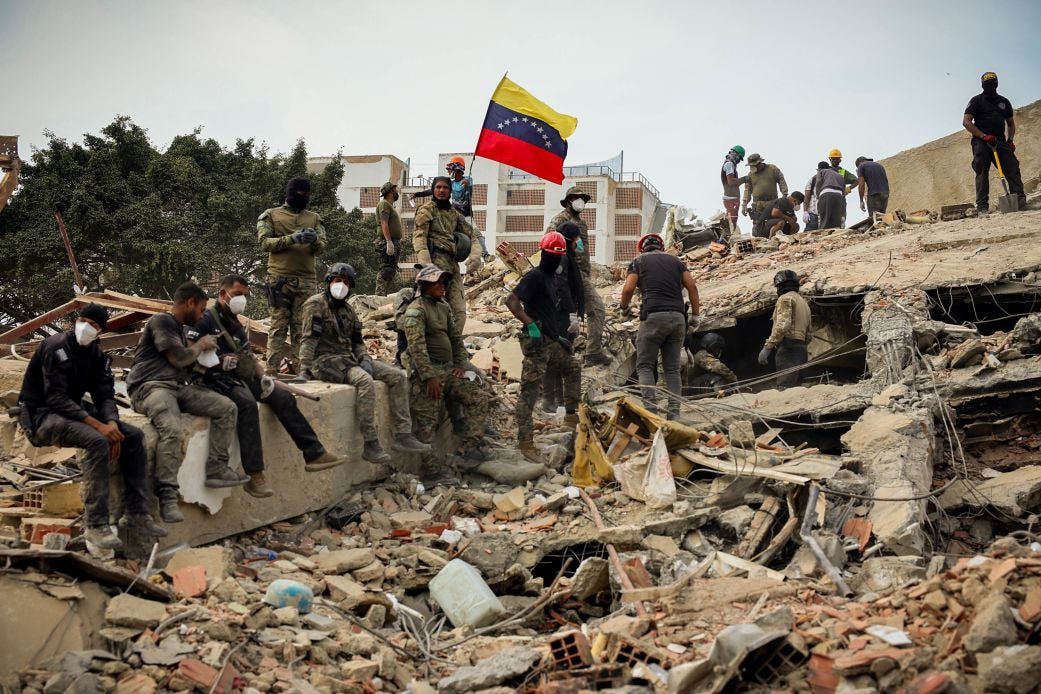
Last month, a pair of devastating earthquakes crippled Venezuela and killed at least 5,000. The disaster has only increased the hardship and suffering of recolonized Venezuelans. Crumbled buildings and makeshift field hospitals force images of Gaza back into our minds. No matter where in the world we look, the fingerprints of American imperialism are inescapable.
While neocolonialism sometimes requires military force, the second Trump administration’s Latin American policy goes far beyond what Kwame Nkrumah articulated. This is not neocolonialism. It is recolonization, the mindset of 19th- and 18th-century European imperialists empowered with the 21st-century weaponry of Lockheed Martin and Boeing. When Marco Rubio spoke at the Munich Security Conference earlier this year, he identified his family ancestry as descending from Spanish colonizers, separating himself from Mestizo Latin Americans, who trace their ancestry to indigenous and formerly enslaved populations. The speech was telling. When Marco Rubio looks at the poor, despondent masses subjected to his dictatorial rule, he does not see people who remind him of himself or his family. Instead, he envisions himself as the European colonizer, the rightful overlord to those who dared challenge American hegemony.
“And do you know that in the year that my country was founded, Lorenzo and Catalina Geroldi lived in Casale Monferrato in the Kingdom of Piedmont-Sardinia. And Jose and Manuela Reina lived in Sevilla, Spain. I don’t know what, if anything, they knew about the 13 colonies which had gained their independence from the British empire, but here’s what I am certain of: They could have never imagined that 250 years later, one of their direct descendants would be back here today on this continent as the chief diplomat of that infant nation. And yet here I am, reminded by my own story that both our histories and our fates will always be linked.” — Marco Rubio, February 2026
Donald Trump has been even more forthcoming with his imperialist designs. Long before Maduro was deposed, he said he wanted to “run” Venezuela because he “wanted their oil.” Unfortunately, that project was successful. Now, the same tactics of recolonization are being directed at Cuba, a far poorer, weaker nation than Venezuela.
By all available signs, Marco Rubio will not stop until he achieves his lifelong dream of recolonizing Cuba, killing thousands, and destroying the left-wing project that toppled the oppressive Batista regime, which Rubio’s own family fled from. (He must have forgotten that part of his family's history during his Munich speech.) A recent State Department “report” argued Cuba was the driving force of political terrorism in America. Entitled “Cuba: The Capital of 21st Century Communism,” the 100-page document manufactures consent for the military invasion of the island, as well as wide-reaching domestic political repression. Rubio lists forty-three individuals and groups as associated with Cuba’s terrorism, most notably the Amazon Labor Union, Code Pink, and the Democratic Socialists of America.
As with imperialist projects of generations past, recolonization will torment the Global South, scarring unfortunate nations and the American homeland long after its architects are dead and buried.
If you appreciated this essay, please click the ❤️ to help it rise in Substack’s algorithm. Don’t forget to subscribe so future articles are delivered to your inbox. If you’re a returning JoeWrote reader, consider supporting my work with a premium subscription. For the cost of just one cup of coffee a month, you can help me keep creating content like this. Plus, you unlock everything JoeWrote has to offer.
Thanks in advance!
In Solidarity — Joe
It’s scary how true this all is: forget about neocolonialism, Viceroy Marco and the orange king want absolute power over those people who they think are inferior! And of course American money is the real driver of this re conquista!
Rubio's family left Cuba during the Batista dictatorship, so it is incorrect to say they fled Communist rule