

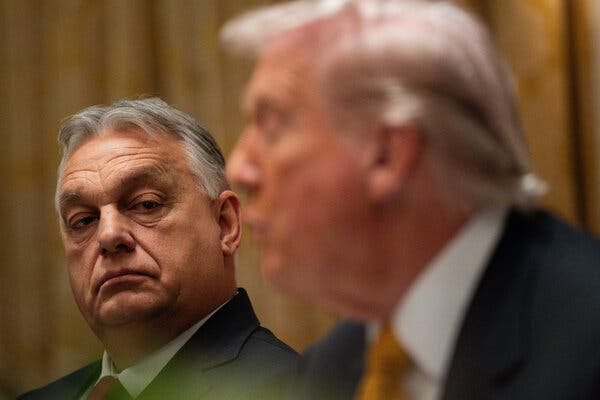
When Donald Trump reentered the White House in 2025, he had far more international allies than he did in 2017. From Buenos Aires to Budapest, far-right politicians and their movements were winning democratic elections on explicitly reactionary platforms. In each case, the national conservative agenda was the same: cut social programs, scapegoat immigrants, persecute queerness, and defend “Western civilization” (whatever that means). The timely ascendence of fascist leaders was no coincidence. It was a meticulously planned political project that crossed oceans and traditional geopolitical divisions. Covering this phenomenon in 2023, The Institute for Policy Studies warned 2024 was the far-right’s “greatest opportunity since the 1930s to push the needle towards fascism.” This sentiment was echoed by the fascists themselves. At the conclusion of one international rightist gathering in 2024, the keynote speaker announced that “An international coalition of national forces has been established.” When Donald Trump won the 2024 presidential election, it seemed to confirm that this international nationalism was shaping the future of geopolitics, replacing the liberalism in the post-World War II liberal order with an illiberal substitute. Writing in Jacobin days after Trump was sworn in, international relations scholar Somdeep Sen warned that this movement was nearing global hegemony.
“From Rome to Buenos Aires, and from San Salvador to New Delhi, right-wing leaders are similarly optimistic that, with a friend like Donald Trump at the helm in Washington, an illiberal reconstruction of global politics is within reach.” — Far-Right Leaders Are Forging a Gobal Alliance
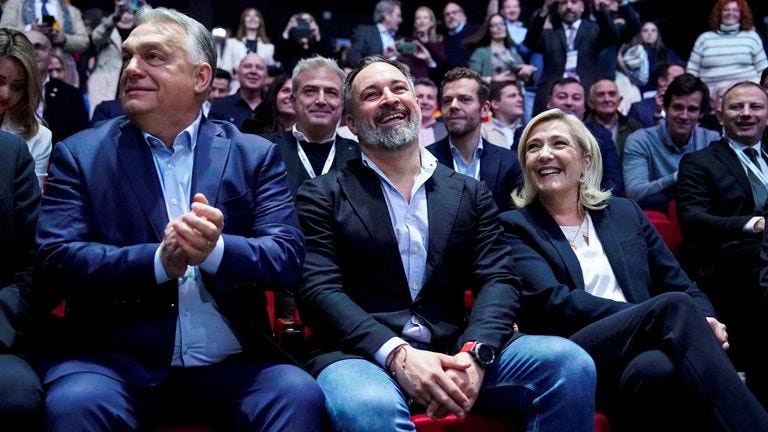
Sen was foresightful. When Trump was inaugurated for the second time before an audience of oligarchs, he had friends in every corner of the map. Libertarian Javier Milei held the Argentine presidency, Mussolini-praising Giorgia Meloni was prime minister of Italy, Salvadorian Nayib Bukele fancied himself “the world’s coolest dictator,” and anti-feminist Prime Minister Yoon Suk Yeol welcomed Trump’s return from South Korea. These newly emerging international nationalists were supported by long-standing fascist icons such as Indian Prime Minister Narendra Modi and Israeli Prime Minister Benjamin Netanyahu, who have long shared Trump’s disdain for Muslims and other religious minorities. From the perspective of January 2025, it also appeared that this national conservative network would quickly expand. With Trump-inspired far-right political movements surging in Britain, Romania, Canada, and Australia, the speaker, who predicted an “international coalition of nationalist forces,” appeared to know what the future held. Which is no surprise. After all, this was his project, the lifelong work of the fascist Hungarian Prime Minister Viktor Orbán.
Trump Before Trump
While many have referred to Viktor Orbán as a Trump-like figure, a seeming Hungarian clone, this framing misunderstands the order of events. It was Orbán who first pioneered the quasi-populist far-right blueprint in 2010, which The Apprentice host borrowed to create the MAGA movement during his 2015 entry into electoral politics. The Trump-Orbán connection wasn’t personal, but ran through conservative strategist Steve Bannon. After Orbán won the Hungarian presidency in 2010 by railing against immigration, social justice, and other progressive causes, he became the shining beacon of reactionary conservatism, turning heads across the rightist world. As Bannon said in a speech in 2018, Orbán was “Trump before Trump” and “the bridge between the United States and Europe.”
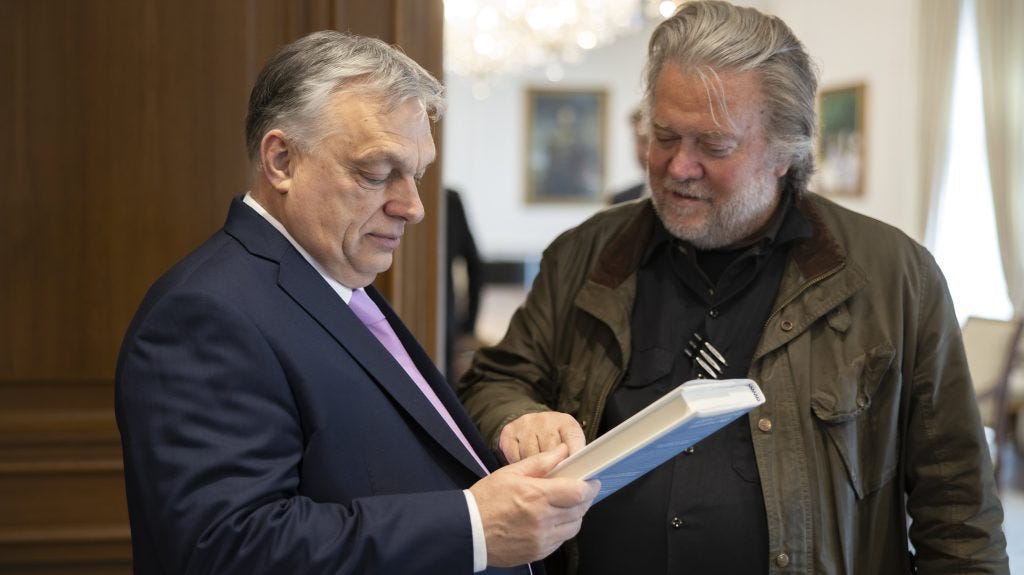
The American and Hungarian far-right quickly strengthened their ties and laid the foundation for the international nationalist coalition they hoped to build. Conservative influencers such as Tucker Carlson flocked to Hungary and praised Orbán’s “defense of Western civilization,” as if the former Soviet satellite was some kind of White Boy Wakanda. By 2022, the Conservative Political Action Committee (CPAC), known for its outlandish right-wing conventions, expanded to Europe and began holding annual events in Budapest. Running for five consecutive years, CPAC Hungary is home to the longest-operating CPAC outside of the United States. As is the case with most conservative projects, the spectacle of American conservatism was far from organic. It was recently revealed that Viktor Orbán was funding CPAC Hungary with taxpayer money. As the old conservative saying goes, “What’s good for the goose is good for the grift.”
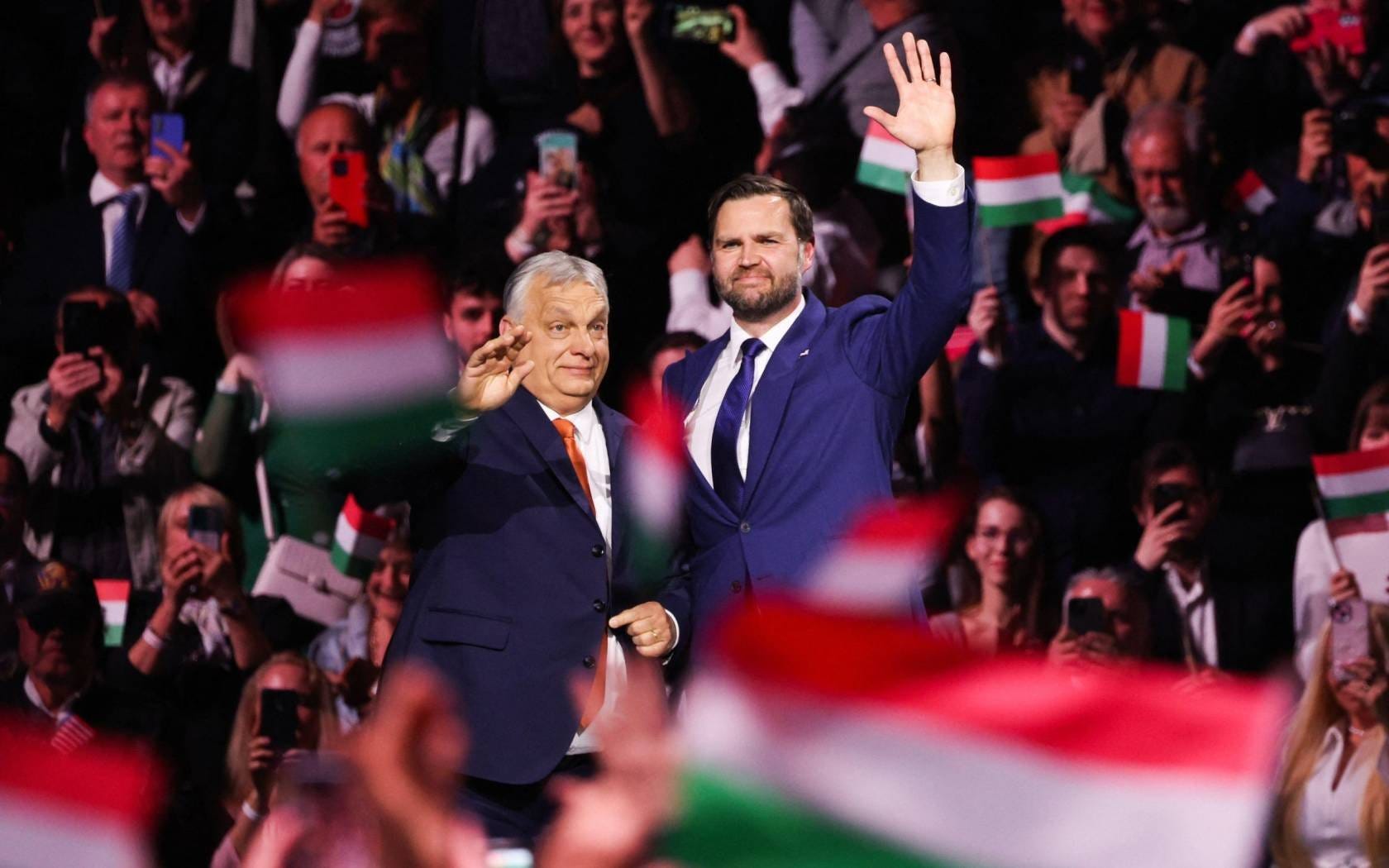
With American conservatives so heavily invested in Victor Orbán’s project (both financially and ideologically), it was no surprise to see the Trump Administration supporting him in the recent Hungarian election. Trump promised to give Hungary the “full Economic Might of the United States” if Hungarians re-elected Orbán, and J.D. Vance flew to Budapest to stump for him. (Don’t worry, J.D. It’s not like your country is at war or anything.) It’s also likely that Vance’s international campaign is only the tip of the iceberg, the only visible part of the Trump administration’s support for the Hungarian despot. Recent reporting shows that the State Department’s Under Secretary of State for Public Diplomacy, Sarah Rogers, was bolstering fascist and reactionary programs across Europe, with particular focus on uplifting the Hungarian regime. With the U.S. State Department openly shaping American foreign policy to protect the President's ideological allies, one can only imagine the illicit support the United States government provided Viktor Orbán behind the scenes.
However, whatever Trump gave, it wasn’t enough. Despite the American government’s full-throated support for the Hungarian prime minister, Viktor Orbán and his Fidesz party were resoundingly defeated in the recent elections. In the highest-turnout election since 1989, Hungarian voters delivered 137 parliamentary seats to the opposition party, while only 55 went to Fidesz. With his rivals winning over two-thirds of the majority, Viktor Orbán conceded to his opponent, Peter Magyar.
The architect of the international nationalist coalition had fallen.
The Coalition Crumbles
As the creator of the global rightist alliance, it’s not surprising that Viktor Orbán was one of its last surviving members. With the Hungarian fascist ousted, Trump’s once dominant coalition of far-right and fascist international partners has been scattered to the wind.
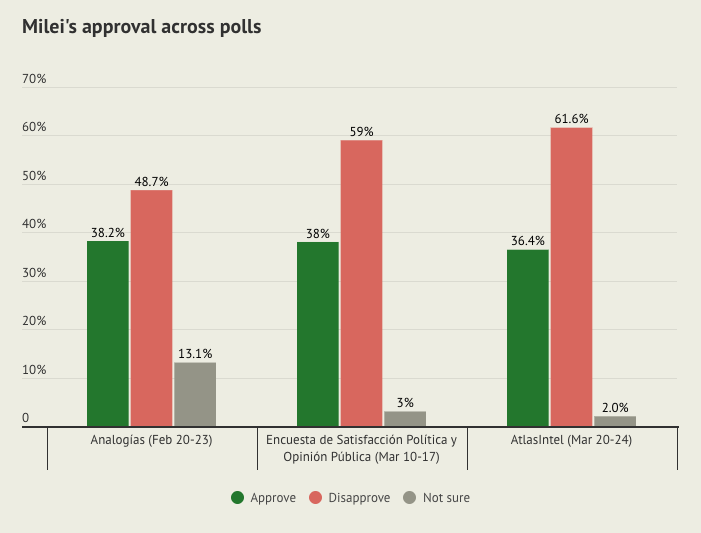
Across the globe, Bannonite candidates have suffered landslide defeats, legal losses, and major setbacks. Within the first year of Trump’s second term, both Brazilian President Jair Bolsonaro and South Korean Prime Minister Yoon Suk Yeol were jailed for coup attempts. Javier Milei’s chainsaw austerity ran the Argentinian economy into the ground, forcing Trump to save his government with $40 billion in credit swaps: an embarrassing display for two men whose ideology centers on effective economic management. As a result, Milei’s disapproval rating has skyrocketed.
While the conservative ideology has always done well attracting voters (Republicans’ two favorite presidents, Trump and Reagan, are actors for a reason), its Achilles Heel has always been governing. (Which is kind of important.) Just a few months of far-right governance in America was enough to make MAGA-curious voters across the world sprint in the opposite direction. Pointing to the glowing dumpster fire that is the United States of America as an example of what Trumpist politics would bring to their countries, centrists and liberal parties pull off major upsets against Trump-like nationalists in Romania, Australia, and Canada. The Canadian result was particularly shocking, as Justin Trudeau’s Liberal Party was expected to be wiped out by the same North American rightward wave that defeated the American Democrats. But with a front row seat to MAGA madness, Canadian voters backed the Liberals, reversing the Conservatives’ 20-point lead and handing the prime ministership to Mark Carney. The reversal was so stark that, in just a couple of months, conservative leader Pierre Poilievre went from the frontrunner for Prime Minister to losing his seat in Parliament.
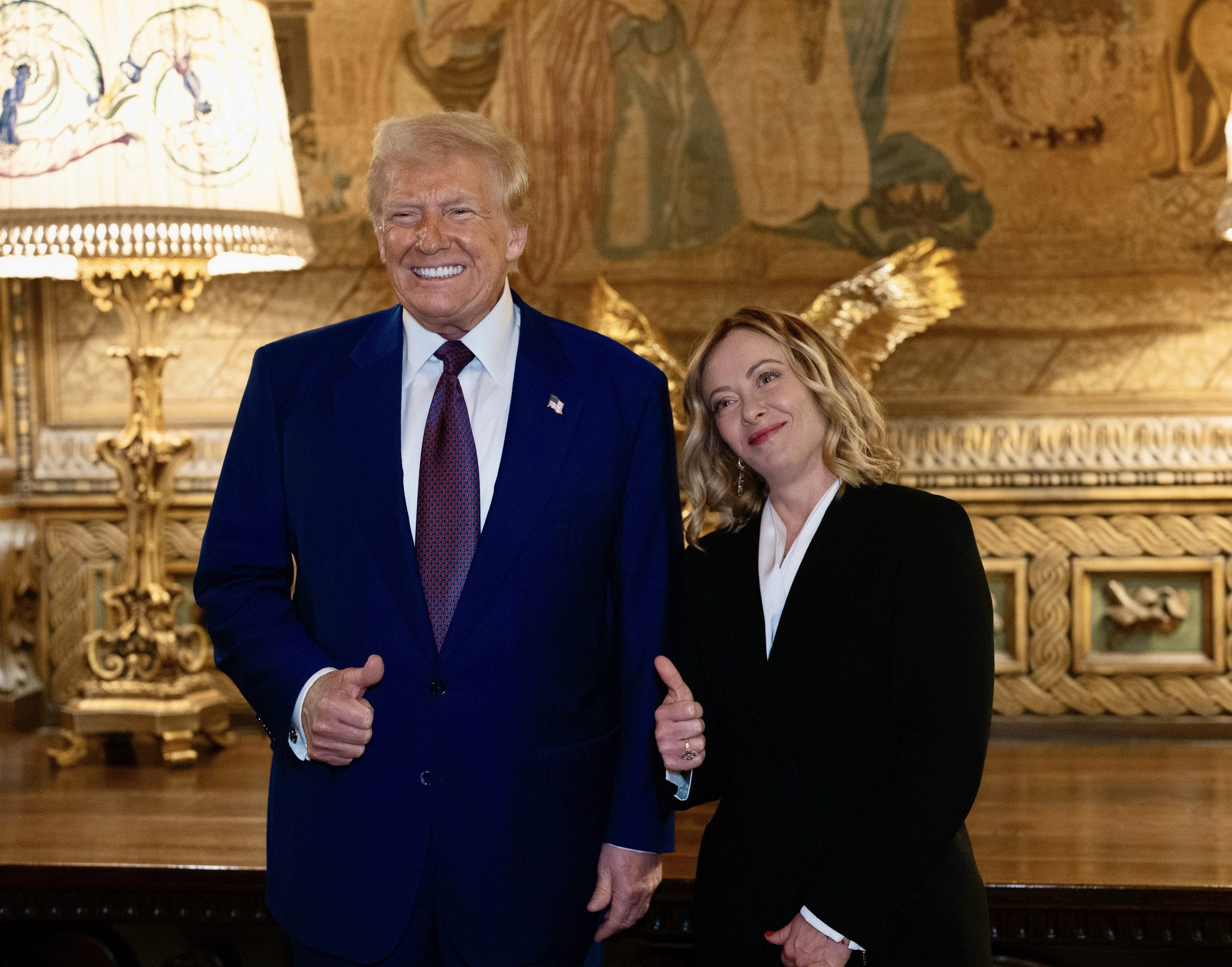
While Trump’s Italian ally, Prime Minister Giorgia Meloni, is still in power, she’s suffered a series of notable recent defeats that have forced her to break with Trump. Last month, Italian voters rejected Meloni’s motion to overhaul the judiciary, and she was forced to fire multiple members of her cabinet for corruption and sex scandals. As the global support for MAGA-style politics has cratered, Meloni has effectively severed her relationship with Trump. She rejected Trump’s request to send the Italian Navy to the Strait of Hormuz and rebuked his attacks on Pope Leo. Trump didn’t take kindly and denounced Giorgia Meloni, saying she is “no longer the same person, and Italy will never be the same country.” Considering Giorgia Meloni was the only European Prime Minister invited to Trump’s second inauguration, and once said she would work with him to “make the West great again,” the reversal of position from close ally to opponent in one year shows the rapid pace at which the international nationalist coalition deteriorated.
Broken. Not Gone.
While Viktor Orbán’s loss shows his coalition of international nationalists is no more, this does not mean the ideology is defeated. Or even that this break is permanent. Rightists may have lost the battle, but the war is far from over. Like after any climactic battle, the forces of global reactionaryism have been scattered. They are disunited on the international stage, but 21st-century fascism has not been obliterated.
After J.D. Vance traveled to Germany last summer to stump for the Nazi-adjacent AfD, the party secured the second-most votes in the election. Fortunately, the center-right honored the German firewall (a gentleman’s agreement not to build coalitions with the far-right) and formed a government with the center-left. While they are still barred from power, the AfD is not unpopular, and the firewall will not hold forever. In France, the most recent elections went to the socialists, who maintained control of the nation’s four largest cities. But the far right also showed signs of increased support, building on previous gains by Marine Le Pen’s National Rally party. Meanwhile, the British far-right party Reform has seen a meteoric rise since 2024, largely driven by Keir Starmer’s Labor Party cratering to Liz Truss-levels of disfavor. Reform’s position remains troubling, but recent elections show the eco-socialist Green Party is beginning to challenge the xenophobic narrative and give Britain a better alternative.
As the national conservative projects are retreating around the world, now is the time to step on their throats. Trump is deeply unpopular, and his legacy will likely kneecap the GOP in upcoming elections. But as his reelection shows, Americans have short memories. Steve Bannon and the architects of Project 2025 are not viewing the end of Trumpism as the end of their project. And if liberals and centrists around the globe insist on returning to the broken order that gave rise to Viktor Orbán’s project, they will only return. That is why it’s so troubling to hear DNC Chair Ken Martin refuse to release the party’s 2024 post-election autopsy on the grounds that the Democrats are winning elections, so there’s no need to look backward. This is like a football coach saying there’s nothing to learn from a 31-30 win in which the opponent fumbled five times. If return to disorder is the only response to fascists coming within striking distance of establishing a global reactionary order, then it’s only a matter of time before they’ll be back, stronger and harder to kill. If the problems that created the Trumpist movement are not addressed, then it can never truly be defeated. Unless there is a serious reckoning with capitalism and the inequality, imperialism, and individualism that it creates, then it’s a matter of time before there’s another Jair Bolsanaro, Donald Trump, or Viktor Orbán — or God forbid, someone much worse.
Thank you for reading JoeWrote! Please tap the ❤️ to help this article stand out in Substack’s algorithm. And if you’re a new reader, make sure you subscribe to receive new articles in your inbox.
For a limited time, annual premium subscriptions are 50%. That’s an entire year of exclusive content for just $25. Financial contributions are crucial to supporting my work and ensuring I can keep creating content like this. With this offer, you can help my writing continue (and unlock everything JoeWrote has to offer) for just $2 a month. Thanks in advance for your support!
In Solidarity — Joe
Aw, come on. You know “Western Civilization” = “Stealing anything that’s not nailed down and taking credit for creating it.”
Ouch that is a rough typo in the headline