

This is a spoiler-free, off-the-rail review of Yesteryear.
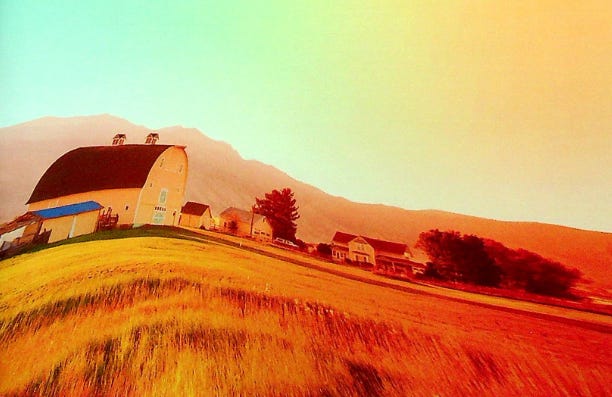
It’s impossible for me to talk about Yesteryear without kissing Caro Claire Burke’s ass.
I’ll be honest. I doubted the Yesteryear hype. With a parade of 5-Star pre-launch reviews and comparisons to the greatest American novels, I got the sense the literary world was caught up in the moment. I always thought the book would be good. But the universal acclaim created the creeping suspicion that the publisher had found a marketable bestseller and thrown the entire Q2 marketing budget behind it. It’s not like my concern was unfounded. Hype and quality are often uncorrelated in the publishing world. The last six months of 2025 were a full-court press for American Canto. Every magazine, talk show, and podcast in America told me that Olivia Nuzzi’s love affair with the worm devouring RFK Jr.’s last brain cell was the greatest political tragedy since Princess Dianna. When I picked up Yesteryear from Barnes & Noble, a pile of dusty American Canto copies under a “50% Discount!” sign reminded me that booksellers are as sensationalist as they come.
So, when I opened Yesteryear, I was optimistic for an enjoyable satire of American patriarchy. After a furious weekend reading marathon during which I ignored every responsibility in my life, I set Yesteryear down. Stunned. The reviews were wrong. Giving Burke’s debut novel a meager 5-star rating is an insult. (As I said, it’s impossible to talk about this book without kissing Caro’s ass. Before you call me a sycophant, read it for yourself. You’ll see)
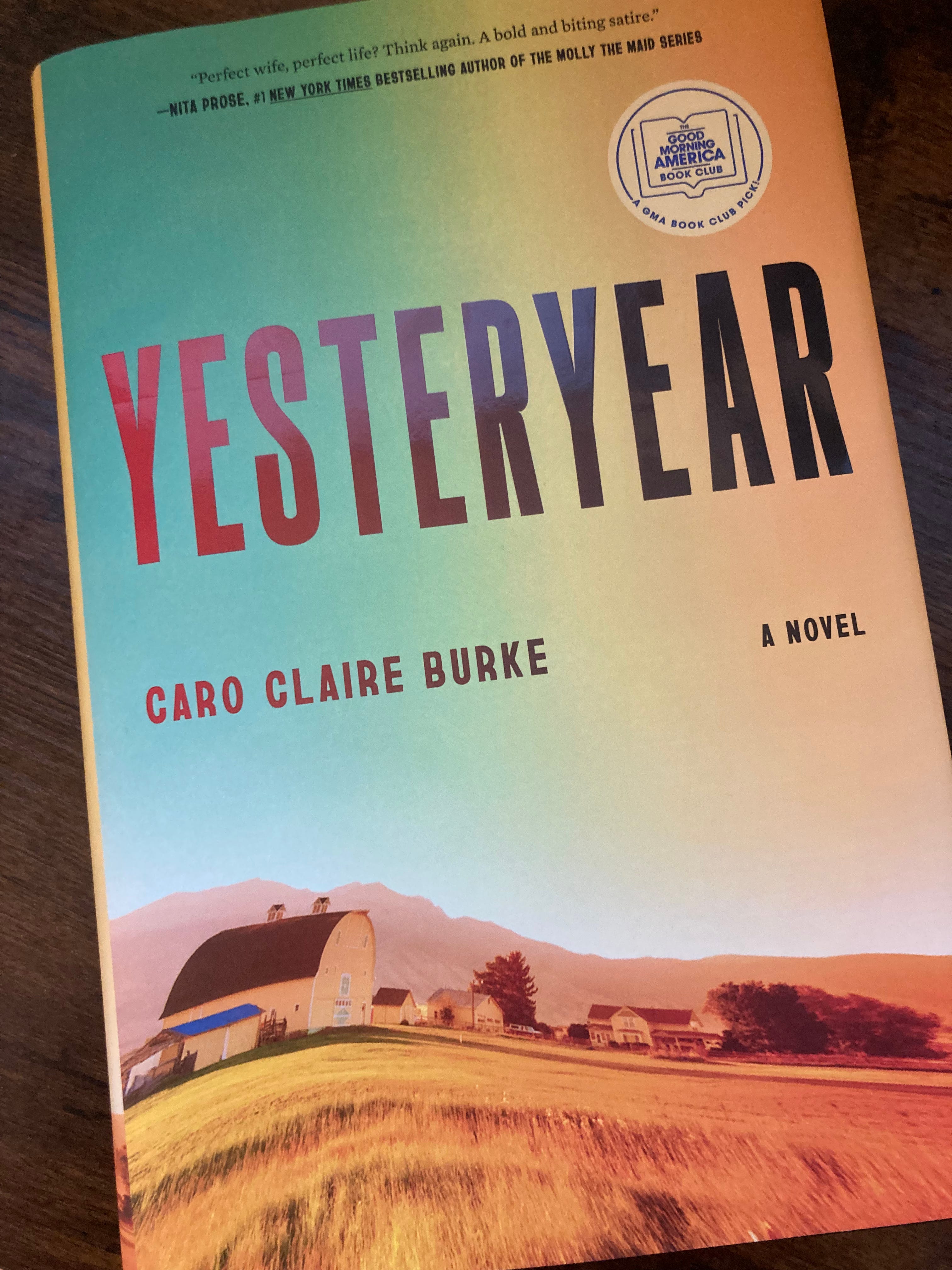
Yesteryear is the defining cultural product of contemporary America. Through the time-traveling life of trad wife Instagram influencer Natalie Heller Millls, the book captures what it’s like to live in a society burdened by the social media paradox: As the hyper individualization of American capitalism separates each citizen into an isolated unit of consumption and production, we Log On, hoping digital connections will fill the hole of human camaraderie the profit-driven world tore out of our evolutionary psyche. Only once we’re immersed in the world of follows and likes and friends and trolls do we realize our mistake. The more time we spend online navigating algorithms to maximize our disconnected connections, the less human we become and the more alone we feel.
At first glance, Yesteryear appears to be about the pitfalls of patriarchy and America’s genetic hatred of women (The only time the Constitution mentions “women” is when it gives them permission to vote after 150 years of codified second-class citizenry). There’s no denying that misogyny is Yesteryear’s home-grown bread and hand-churned butter. But the novel speaks to social dynamics far beyond the scope of gender relations. Or at least issues that seem gender-agnostic.
In both her glamorous present and dystopian past, Natalie considers everyone and everything bullshit. From the well-rehearsed script for her social media posts to the old classmates she runs into at Target, every interaction of Natalie’s seemingly perfect life is fraudulent. No one knows this better than the protagonist, whose vicious inner monologues skewer anything caught in her path. Including herself. The self-loathing runs between her thoughts and drips off her every word. The only thing Natalie sees as real is her religion. God is always a certainty, whether Natalie is thanking Him for gifting her a million followers or begging Him to free her from the horrors of life on the antebellum frontier. When I asked caro claire burke about Natalie’s unwavering faith during her author event here in Denver (well, Katie Gatti Tassin asked her on my behalf), the Yesteryear author challenged my framing: Natalie might be religious, but does she really have faith? After all, her relationship to God is transactional. As is common in Evangelical and Protestant sects, Natalie’s religion is purely Old Testament. She believes she is in covenant with God. She glorifies Him, and He gives her followers. She accepts His “test,” and she expects Him to free her from the unbearable past once she passes it. She does X, so He should provide her with Y. Faith is trusting even against the unknown. Natalie trusts no one. She is certain, to a fault.
“Now if you will obey me and keep my covenant, you will be my own special treasure from among all the peoples on earth; for all the earth belongs to me. These are the words that you shall speak to the Israelites.” — God comands Abraham about his covenant with anceint Israel, Exodus 19:5-6.
Not every American shares Natalie’s transactional Christianity. But all of us can relate to the frustration of being handcuffed to a voided social contract. Whether through God or government, the powers that be have offered every American a deal. We were required to go to school, get a job, start a family, and follow the law. As a result, we were promised that Star Spangled capitalism would carry us into the joy and prosperity of a middle-class, white-picket life. Like Natalie waiting on divine deliverance, we plebeians did our part. But the higher powers never delivered. Income inequality skyrockets. Politicians ignore us. Life gets harder. Opioids and booze become more appealing. Instead of proving themselves to be honest partners, the powerful laughed at us for being foolish enough to trust them.
Americans from all walks of life played by the rules and have little to show for it. Now, they’re left asking the all-powerful deity — Uncle Sam or Father Yahweh — why he’s not holding up His end of the bargain. Grappling with this betrayal is sure to drive us into psychosis. Not because we lost our grip on reality, but because the reality we were promised was waiting for us was revealed to be a lie. Like the despondent Natalie Heller Mills during her first days in 1855, much of America wallows in pitiful deterioration. Need a way out? Why not log on to the internet? Speaking from personal experience, it’s the perfect place to accelerate your mental breakdown into stage five Computer Madness.
Though Yesteryear satirizes the domestic side of a collapsing misogynistic nation, I couldn’t help but notice the parallels between the tradwife and the cowboy, each a romanticization of America’s brutal history. Much like Natalie’s idea of 19th-century homemaking is a far departure from historical reality, so is America’s silver screen view of the Western vigilante. Historically, cowboys were the American proletariat — wayward young men lured to the frontier by promises of gold and adventure, a much more tempting offer than working in the deadly factories that gave rise to European labor movements. While real cowboys were too broke to even buy a gun, the Hollywood gunslinger has rewritten national history, and by extension, our modern self-image. John Wayne and Clint Eastwood thrilled generations by giving Manifest Destiny a handsome face and a chiseled jawline. In the process, they helped American audiences forgive themselves for our nation’s sins, much like how predators manipulate religion to self-foregive for their transgressions. (Why would Pete Hegseth need to ask the women he raped for forgiveness? God already forgave him. After all, He is God. They’re only women.) Rescuing white women from savage Apaches and masked gunmen wasn’t just entertainment. It was a permission structure for American audiences to move past the guilt of the genocidal project that we all benefit from.
If a tradwife is the misinformed rosey face of America’s domestic past, then her counterpart, the cowboy, is the handsome and daring personification of American imperialism. Much like the bearded, grizzled cowboy gunslinger was used to humanize and justify America’s 19th-century westward expansion, the bearded, grizzled special operations soldier is used to humanize and justify America’s 21st-century global expansion. No one has done more to connect the past and present of Hollywood misrepresentation than screenwriter Taylor Sheridan. With a world-renowned collection of neo-Western titles such as Yellowstone, Sicario, Hell or High Water, Wind River, Landman, and 1923, Sheridan has repurposed the classic cowboy aesthetic to justify every social failing conservatives love to love. From beneath the sun-tinted brims of prop cowboy hats, Sheridan’s male characters lecture woman characters (who represent the liberal audience) on the need for unregulated oil drilling, drone strikes in Afghanistan, CIA intervention in Mexico, and, most importantly, male dominance in the household. In the scene below from Landman, good ol’ boy Tommy Norris drives the uptight, coastal elite lawyer Rebecca Falcone into the Texas desert just to lecture her about how windfarms are wasteful and she’s stupid for thinking otherwise. To a male audience, this is an enjoyable, Emmy-worthy scene: the American Hero tells the Lib Lawyer Lady how it is. (You woke dumb bitches don’t understand REAL America!) I imagine this scene is experienced very differently for the female viewer, who likely assumes a visibly angry, half-drunk 60-year-old man carrying a young woman into the wilderness is the start of an unsolved murder.
The entire time I was reading Yesteryear, I couldn’t help but equate the fictional Natalie Heller Mills to the very real Taylor Sheridan. With Natalie’s father-in-law, Doug, a classic MAGA senator, Burke expertly draws a parallel between the hyper-masculine world view of American reactionaries and the feminine, domestic face of their political project. The two characters have a mutually beneficial relationship, exchanging money and electoral support. If Senator Doug represents the conservative worldview Taylor Sheridan seeks to promote with the modern retelling of American cowboys and special forces operators, then Natalie represents the homemaking foundation on which that worldview rests. Both then and now, protecting white women has often been the justification for America’s most heinous acts — slaughtering Natives, enslaving Blacks, and deporting immigrants. (Except the ones that work on Yesteryear Farm, of course.)
Like Natalie, Sheridan’s western bona fides are aesthetic, not material. Natalie purchases Yesteryear Farm in pursuit of a lifestyle reset. Sheridan’s mother bought her family a farm to “have an opportunity to learn firsthand about the peaceful feeling of freedom in nature.” He visited on “holidays and weekends,” playing cowboy part-time while his real life was that of a theater kid, starring in Grease and Piaf at his well-funded high school. Still, he projects the Western Way of Life to his audience, frequently appearing on-screen as the sun-weathered cowboy he very much is not.
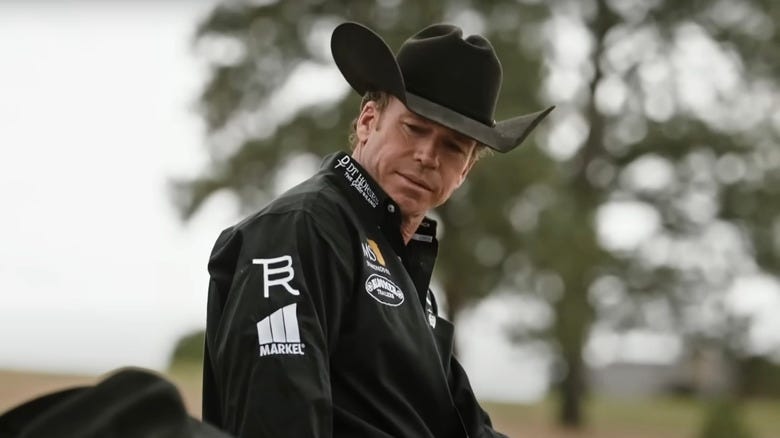
While Sheridan’s modern cowboys lionize modern capitalism and imperialism through American television screens, Yesteryear gives a more honest look into the domestic hellscape this bipartisan project has brought us. Not just the subordination of 51% of the population, but soulless consumerism, social isolation, a pathological need to be liked by those we despise, and the greatly mistaken belief that if only we were someone else, somewhere else, our problems would be better. And, of course, it’s all monetized.
In my experience, no show, movie, album, or book embodies the 21st-century American experience as well as Yesteryear. Succession came close, but its focus on the inept, oligarchical class failed to convey the madness experienced by those of us subject to their whims. It’s a unique comparison, but I haven’t felt that a media project has captured its moment this well since The Sopranos. Decades after it aired, the ballad of Tony Soprano remains a widely watched show because it conveys the unique malaise of 1990s America through a compelling story. Strippers and shotguns are foreign to middle-class suburbanites. But Tony Soprano’s struggle to protect the dying empire of organized crime from modernity’s crushing persistence reflected the anxieties of Americans coping with life inside the dying empire of the United States of America. When the series debuted in 1999, the end of the Cold War had left the militant nation without purpose. For so long, the American identity centered on defeating communism. Like a star high school athlete after graduation, America didn’t know what it wanted to become now that the Soviet Union was gone. After 9/11, the metacommentary of a declining empire within a declining empire broke the fourth wall. When the greatest military defeat on the American homeland since Pearl Harbor knocked down the Twin Towers, the showrunners removed the iconic shot of American Prestige — a representation of the powerful New York mafia families that Soprano’s New Jersey empire sat beneath — from the show’s famous theme song. From there, The Sopranos created an unforgettable yet significantly heightened representation of the struggle to balance family, work, and happiness in a world in which the old rules, the ones every character believed would exist in perpetuity, no longer applied. What The Sopranos did for the uncertainty of turn-of-the-millennium America, Yesteryear does for the 2020s. Only it’s better.
For a book review, I’ve talked very little about Yesteryear’s plot or the overarching theme of the persecution of women. I’ve steered clear of both these topics simply because I cannot do them justice. More adept feminist reviewers than I have spilled considerable ink and typed many a key on the book’s wonderful satire of the harms of patriarchy. (Which hurt the male characters as well as the female ones.) And I have little interest in mansplaining patriarchy’s gender penalty to those who understand it better than I do. As for the plot, I have nothing to say other than you should go buy Yesteryear and read it. At a time when every piece of entertainment is a product of AI and capitalist slopification, Yesteryear feels like the first original, dare I say human, major American cultural contribution in a long, long time.
Things used to be better back in the day, huh? If only I could go back there…
Thanks for reading JoeWrote! If you’re a new reader, remember to subscribe so you receive new emails in your inbox.
As the economy is going down the drain, I’ve reduced the price of annual premium subscriptions to $25. Hopefully, this allows readers to continue accessing exclusive content amid tightening budgets. But if it’s not enough, shoot me a DM, and we’ll work something out. Thanks in advance!
In Solidarity — Joe
Agree with you a zillion percent!!!
It’s so so good!