

The most common argument centrist Democrats make against progressives is that they lose support outside of deep-blue districts. As the establishment claim goes, Zohran Mamdani-style leftism works in the progressive bastion of New York City. But in any race outside a D+20 district, the “far left” policies of Medicare For All, abolishing ICE, and criticizing Israel will scare off moderate voters, causing Democrats to lose close races and win by less than they should in unconstested ones. As Adam Jentelson, the founder of centrist thank tank, The Searchlight Institute, told The New York Times, “The folks who are most to blame about Trump are the ones who pushed Democrats to take indefensible positions” — i.e., the left.
There has always been strong evidence that this wasn’t the case, and I’ve routinely pointed out how pro-establishment voices like Jentleson bash the left to preserve an unpopular corporatist agenda and their careers within the Democratic Party. But with an unapologetic progressive winning a recent special election in the New Jersey suburbs, the truism that leftist candidates cost Democrats votes can be put to rest.
On April 16th, Democrat Analilia Mejia defeated Republican Joe Hathaway in a special election for New Jersey’s 11th congressional district. The outcome wasn’t a surprise. NJ-11 went for Kamala Harris by 8 points, and Democratic enthusiasm is at an all-time high. It was highly likely that the Democratic candidate would win, regardless of where they stood on the intra-party spectrum. What makes Analilia Mejia’s victory interesting is not that she won, but how she won.
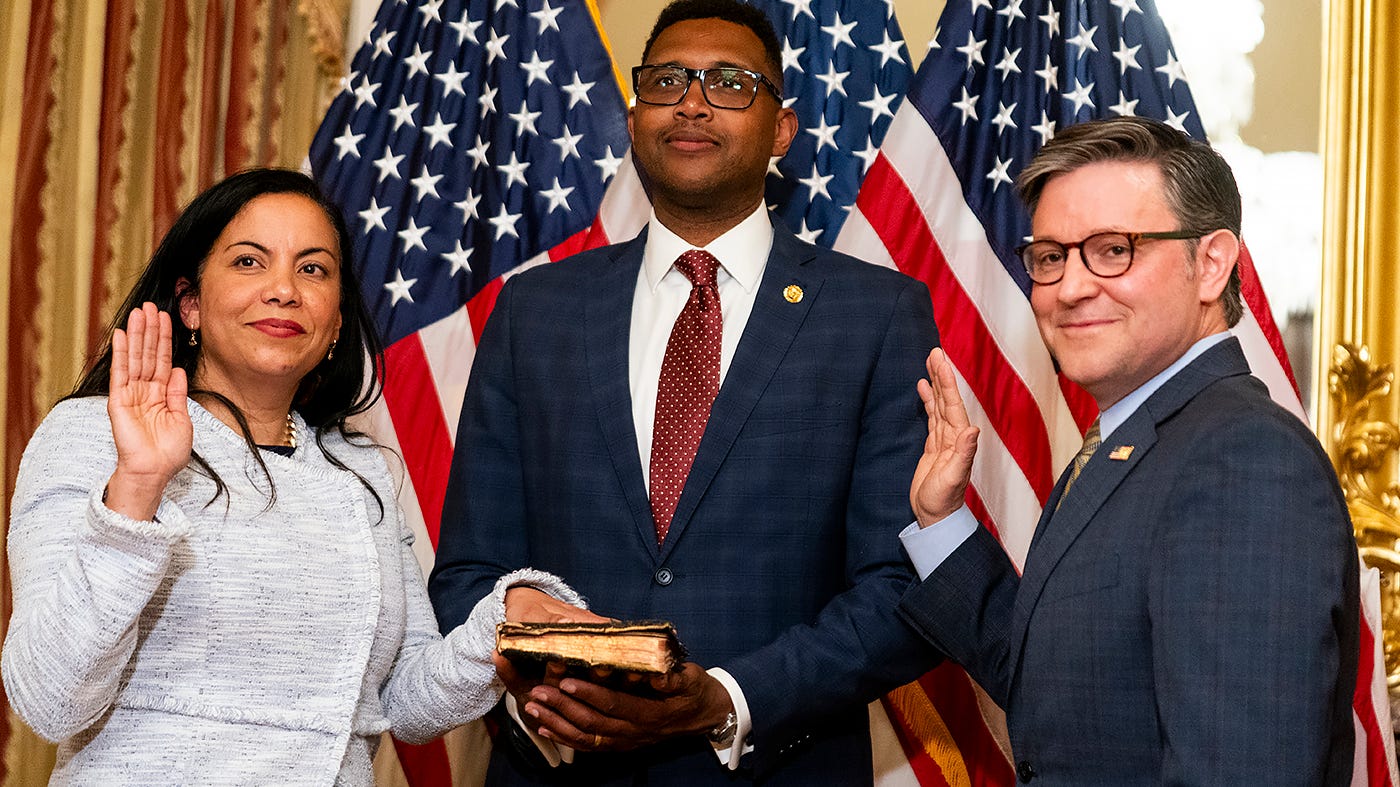
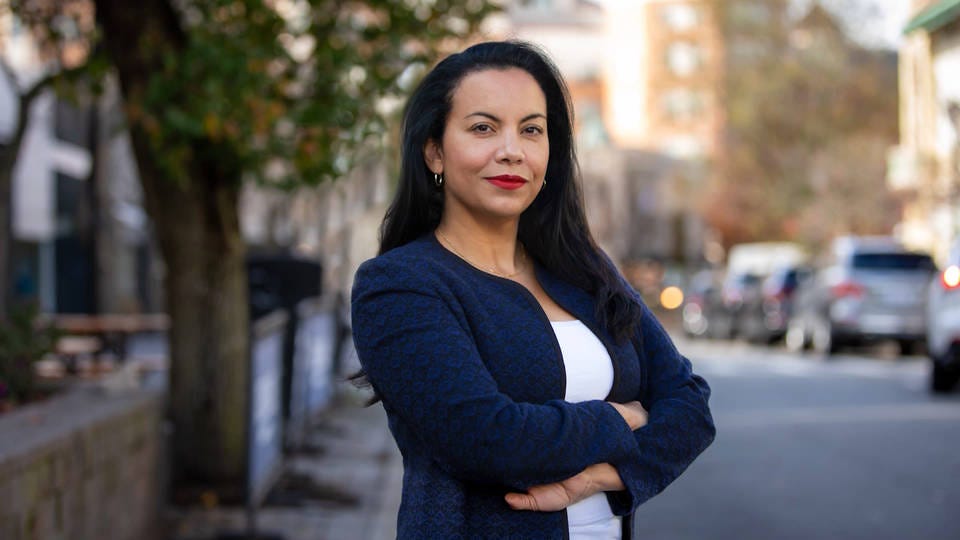
Formerly a top staffer to Senator Bernie Sanders, Analilia Mejia is the most radical person to represent the quiet suburbs of New Jersey’s 11th congressional district. NJ-11 is far from deep blue. It leaned Republican prior to some 2021 redistricting, and its demographically similar neighbor, New Jersey’s 7th district, elected Republican Thomas Kean Jr by a healthy margin in 2024. NJ-11 was previously represented by centrist Democrat Mikie Sherill, who vacated it last fall after winning the governor’s election. While the conventional Democratic wisdom published in slopified publications such as The Atlantic and Slow Boring would have urged Mejia to moderate in this light-blue area, she did no such thing. Instead, Mejia ran on the socialist wishlist of Medicare for All, national paid sick leave, abolishing ICE, universal childcare, free community college, and a moratorium on the construction of AI data centers. She also accused Israel of genocide and rebuked Zionism on the debate stage. According to the centrist theory of politics, these “far left” positions should have scared off the mythical “moderate swing voters,” causing Mejia to win by less than her centrist predecessors. But that did not happen.
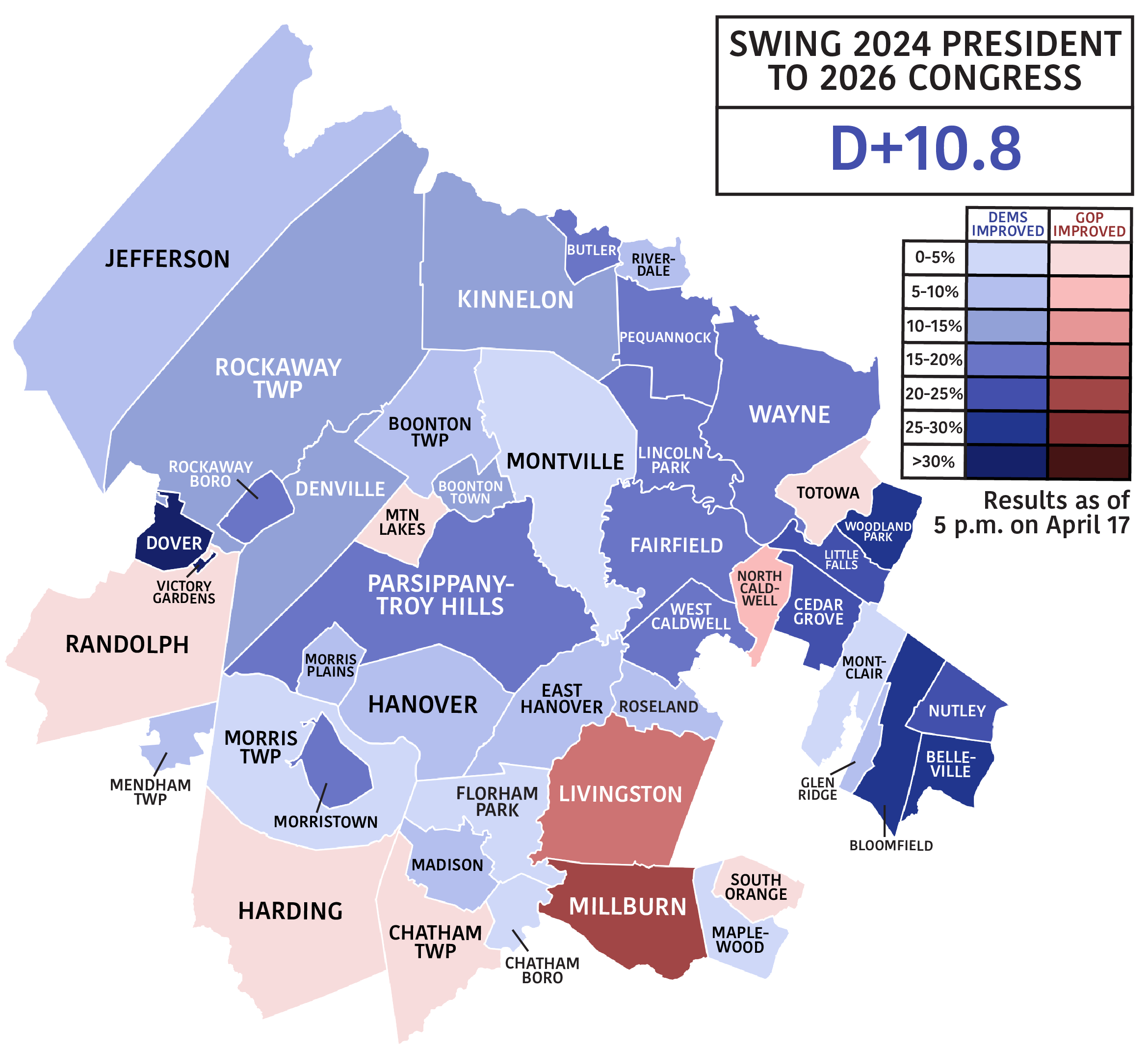
In 2024, Kamala Harris won New Jersey’s 11th district by 8 points. That same year, Mikie Sherrill won the NJ-11 congressional seat by 15 points, the same margin she received during the 2025 gubernatorial election last fall. Five months later, Analilia Mejia ran to their left and won NJ-11 by 21 points. Outrunning Kamala Harris by +13 points and Mikie Sherill by +5 points, there’s no denying that Analilia Mejia ran an impressive campaign. But when we dig into exactly where and who she won, her victory goes from impressive to spectacular.
Running on a bold working-class program, Analilia Mejia won back many of the communities that centrist Democrats lost to Trump. She won majority-Hispanic Dover by 44 points, a 30-point improvement over Harris’s 2024 margin. Mejia also flipped ten towns that voted for Trump in 2024, and possibly more as the final 6,500 votes are counted. In 2024, Mikie Sherrill won Essex County by 35 points, Morris County by 4 points, and lost Passaic County by 8 points. Eighteen months later, Analilia Mejia won Essex by 43 points, Morris by 9 points, and flipped Passaic to the Democrats. Because NJ-11 only encompasses parts of these counties, it’s difficult to directly compare Mikie Sherill’s 2025 gubernatorial performance to Analilia Mejia's 2026 congressional performance on a county-by-county level. However, local-level analysis shows working-class, populist messages outperform those written in the belly of the Democratic establishment. In 2025, the traditionally Republican towns of Wayne and Woodland Park voted for the Republican gubernatorial candidate. This year, they voted to send a Bernie Sanders acolyte to the House of Representatives. As one local reporter put it to his New Jersey audience, “Analilia Mejia’s strength extended into areas that, just a few years ago, would have seemed completely unwinnable for a candidate with her ideology.”


Of course, Mejia’s progressivism doesn’t come without its trade-offs. Compared to Kamala Harris, she lost ground with high-income and Jewish neighborhoods. This isn’t surprising given Mejia’s message resonates more with common Americans, and her opponent relentlessly fear-mongered that she posed a “threat to Jewish safety.” (lol) Still, Analilia Mejia won the majority of Jewish voters in NJ-11, once again disproving the anti-semitic political truism that all Jewish Americans are some sort of hive-mind dedicated to a foreign state.
To be fair, Mejia’s loss of high-income voters shows there’s a grain of truth in the centrist argument. Going too far left does cost the Democrats some votes. Richer New Jerseyans turned away from Analilia Mejia’s economic populism and went for the Republican. But the fact remains that Mejia’s platform of Medicare For All, strong unions, and accusing Israel of genocide brought far more voters into the Democratic tent than it pushed out. As a result, the unapologetic progressive outperformed centrists Kamala Harris and Mikie Sherrill by impressive margins. The lesson is clear: if Democrats want to prioritize winning high-income communities, they should run candidates like Kamala Harris. But if they want to maximize the amount of votes they receive, they should run candidates like Analilia Mejia
The Democratic Party can follow establishment zealotry or build strong electoral majorities. But it can’t do both.

Now, does this mean Sanderite progressives are about to sweep every district across the country? Of course not. There is no political commentator worth their salt who will tell you moderation and regional-specific pivots are unnecessary. One difference between the progressive left and establishment corporatists is that the left believes moderation is a campaign tactic while the corporatists believe it’s the Democratic Party's message. The New Jersey 11th special election doesn’t prove Sanders-style progressivism is universally a winner. But it does prove the Democratic establishment’s anti-left narrative is false. The centrist claim has always been that going too far left would cost votes outside of deep-blue areas.
After DSA-associated Aftyn Behn came within single digits of winning the Trump +22 Tennessee 7th special election last December, the centrist interest group The Welcome Party published a prewritten analysis erroneously claiming a moderate would have won. According to The Welcome Party, Behn’s association with Bernie Sanders and DSA turned away moderate voters, costing the Democrats the seat. If Analilia Mejia won by five or even ten points, then we would have heard the same post-election argument from The Welcome Party and other centrists. Something like, “Analilia Mejia won, but her far leftism scared off moderate suburban voters. Democrats should run more moderate candidates if they want to win back the House.” But Analilia Mejia didn’t win by single digits. She won by 21 points, overperforming the centrist president and current governor, including in Republican areas where they lost — which is why The Welcome Party still hasn’t mentioned Analilia Mejia more than two weeks after her victory.

And it’s not like Meija’s progressive ideology was unknown. The pro-Hathaway Super PAC American Counterpoint closed the New Jersey 11th special election with $183,000 worth of ads directly equating Analilia Mejia to Zohran Mamdani. And voters chose her anyway.
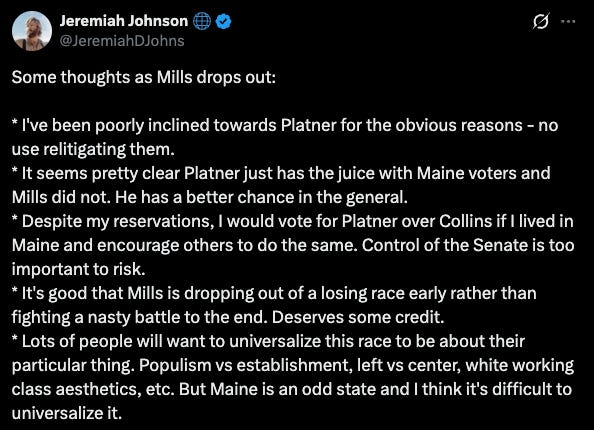
Speaking of Mamdani, the New York City mayor addressed the limits of socialist politics during a recent interview. As America’s Mayor said, political opponents keep moving the goalposts on the limits of progressive success. First, it was “You can only win in Queens,” then it was “You can only win in New York City.” The mayor’s experience is a perfect representation of the ever-moving goalposts centrists keep shifting to discredit the left. After establishment darling Janet Mills dropped out of the Maine Democratic Senate primary last week, Center for New Liberalism founder Jeremiah Johnson tried to downplay the significance of Graham Platner’s left populist victory by saying Maine was an “odd” state and that the lessons from this race weren’t applicable elsewhere. (Okay, man. Sure.) Whatever one thinks about Maine’s peculiarities, Janet Mills is the sitting governor. She won a hotly contested Democratic primary and then a statewide election just four years ago. The same voters who sent Mills to the governor's office overwhelmingly rejected her in favor of Graham Platner’s anti-imperialist, pro-worker politics. It’s also not like Maine is a far-left state. It hasn’t elected a Democrat to the Senate since 1988. Yet, Platner blew Chuck Schumer’s hand-picked candidate out of the water and is polling ahead of Susan Collins. His primary victory speaks volumes about the current state of the Democratic Party. And if he can do what the Democratic establishment has failed to do and unseat Susan Collins, it will trigger a political sea change.
While critics will find ways to write off Analilia Mejia’s landslide as an anomaly, they do so at their own peril. Progressive politicians who were once deemed unelectable are surging in Michigan, Wisconsin, Colorado, and countless other areas across the country. Deluded by their self-importance, our factional opponents will keep moving the goalposts. Let them. The left has no trouble scoring.
If you appreciated this essay, please click the ❤️ to help it rise in Substack’s algorithm. Don’t forget to subscribe so future articles are delivered to your inbox. If you’re a returning JoeWrote reader, consider supporting my work with a premium subscription. For the cost of just one cup of coffee a month, you can help me keep creating content like this. Plus, you unlock everything JoeWrote has to offer. Thanks in advance!
In Solidarity — Joe
Just wish Platner… you know
It's refreshing to see candidates running on what they stand for, instead of just what they're against.