

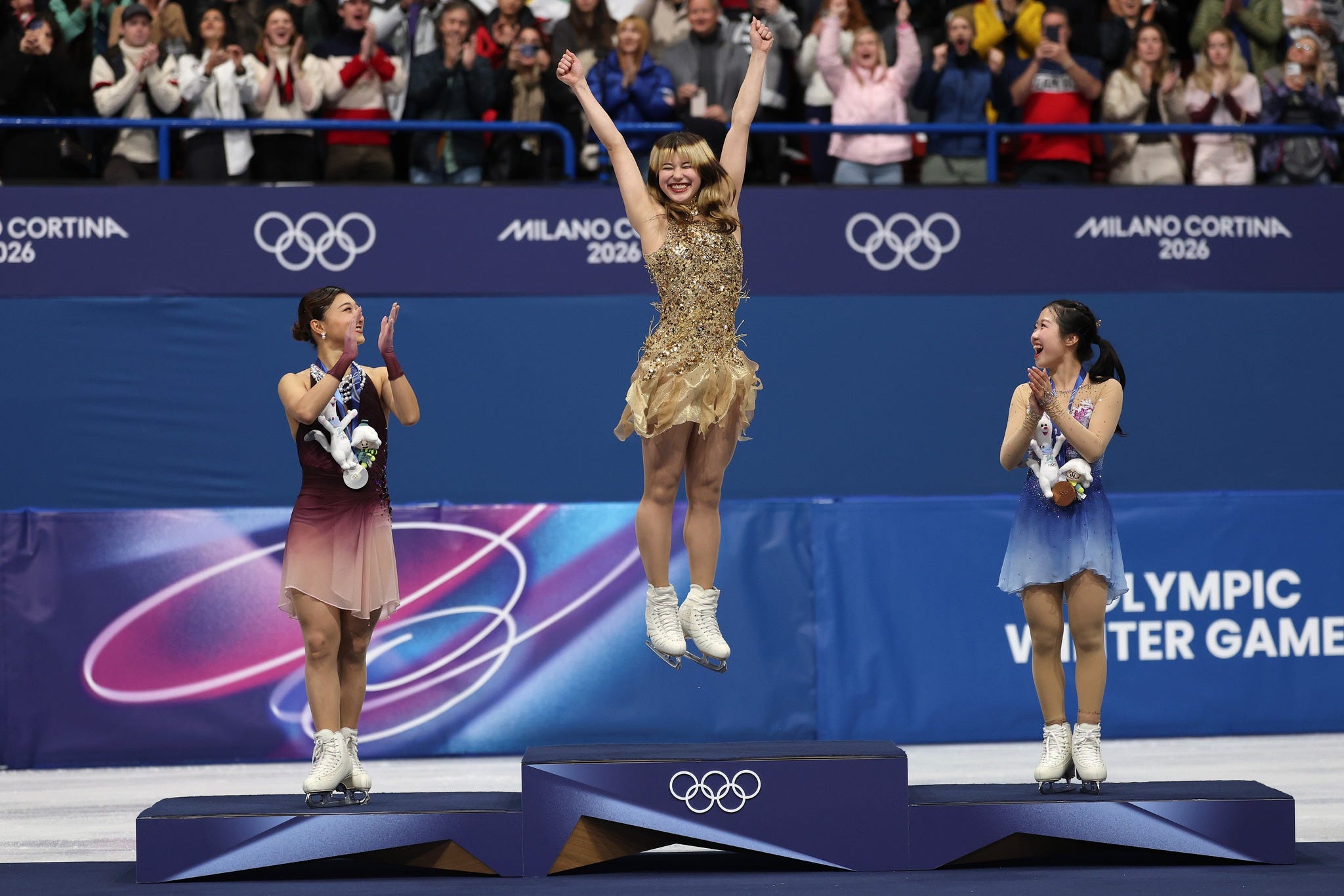
Ever since Alysa Liu won a gold medal in figure skating at the Milan Winter Olympics last week, I’ve been wondering why I adore her. Like most people now obsessing over the 20-year-old Oakland native, figure skating plays a non-existent role in my life, save for a brief two-week period every four years when the Olympic rankings appear at the bottom of the ESPN app. But like the rest of the world, Liu has invaded my social media feed and attention span, to which I have been a willing collaborator. Now I find myself asking why I, and apparently everyone else on planet earth, is so enthralled with this athlete who competes in a sport that, to be blunt, I just don’t care about. Sure, Alysa Liu is the first American to medal in women’s singles skating in twenty years. That’s cool. But again, I really don’t care. I’m a huge hockey fan, yet I find Liu’s story more compelling than Team USA’s climactic overtime defeat of rival Canada. And I’m not alone. The Milan Olympics have given us Hollywood-worthy sudden-death victories, death-defying highlights, enticing superstar crashes, and many other opportunities for highly produced, social-media-optimized content that drives the 21st-century attention economy. Yet I haven’t seen anything from the Olympics get as much attention as Alysa Liu’s post below, featuring three blurry photos of her wandering the streets of Milan. With 3.6 million likes and counting, the people love Liu. Why?
To answer that question, I’m going to do something I typically refuse to do when writing: I’m going to speak for everyone else. Because I’m pretty sure the reason I like Liu is the reason you like Liu, too.
At a time when humanity is being stripped from every aspect of life — AI slop on TV, gambling in sports, dehumanization in politics — Alysa Liu emerged as the antithesis of everything we’re being forced to become; living, breathing, flying testimony that joy and passion are the reasons we exist. After burning out following the Beijing Olympics, Liu retired from skating at age 16. After rediscovering her love for winter sports on a family ski trip, she decided to return. But she came back with rules. Or rather, pledging to break the rules of the highly-regimitized world of competitive figure skating that were supposed to maximize an athlete’s chance of victory. Refusing to let others decide her music, choreography, training, or diet, Liu chose herself over all else. “I don’t care what the dietitian says. I’m eating lava cake.” “I don’t care if the coach wants me to practice today. I don’t want to. So I’m not going to.” Her skating career and lifestyle are a giant middle finger to the philosophy of sacrifice over everything—a big, smiling, polite fuck you to the “No Pain, No Gain” mantra that has long dominated professional sports, and is increasingly dominating everyday life.
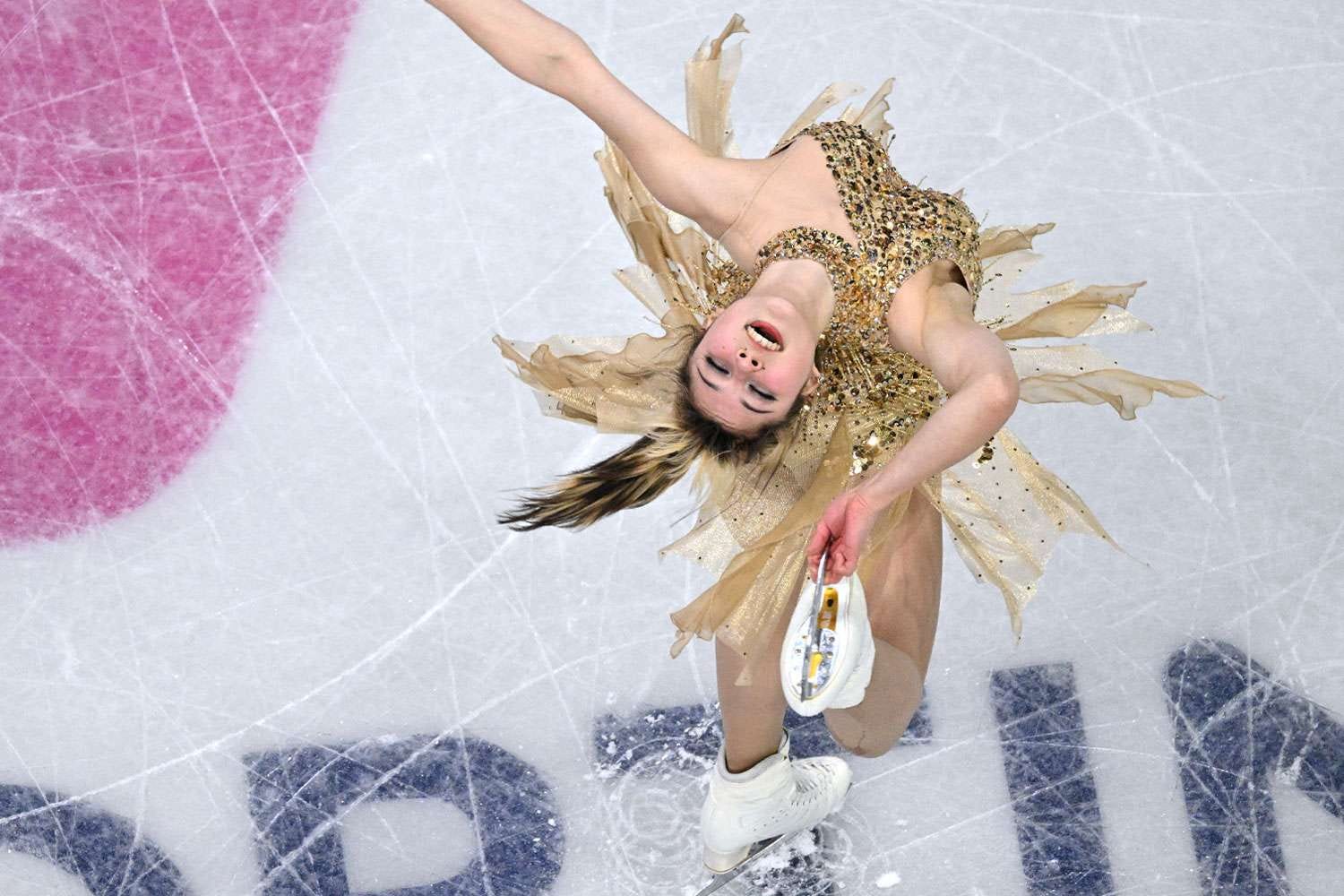
While everything society tells us would have us believe Liu’s joy-first approach would lead to disastorous failure — a depressing finish behind more “dedicated” and “professional” skaters — it was Liu’s authenticity, her unapologetic prioritization of herself over other people’s expectations that enabled her entry into a historic club few people will ever earn: Olympic championship, won through a 5-minute routine perfectly harmonizing creativity, happiness, and athleticism, three purely human abilities that no computer or algorithm could or will ever achieve, no matter how much the powers that be tell us otherwise. I cannot emphasize enough how little I care about figure skating. I’m not saying it’s unimportant. It’s just not my thing. Yet, I’ve watched Liu’s gold medal routine no less than twenty times, my eyes watering more with each viewing. Never have I seen a human being so free. If Liu brought her masterful artistic carelessness to a local skating competition in a rundown rink in town we’d never heard of, it would have been poetic. But gifting this spectacle of humanity to the world on the most prestigious and pressured stage in history made it more than elegant — it made it powerful.
At every point in our daily lives, the anti-social elite tells us to kill the human elements of our souls. At work, play, and even in relationships, we’re told to “Streamline.” “Optimize.” “Digitalize.” “Don’t learn. The machine will do it for you.” “Don’t raise your child. AI will do it for you.” “Don’t love. The app will do it for you.” Modern existence is a continuous struggle against the never-ending, omnipresent forces urging us to surrender our individuality so we can become the heartless, mindless, pointless units of production that the powerful already see us as. To those with everything, we common folk are nothing but a means to their own gratification — profit, power, and pleasure. We’re told this is the best way. The only way to enjoy the Super Bowl is to have “skin (your money) in the game.” The ideal beach body is yours, ready and waiting for you behind the paywall of a celebrity-endorsed calorie-counting app. Make sure God hears your prayers with Gwen Stefani’s Pay to Pray Power Program. Has the replacement of all human community with social media left you feeling unwanted and unloved? Get all the attention of a beloved celebrity by joining Twitter Premium or Tinder Plus or Instagram Mark or any other pay-for-likes social media service offering to sell you a slightly less-hollow version of digital camaraderie.
Amid the inescapable gust of dehumanization, Alysa Liu glides across Olympic ice with the same concern of a child dancing in her room. She doesn’t pull the edges of her mouth up at an angle pre-determined by mathematicians. She smiles. No ten-stylist team works on her hair like it’s the cure for cancer. She wears it as she likes, looking like “King Tut.” At only twenty years old, Alysa Liu is subjected to an ocean’s weight of social and athletic and societal demands of what her beauty and sexuality and body and life should look like. She dismissed them all with a polite “No thank you,” then silenced every objection to her refusal to be controlled with a spectacular feat that transcended every national and cultural barrier in existence.
Alysa Liu, the skater, convinces the judges that she is the best. Alysa Liu, the human, convinces all of us that our lives, passions, fears, and joys are far, far more worthwhile than the soulless void of optimization and gamification and enshitification being forced upon all of us against our will.
Jessica Valenti at Abortion, Everyday said pretty much this as well. She said to see a young women in control of her life, joyful and free, and we haven't been seeing people (other than fascists) being happy and free for a while. You're both right.
I actually am a fan of ice skating, and I don’t think I've ever seen anything like her. Watching her performance, I couldn't help but think, "This woman isn't competing; she's just having fun!" But there was also something in that attitude that made her performance so medal-worthy in the end. So many of these skaters get crushed by the pressure of the Olympics, but there was none of that in her.