

By taking SpaceX public, Elon Musk has become the world’s first man to successfully steal a trillion dollars. “Steal” implies illegitimacy, corruption, and lawlessness. So, allow me to explain how Musk built his unprecedented wealth empire by manipulating and rigging a financial system that is no longer a mechanism for social development, but a backdoor for the oligarchy to seize state power without ever winning an election.
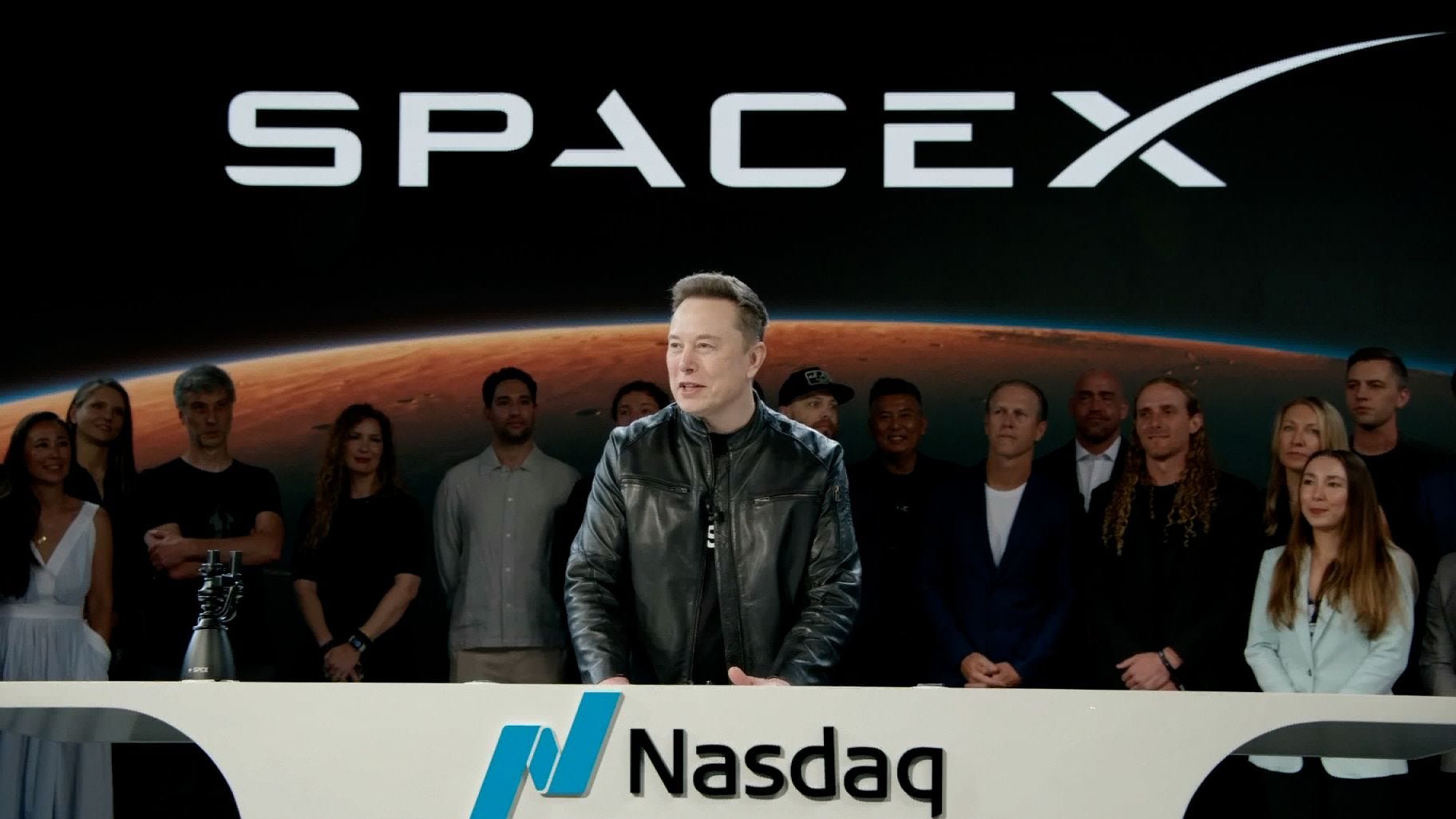
On June 12th, SpaceX launched its initial public offering with a valuation of $1.77 trillion. Pre-IPO investors made a killing. The SpaceX share price (SPCX) rose 20% over the last month. Musk was the greatest benefactor, in more ways than one. Though he owns 42% of SpaceX stock (worth over $765 billion), Musk holds the Class B stock, which gives him 82% of the voting power. SpaceX might be public, but it’s very much still Elon Musk’s dominion. I can’t blame Musk for not wanting to give up control. His stewardship of SpaceX (which is a Russian nesting doll of all his failed companies) made him the world’s richest man by an impressive margin. Currently, Elon Musk is almost four times as rich as the world’s second-richest man, Google co-founder Larry Page, who is making ends meet with a humble net worth of $304 billion.
As expected, many people bemoaned the structural failures that led to one man owning 550% as much wealth as the entire bottom half of American society. Clearly, you peasants don’t know what’s good for you. Thankfully, our sagest business leaders and Professional Brain Thinkers have generously explained to the unsophisticated, ungrateful, undeserving masses that unsustainable wealth inequality is good, actually.
“The fruits of Elon’s labor are making him into a trillionaire, and they’re uplifting humanity,” one Silicon Valley head told The New York Times. SpaceX chief Adeo Ressi was even more sycophantic, saying Musk’s wealth was a by-product of his unscratchable itch to advance the human race. “He’s amassing resources to do things, and the thing he wants to do most is colonize Mars. That’s a really big driving force behind his wealth accumulation.” Conservative writer Charles C. Cooke praised the trillionaire status with “Three Cheers for America,” calling those who criticized Musk “Revolting. Repulsive. Grotesque. Un-American.” (Original emphasis.) Meanwhile, Cooke’s National Review colleague Jonah Goldberg declared the first trillionaire a victory for "Team Capitalism” and scolded Musk’s critics with the intellectual rigor of a middle-school redditor who read half of Thomas Sowell’s Wikipedia page.
“In objective terms, no one was made poorer by Musk getting richer. Subjectively, however, we’re all poorer in the sense that the richest person in the world became marginally richer. That’s a vibes argument. If your neighbor wins the lottery, you will be poorer in comparison. But your ability to clothe, feed and house you and your family will not have changed.
If I cure cancer tomorrow, I will get very rich. Where’s the injustice? The world gets a cure for cancer, the economy saves countless billions fighting cancer, and I get to buy a bunch of cool stuff. Everyone, except maybe some drug companies and oncologists, comes out a winner.
I’ll never cure cancer. But capitalism probably will, eventually. Which is just one of a trillion reasons why I am on Team Capitalism.” — Jonah Goldberg
It’s always fun to check in with our conservative friends and remember that “Capitalism will probably, eventually cure cancer” is the best argument they can muster. The depth of American conservative intellectualism is as shallow and repugnant as their daddy’s new swimming pool.
While the American League of Trillionaire Bootlickers is correct to identify Elon Musk as a uniquely American product, their blind zealotry reveals they have no interest in examining the consequences of a trillionaire’s world, only awarding themselves points on the imaginary political scoreboard. While the Free Market Fetishizers try to gaslight us into believing Musk’s wealth will soon trickle down to your neighborhood, an honest accounting of his business ventures paints a different picture — one that shows modern capitalism is not an engine for social advancement, but a mechanism for the rich to get richer at great cost to the rest of us.
The Best Capitalist
For centuries, capitalists have won over the masses with the rising tide theory: if capitalists are allowed to own everything and distribute resources as they please, the rising tide of economic growth will lift every boat — the billionaire’s mega-yacht and the fisherman’s rowboat alike. As the theory goes, the capitalists will create better technology, the economy will grow, and increased collective wealth will foster peace and prosperity. Though simplistic, this theory isn’t wrong. It’s why the opening chapter of The Communist Manifesto praises the bourgeoisie (capitalist class) for “creating more massive and more colossal productive forces in one century than have all preceding generations together.” Competition fuels innovation. And though the greatest technological breakthroughs have come from governments competing in space exploration and war, market competition has increased the average human’s quality of life.
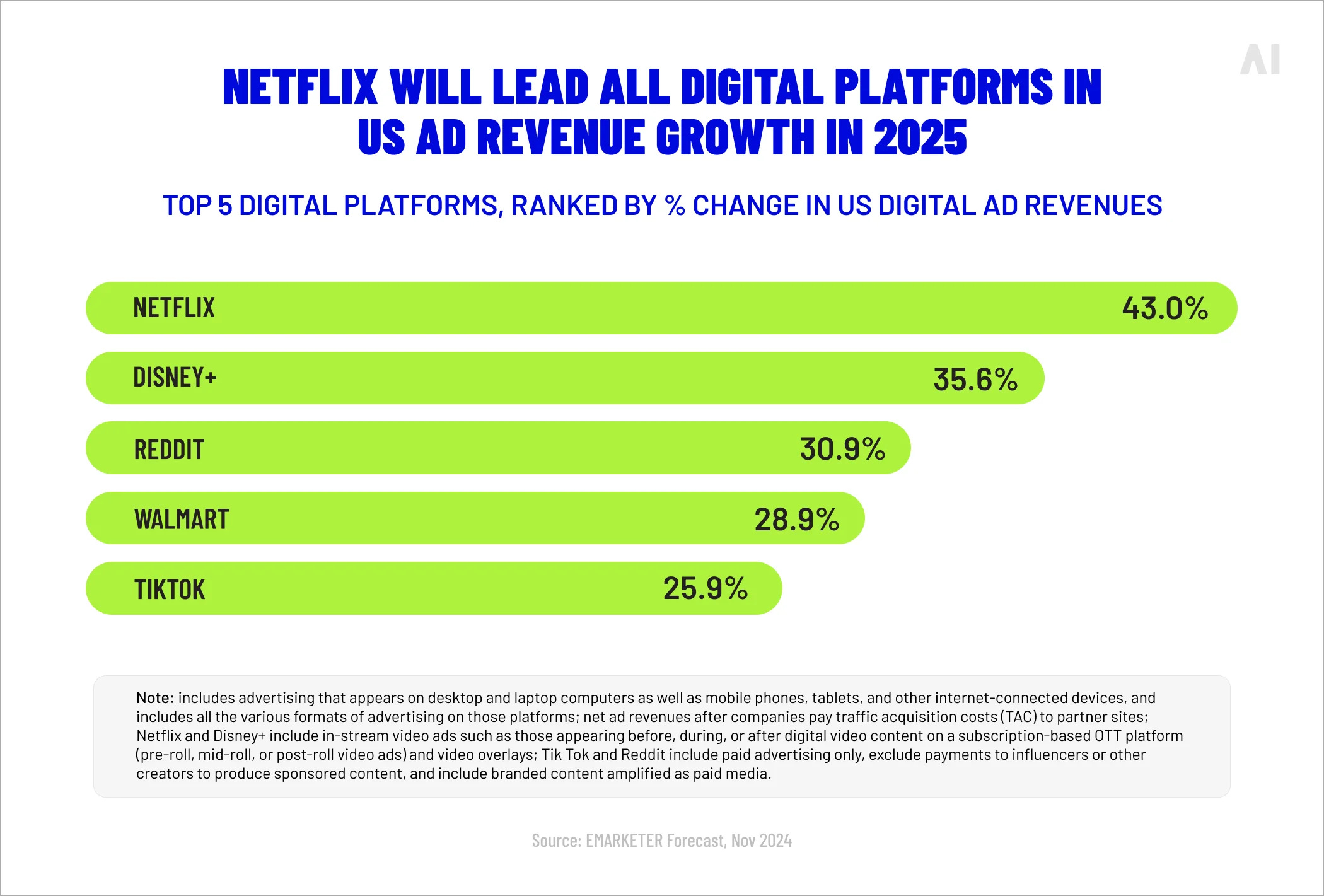
However, we must remember that improving society is not the capitalists’ goal. Bankers and investors don’t want to grow the economy, invent new technology, or raise millions out of poverty. Capitalism is not a contest to be the best entrepreneur, innovator, or humanitarian. It is a competition to be the best capitalist, a race to see who can best manage money to maximize their wealth, power, and profits. Sometimes this continuous tournament will bank-shot its way into helping the working class. But as market capitalism reaches its inevitable form of state-protected monopoly, those cases are becoming increasingly rare. According to capitalist theory, Uber should be improving the rider experience to outcompete Lyft. Instead, these companies are looking inward and investing in surveillance pricing technology to squeeze extra profit out of crucial rides, raising prices if you’re in a hurry or going to pick up your kid. This process is called Enshitifcation, which is why everything around you is getting worse. Southwest Airlines is shrinking seats for the same reason Netflix is increasing ads. They can make more money squeezing you than competing with their competitors.
While capitalists can still profit through traditional market competition among companies, investors and owners are accustomed to the massive returns of internet-age hyperscalers. They don’t want 2% returns on making better dishwashers. They want massive, quick returns on tens of millions, as delivered by companies like Apple, Microsoft, and the thousands of successful tech firms that emerged in the modern computing age. So, investors are eager for new markets, even when there’s no consumer base to buy what they’re selling.
In centuries past, this was done through imperialism and colonization. But now that the map is mostly set. So billionaires hype up the Metaverse, Crypto, Artificial Intelligence, and even space exploration as new avenues for economic expansion. Silicon Valley tech bros go wild for what these products “will do,” despite their investments having no material benefit to consumers, commodities, or productive activity. Karl Marx called this “fictitious capital” for good reason. With no tangible connection to valuable goods or services, this hype capitalism has created a class of oligarchs who have summited the capitalist system without producing much of anything.
“[Ficticious capital has created] a new financial aristocracy, a new variety of parasites in the shape of promoters, speculators and simply nominal directors; a whole system of swindling and cheating by means of corporation promotion, stock issuance and stock speculation.” — Das Kapital, Volume III
Despite what SpaceX’s public relations briefs and National Review sycophants say, Elon Musk did not attain trillionaire status by curing diseases or inventing a useful product. That is what zealots want us to believe modern capitalism is. In reality, Elon Musk built his status through what modern capitalism actually is: the management of fictitious capital, the cudgel of undemocratic political power, and the profitization of the rapid fusion of corporations and the state.
A Trash Can, In a Dumpster Fire, In a Rocket Ship
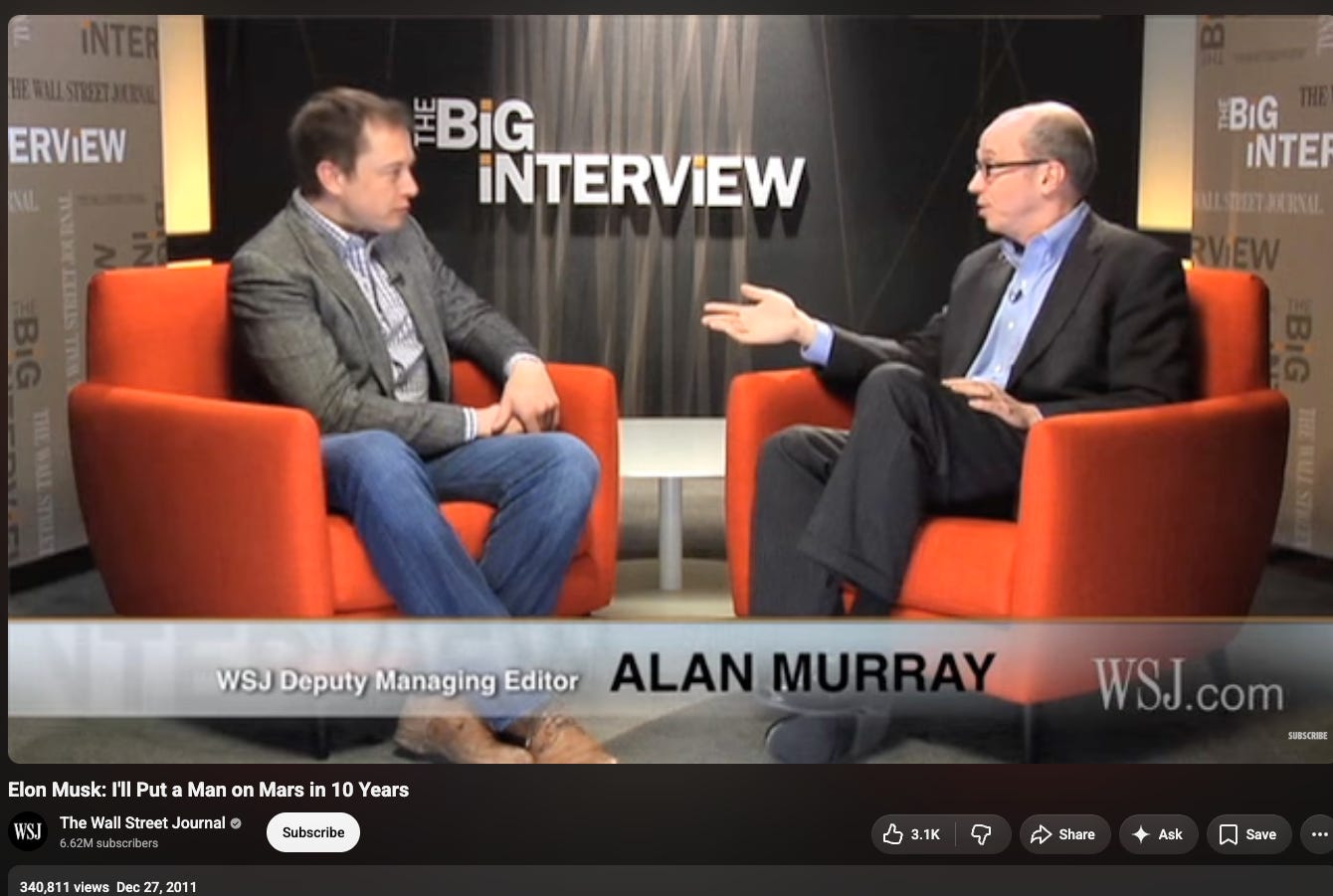
While SpaceX is marketed as a space exploration company, it’s… not. Musk is already half a decade behind his promise to put a man on Mars. He hasn’t even gotten to the moon, something the United States government did two decades before the internet was invented. SpaceX’s spacefaring brand is really a trench coat that Musk uses to hide his unprofitable, overvalued companies and the profitable, publicly-funded government contracts that disprove his image as a libertarian inventor.
The SPCX IPO was valued at a record-breaking $1.77 trillion. That’s 94 times the revenue it’s generated in the last twelve months. For context, pharma companies are usually valued at 3-7 times their twelve-month trailing revenue. Figma went public last year with a head-turning evaluation of 25 times its twelve-month trailing revenue. So SpaceX being at 94 times its latest revenue year is astronomical (no pun intended.) Of course, this difference between hype and delivery rests on Elon Musk’s well-curated image, not what he’s actually done.
In January, Elon leaked to Reuters that SpaceX made $8 billion in profit in 2025. But when the company opened its books for pre-IPO due diligence, it was discovered that SpaceX actually lost $5 billion. Valuations are forward-looking, but even then, there’s little promise of actual profit. Before the IPO, SpaceX claimed it had a total addressable market of $28.5 trillion, which it boasted was “the largest TAM in human history.” However, $26.5 trillion of that potential SpaceX revenue is predicted to come from xAI, Musk’s second-rate AI company that he merged with Twitter last March. (I’m never calling it ‘X.’) xAI’s flagship product is Grok, the AI chatbot built into Twitter that has a tendency to accuse Jews of undermining society and claim South Africa of white genocide. I’m not a financial analyst, but I fail to see how a declining social media site and a conspiracy chatbot will deliver $26.5 trillion in revenue.
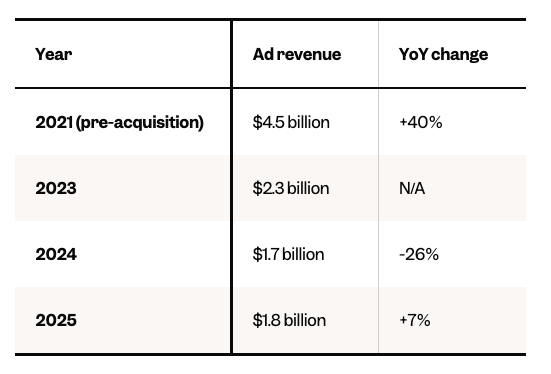
Twitter's ad revenue has plummeted since Musk took control, with the company losing about 80% of its value in the first few years under his tutelage. Musk purchased Twitter with $44 billion raised from Bill Ackman, Larry Ellison, Saudi Arabia’s investment arm, and, of course, Sean “P. Diddy” Combs. Unable to deliver a healthy return to his investors, Musk merged Twitter and xAI to obscure the social site’s shortfall. The only problem is that xAI lost $6.4 billion in 2025, making it only slightly less of a disaster than the Nazi-filled microblogging site. So, Musk merged xAI (including Twitter) into SpaceX earlier this year to hide his AI and social media losses. Yet, even that wasn’t enough.
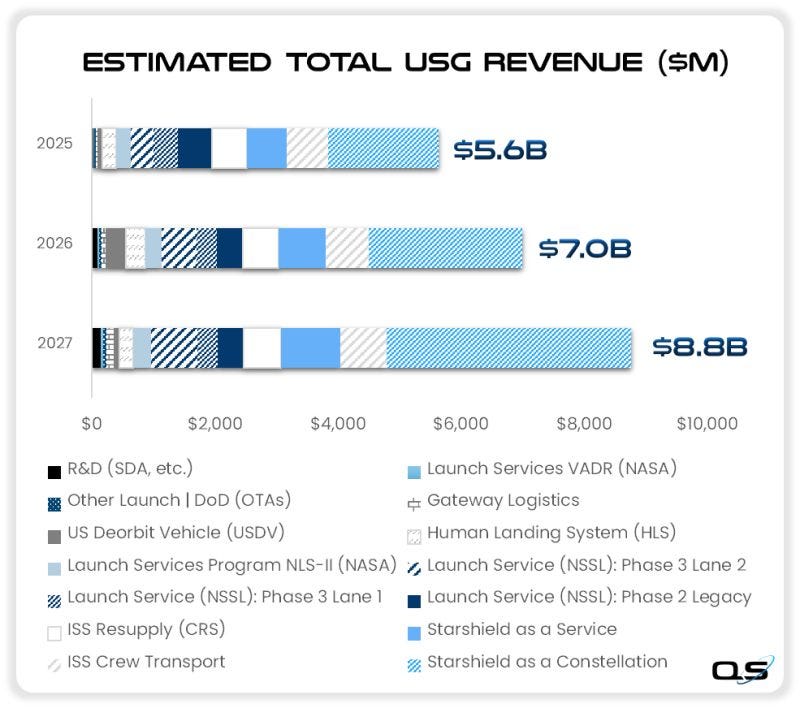
The only profitable part of SpaceX is Starlink, the satellite-based internet service and Pentagon contractor. Starlink generated between 60% to 80% of all SpaceX revenue in 2025, depending on the estimate. But that’s only because its satellites are launched by the SpaceX space exploration segment, which operates at a loss. This is a more creative bookkeeping to make Starlink look profitable than an actual successful business model. According to the space business intelligence firm Quality Space, Starlink’s current revenue is about half consumer internet and half government contracts. Top-secret status prevents us from knowing exactly how much taxpayer money is going to Musk through government contracts, but it’s at least $38 billion. Quality Space predicts that by next year, the majority of Starlink's revenue will come from Starshield, its government contracting arm. Musk has predicted SpaceX will earn a trillion in revenue by 2031. But as analysts have pointed out, he would have increased his rate of rocket launches by a factor of 100 each year.
Elon Musk did not become a trillionaire by inventing helpful products or creating millions of jobs. Rather than engaging with the side quests, the South African immigrant identified and executed a plan to win the capitalist game. Like his fellow ultra-wealthy, Musk won the lottery of birth, being born at a time when he could capitalize on the internet's nascent market. After cashing out on PayPal, he realized Wall Street was excited for futuristic investments, even if they didn’t understand the actual value of what he was planning to build. So Elon took advantage of the turn-of-the-millennium technological acceleration and sold himself to investors as the next Thomas Edison. He quickly founded SpaceX, bought Tesla (and calls himself its founder), acquired Twitter and numerous other companies, all of which enhanced his reputation as a genius inventor. However, few of these companies are profitable, and the ones that are rely on government contracts. Which means the only functional companies Elon Musk runs are the ones that receive your tax dollars.
SpaceX is Musk’s attempt to turn his hype into profits. One after another, his lagging businesses have been shoved under the SpaceX umbrella for this IPO, hoping the public will gleefully buy up so much stock that he and his investor buddies can make themselves whole. If you’ve been on Twitter lately, you know it’s a dumpster fire. Elon Musk tried to hide that dumpster fire by merging it with the cash-burning pile that is xAI. But that looked bad, so he shoved the whole thing into a SpaceX rocket in hopes the sci-fi vibes would outshine the flames pouring from every crack in his poorly designed spaceship. And it worked. Just weeks after taking the company public, Musk announced SpaceX would be selling $20 billion in bonds, the same amount he borrowed from Wall Street in February to merge xAI (and Twitter) into SpaceX. Because Twitter wasn’t worth what he paid for it, Musk combined his companies and is using the overinflated SpaceX valuation created by his persona to pay for the acquisition. But Musk isn’t using the profits from one successful venture to balance the losses of an unsuccessful one. Musk is using SpaceX's hype to offset losses from Twitter and xAI. And this is as stable as SpaceX is going to get. It’s an open secret that Musk plans to merge Tesla into SpaceX to obscure the losses of this “car” company.
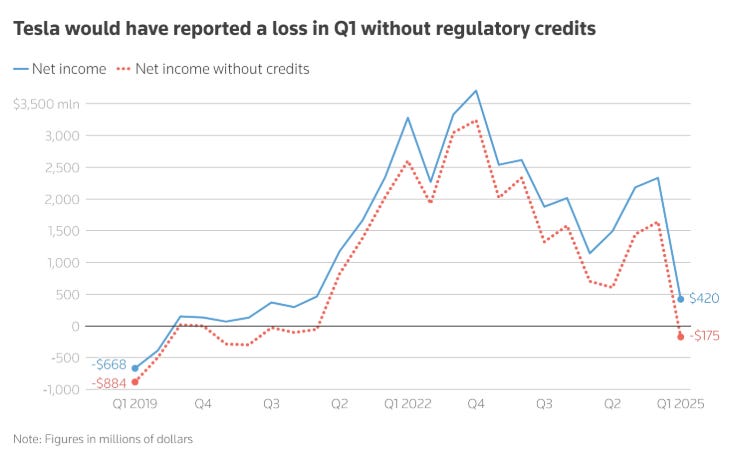
Tesla sales plummeted in Q1 of 2026, the third straight year of declining car sales. That indicates a lack of market need for Tesla’s product, but cars were never Musk’s business model to begin with. While Musk tricked America into thinking he was an environmentalist Henry Ford, Tesla made money by taking advantage of carbon-credit loopholes. By making gasless cars at a loss, Tesla sold its carbon credits to other car manufacturers to generate revenue. This is how the company supported itself as the car technology advanced. But declining car sales show that the only long-term profitability Tesla can offer comes from environmental regulation loopholes. Over half of Tesla’s $3.8B in 2025 profits came from selling carbon credits. Meanwhile, its profit margin has been in free fall, from 24% in 2022 to 4.9% in 2025. Musk has also been steering Tesla towards becoming an “AI company.” So expect fewer cars and more nonsense about how Tesla/xAI/Grok will be the future.
What Elon Musk understands isn’t about inventing or selling good products. Nor is it about using private capital to advance the common interest. What Elon Musk understands better than his oligarchic peers is that capitalism is about power. One of his supporters told The New York Times that the traditional view of wealth inequality doesn’t apply to Musk, because he doesn’t own mega-yachts or private islands (though he was very eager to go to his good pal Jeffrey’s!) Musk might not flaunt his wealth, but he understands better than anyone else that by amassing it, he can break the rules and laws to bend the capitalist system to his will. Musk has decided the law doesn’t apply to him, flaunting everything from the SEC guidelines to the Constitution. Unfortunately, he’s correct. Along with fictitious capital, Musk correctly identified that he could fuse his private companies with the state, a perpetual source of income. Not only is he making money from carbon credits and government contracts, but his record-breaking $250 billion donation to candidate Donald Trump (along with his purchase of Twitter) also enables him to pressure the government to protect his interests. In a recent lawsuit, the Department of Justice stepped in to defend xAI’s polluting data centers, claiming they were “vital to national security.” Apparently, Grok is helping us fight Iran. (Which explains why we lost.)
With so much economic and state power in his hands, no Democrat, Republican, or stockholder dares to challenge Musk. Now, he’s using that power to change the already-flimsy guardrails used to protect your retirement investments.
Congrats, You’re a SpaceX Shareholder
Through skilled management of capital, Musk has made SpaceX so valuable on paper that investment managers are throwing protections to the wayside to ride IPO coattails.
To get SpaceX listed on its exchange, the FTSE Russell Index eased its regulatory rules specifically for Elon Musk. Companies no longer need to wait for their next annual review to be included on the British FTSE 1000 and the American Russell 2000, two indexes frequently used for low-risk retirement investing. Instead, FTSE Russell requires only that the value of publicly traded shares exceed the index cutoff after five days of public trading. While every index has different cutoff requirements, the result will be the same. As mentioned above, SpaceX is valued at a record-breaking 93.5 times its twelve-month trailing revenue. You don’t need to be Warren Buffett to know this is a risky bet, which is why many seasoned investors are skeptical of purchasing SPCX shares. Yet many working-class Americans, including you, may have their retirement funds invested in SpaceX even if they don’t want to. The Nasdaq 100 also adjusted its fast-track rules to welcome SpaceX, and the S&P 500 and Dow Jones Indices are expected to do so shortly.
This would mean SpaceX will be heavily invested in passive funds, such as 401(k)s, broad-market ETFs, and other consumer portfolios, even if people never chose those investments. AI companies OpenAI and Anthropic are also pushing for IPOs, meaning even more of your retirement investments could be used as collateral to float the billionaires who over-invested in AI, and have nothing to show for it. With the average American being forced to buy into a massively overvalued enterprise, the lessons of the 2008 subprime mortgage crisis ring in my ears.
“Given the high risks of IPO investing, combined with the huge premium valuations being mooted for megacap IPOs such as SpaceX, it is a reasonable question to ask whether passive funds should be forced buyers of these stocks.” — Samuel Kerr, Global Head of ECM at Mergermarket
It gets even more troubling. Musk staggered SPACX’s lockups to expire starting on June 30th and continuing throughout the year. Lockups prevent pre-IPO shareholders from selling before a certain date. This keeps the share price high, so it’s attractive to public traders. Once public money backs SpaceX, Musk’s favored investors and personal friends who got in before the IPO can sell their stock, finally profiting from a company that struggles to turn a profit. After the June 30th release date, 40% more SPACX shares than were sold during the first week of SpaceX’s IPO will hit the market. This puts everyone who purchased after the IPO, including the retirement portfolio investment managers, at risk. In 2019, Uber shares hit an all-time low after early investors sold out when the lock-up expired. With so many of Musk’s cronies invested in SpaceX, expect a similar drop in value as all the outsiders pull out.
While this is nightmare fuel for those of us who work for a living, the business press is awe-inspired by Musk’s manipulation of the financial system. They treat capitalist finance like a sport, rather than the bedrock of societal stability and security. Here’s how asset managers for public employees sounded the alarm about the risk of these new index fast-entry rules:
We write as the Trustee of the New York State Common Retirement Fund, the investment adviser, custodian, and a trustee of the five New York City public pension systems, the Comptroller of Maryland and the Illinois State Treasurer. Together, our funds manage combined assets under management exceeding $600 billion, held for millions of working and retired public servants, teachers, firefighters, police officers, nurses, and other beneficiaries. Those beneficiaries’ retirement security depends on the long-term health of the U.S. public capital markets and stability of passive investment vehicles tracking indexes with reliable, tested inclusion methodologies.
In light of those interests and our respective fiduciary duties, we respectfully request that the London Stock Exchange Group (LSEG) and FTSE Russell reconsider the implementation of the Russell US Indexes IPO fast-entry rule and related eligibility changes, given deep concerns about their potential negative impacts on investors in Russell index-tracking funds. We further request that FTSE Russell publicly disclose the analysis conducted during the consultation process to justify these changes. This includes any analysis of the total market impact of Russell’s rule changes in light of a cascading series of eligibility revisions from other major index providers that seem likely to expose clients to unprecedented volatility over the pending SpaceX IPO.
And here’s how AXIOS covered Musk’s power play to tear down index protection rules:
The first of these SpaceX lockups expires after SpaceX reports earnings for the quarter that ends June 30, when as many as 912 million shares — over 40% more shares than were sold during last week’s offering — could hit the market.
And here’s the final bit of financial engineering that makes a market hack’s heart swell. In the run-up to its offering, SpaceX reportedly sought out rule changes to allow it to be included in key indexes that serve as the basis for index funds. Nasdaq recently made some changes to its Nasdaq-100 large-cap tech index, which serves as the basis for popular investor vehicles like Invesco’s QQQ tech ETF. Russell also made changes.
That means that SpaceX could be added to that key Nasdaq index — essentially forcing passive investors to buy and hold the shares — just before a big slug of freshly unlocked equity hits the market with the potential to steamroll the stock. Now that’s thinking of everything.
It could not be clearer that the interests of capitalists are directly opposed to the interests of the working class. If you’re an investment nerd, Elon Musk’s maneuvering and manipulation of the financial markets is a sight to behold, a true master of his craft. But if you’re an average working Joe, you’re watching this in horror as your nest egg for a dignified retirement is being handed to Elon Musk so he can use it at the craps table to try and win back his losses. Coming up empty would mean nothing to the ultra-wealthy playing the table we call the economy. A shrug and an “aw shucks, we can’t win them all.” To the rest of us, this would be devastating. Which is why we must change the capitalist system before it ruins us.
Predistribute the Wealth
The common progressive response to this display of ultra-wealth is to call for taxes on the rich. That is all well and good. And it’s the best way for politicians to talk about dismantling corporate power in the electoral arena, where they must match voters’ understanding of the world. But we’ll have to go further than that to create an economic system that prioritizes the public good over psychotic greed.
According to the economists at Real Time inequality, the Top 1% has increased its income more than any other group since the turn of the millennium. The ultra-rich don’t just have the most money. They’re increasing the rate at which they're getting money.
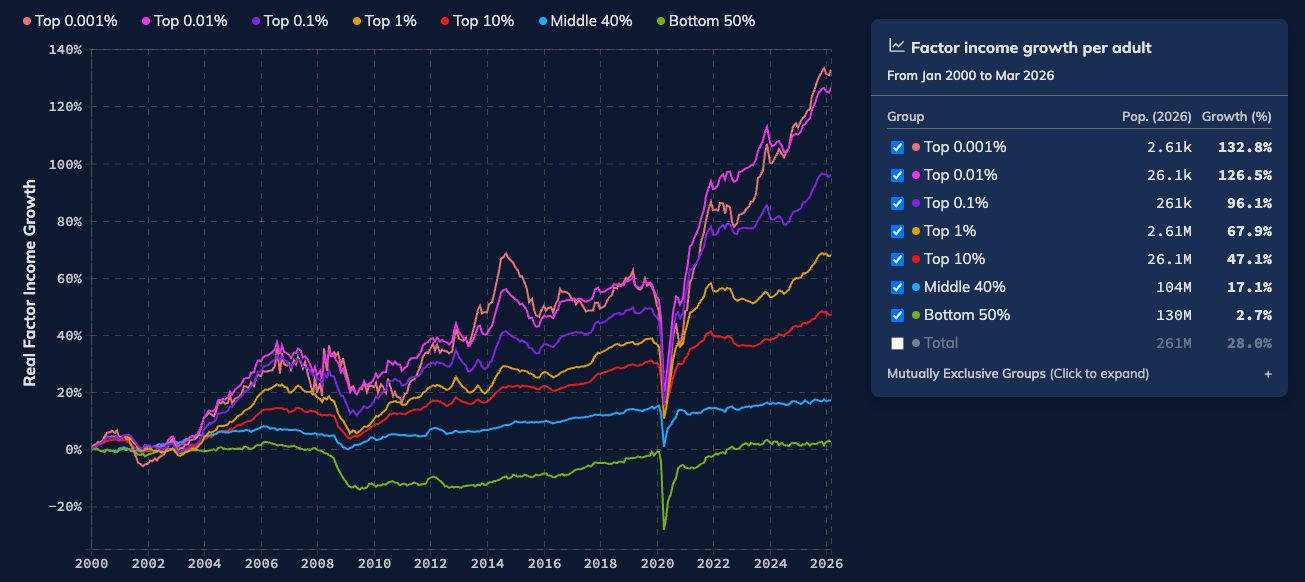
The same is true for wealth, broadly speaking. The wealthiest twenty-six Americans have seen their wealth grow the fastest, with the rate of growth accelerating the higher you climb the ladder. (The bottom 50% is the exception here. But their wealth has been contracting for most of the 21st-century, meaning rapid growth is expected.)
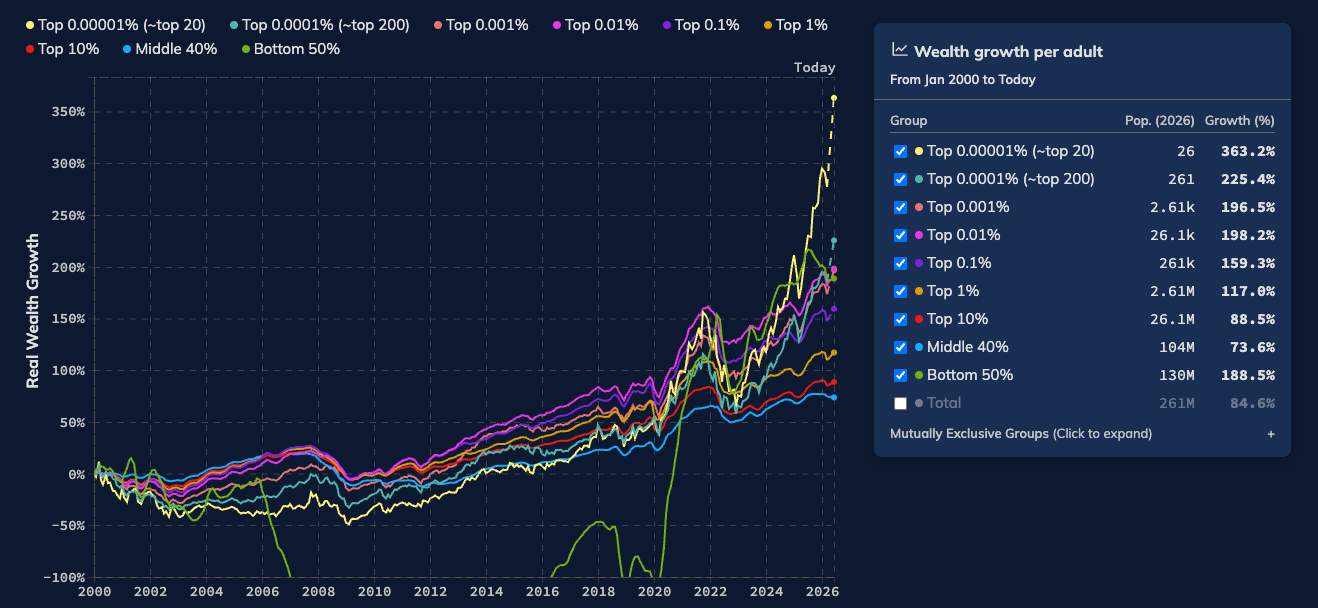
It is no coincidence that the rich are the ones getting richer fastest. In a capitalist system, whoever holds capital, holds power. With more income comes more state power — more government contracts, more help from the DoJ, and more ability to disregard the guardrails of public investment to force you to take on more risk to underwrite Elon Musk’s losses. The problem we face is not just runaway accumulation, but an economic system that, as Marxists long predicted, would accumulate into a cartel — an oligarchy, if you will. Today’s top capitalists aren’t just skilled money managers. They are unelected political actors who used their wealth to bulldoze any obstacle standing between them and further enrichment. In practice, 21st-century capitalism looks a lot more like Jack London’s The Iron Heel than it does the free market utopia Jonah Goldberg is trying to sell us.
“Economically, the main thing in this process is the substitution of capitalist monopolies for capitalist free competition. Free competition is the fundamental attribute of capitalism, and of commodity production generally. Monopoly is exactly the opposite of free competition; but we have seen the latter being transformed into monopoly before our very eyes, creating large-scale industry and eliminating small industry, replacing large-scale industry by still larger-scale industry, and finally leading to such a concentration of production and capital that monopoly has been and is the result.” — Vladimir Lenin, 1916
Taxing the rich at exorbitant rates is a good first step. Returning to the post-World War II structure that taxed top earners at 90% will deplete their power and fund necessary social programs. More importantly, it will reinvigorate our long-forgotten class consciousness and remind Americans that this is supposed to be a democracy.
Capitalism is rule by capital. Democracy is rule by the people. If democracy is the goal, we’ll need to change the system that equates wealth with power. That means hefty taxation, reworking political systems such as the Senate and the Supreme Court, and the democratization of the economy: unions in the workplace, nationalization of heavy industry, and a national culture in which the economy is meant to serve us, not the other way around.
This post is exclusive for supporting members. Thank you for your financial support! Without you, JoeWrote wouldn’t exist.
Please don’t forget to tap the ❤️ button before you go. (You’d be surprised how much it helps!) And consider sharing JoeWrote with a friend.
In Solidarity — Joe